
Greece adds fire-spotting satellites to national wildfire response
Four small OroraTech satellites are feeding AI alerts to Greek fire commanders as heat and drought raise wildfire risks, the AP reported.
By Maya Lindqvist · Senior Technology Correspondent
3 min read
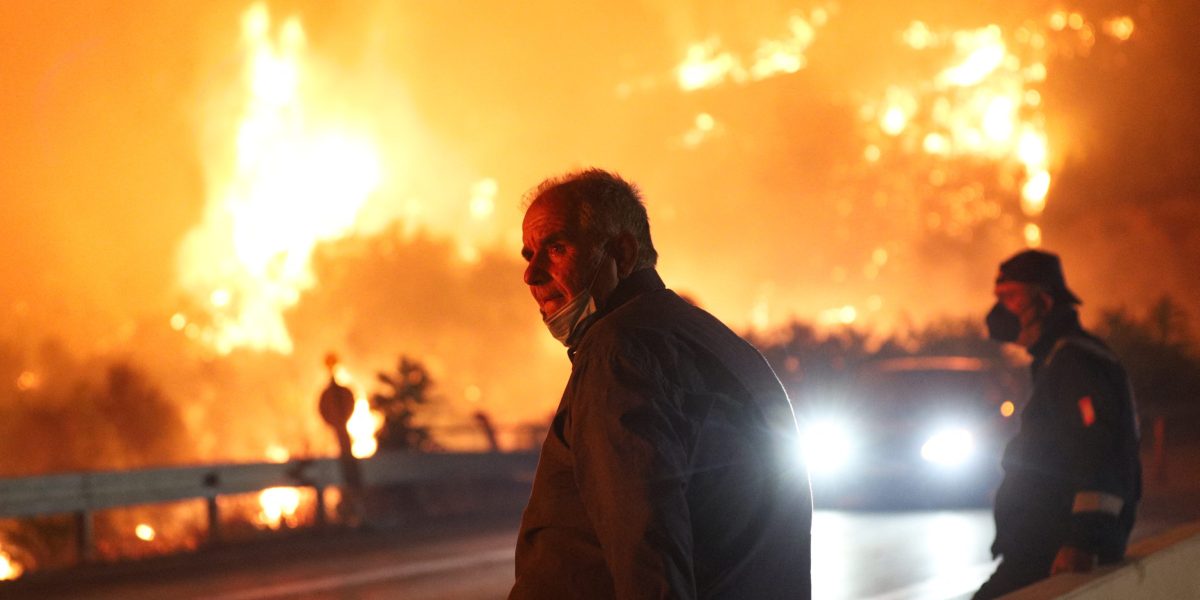
Greece has brought a dedicated wildfire-detection satellite array into its national firefighting system, a step the Associated Press reported is meant to cut the time between ignition and response. The program matters because Greek fires can turn deadly within minutes, especially during hotter Mediterranean summers.
The system uses four compact satellites launched into low orbit in May, according to the AP. Built by Germany’s OroraTech, the spacecraft carry thermal sensors designed to detect new fires as small as four meters, or 13 feet, across.
The AP reported that Greece is the first country to fully connect a dedicated satellite constellation to its firefighting operations. Traditional satellites used for fire detection can miss smaller starts, with AP describing them as able to spot fires closer to the scale of a cruise ship.
AI alerts for fire commanders
When the satellites detect a possible fire, artificial intelligence processes the thermal data and sends emergency commanders an alert with the fire’s location, estimated size and intensity, according to officials involved in the program cited by AP. That information can help crews decide where to send aircraft, vehicles and personnel when several fires break out at once.
Fire Service Col. Zisoula Ntasiou, vice president of the International Association of Fire and Rescue Services, told the AP that commanders can use fire radiative power to decide which blazes need priority. If 10 fires are burning across Greece, she said, lower-intensity ignitions may receive less immediate attention than more powerful ones.
The system must also screen out heat sources that are not wildfires. Officials told AP that solar panels, heated industrial rooftops and rock faces warmed by the sun can register on thermal sensors, so AI models are used to filter false alarms before alerts reach emergency services.
Climate pressure and wider space plans
Greece has expanded drones and ground sensors since a 2018 fire east of Athens killed more than 100 people, AP reported. In 2023, another fire burned through a remote nature reserve and became the largest wildfire recorded in the European Union, according to AP.
The AP reported that Greece recorded its hottest summer in 2024 and its third-hottest summer last year. Ioannis Lantouris, head of OroraTech’s Greek operations, told the AP that rising global temperatures are changing fire intensity and behavior, requiring faster and more accurate models.
The satellite project is part of a broader 200 million euro, or $227 million, EU-funded Greek observation network, according to AP. Greece is working with three European companies on a system that combines thermal satellites, radar satellites that can see through clouds and smoke, and optical satellites that capture detailed ground imagery.
Additional satellite launches are planned by the end of the year, AP reported. Dimitris Papastergiou, Greece’s minister of digital governance, also told AP that the EU plans to add another 350 million euros in funding for Greek programs.
Greek and European planners see uses beyond wildfire detection, according to AP, including border surveillance, crop monitoring, disaster response and heat-wave planning. One proposed use is mapping urban heat islands so authorities can better place cooling centers and emergency services.
Papastergiou told AP that civil protection, security and some defense-related uses are part of the program’s purpose. He said Europe should retain the knowledge produced by the investments and combine it with European telecommunications and AI capacity.
This story draws on original reporting from Fortune.