
Commentary links Ginsburg and Biden to risks of staying too long
A Fortune commentary says leaders can damage their causes when they fail to plan exits early enough for successors to emerge.
By Daniel Okafor · Business Editor
3 min read
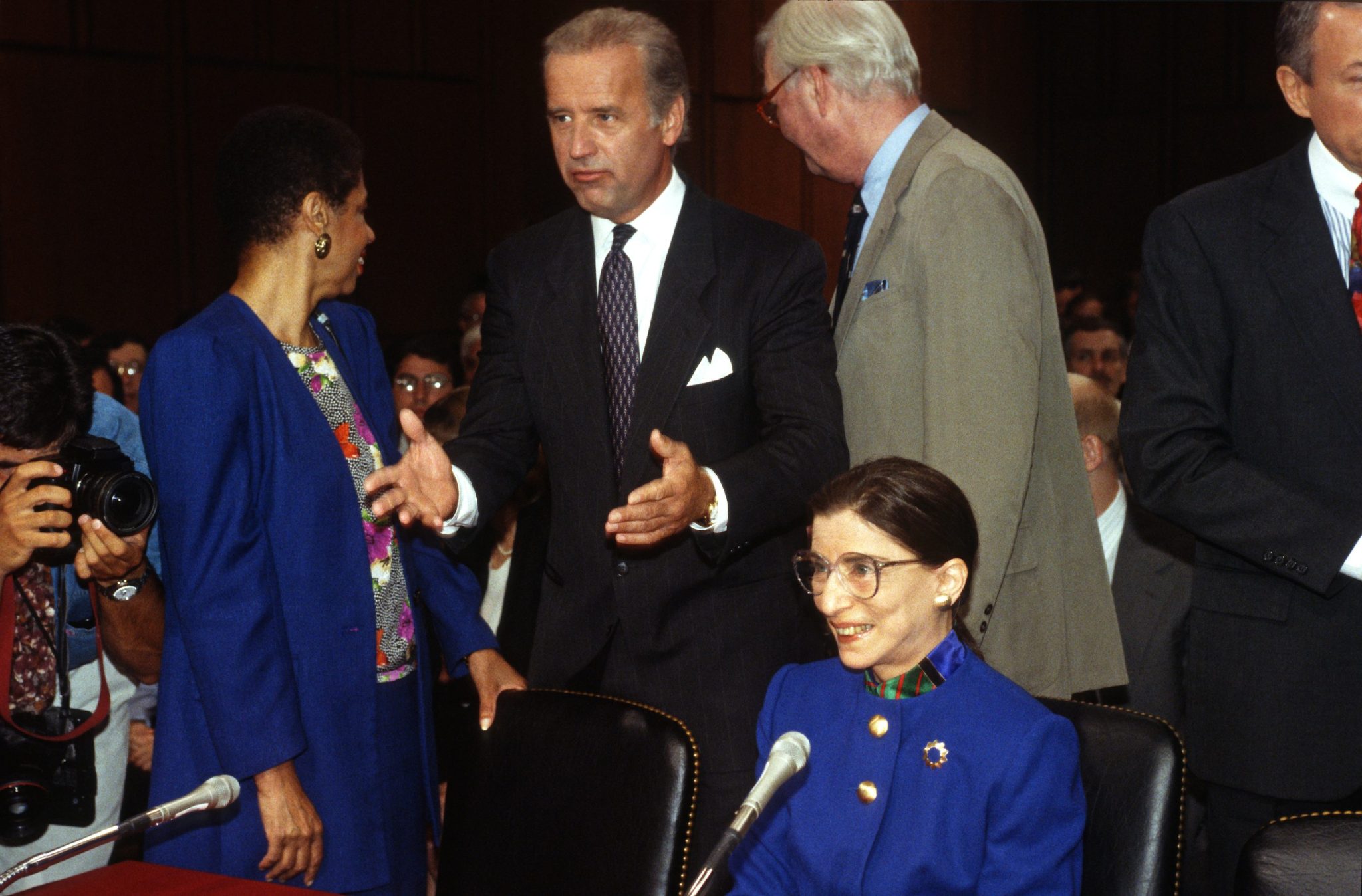
A Fortune commentary argues that Ruth Bader Ginsburg and Joe Biden illustrate a common leadership failure: staying in power after a cause would be better served by succession. The piece says the issue matters because late departures can leave institutions with fewer options and hand advantage to political opponents.
The commentary was written by the founder of TIGER 21, a global peer network for entrepreneurs and executives. He says he ceded control of the organization to a new owner 18 months ago while remaining non-executive chairman, an experience he uses to frame the question of when leaders should leave.
According to the commentary, Ginsburg’s choice to remain on the Supreme Court in 2013 and 2014 was a gamble that failed because the political environment changed. The writer says Ginsburg had survived serious illness and could have retired while a president more aligned with her views had the chance to name her successor.
Ginsburg died in 2020, and President Donald Trump appointed Amy Coney Barrett to replace her. The commentary says Barrett later joined the Supreme Court majority that overturned Roe v. Wade, a ruling the writer describes as central to the legal legacy Ginsburg sought to preserve.
The writer also argues that Barrett’s appointment helped shape a court that has expanded presidential authority and protections. He frames the risk as the combination of a presidency willing to test limits and a Supreme Court more receptive to broader executive power.
Biden cited as a different kind of case
The commentary treats Biden’s 2024 decision-making as a separate example. The writer says Biden, after defeating Trump once, spent years presenting himself as the Democrat best able to do so again, despite earlier describing himself as a bridge to a new generation.
According to the piece, Biden could have announced early that he would serve one term, giving Democrats time to run a fuller process to choose a successor. Instead, the commentary says, his late withdrawal narrowed the party’s choices when time had become scarce.
The writer draws a distinction between Ginsburg and Biden. He says Ginsburg misread an uncertain future, while Biden and those around him failed to respond to conditions already visible to people close to him.
The “indispensability” problem
The commentary calls the pattern an “indispensability delusion,” meaning a leader comes to believe that a broader cause cannot survive without them. The writer says the danger often comes disguised as duty rather than ambition.
The piece also points to earlier leaders whose inner circles helped preserve that belief. It says Woodrow Wilson remained in office after a debilitating 1919 stroke while his wife and doctor concealed the extent of his condition from the public. The commentary says that episode helped undermine Wilson’s effort to secure American entry into the League of Nations.
The writer also cites Winston Churchill’s return to power in 1951 and says a stroke two years later was hidden. In both examples, the commentary argues, the leader’s refusal to step back depended on aides or family members willing to sustain the arrangement.
As counterexamples, the piece cites George Washington and Nelson Mandela. It says Washington gave up military power in 1783 and declined a third presidential term in 1796, while Mandela served one term and stepped down in 1999.
The commentary says leaders who serve a larger cause should define the conditions under which they would leave and begin succession early enough for a replacement to be tested. Citing Annie Duke’s book Quit, the writer says people often mistake quitting for weakness when it can be a necessary decision skill.
The full commentary appeared on Fortune.com.
This story draws on original reporting from Fortune.