
G7 sets rare earth import target to reduce reliance on China
Leaders pledged to limit dependence on any one supplier by 2030, but experts say refining and heavy rare earth capacity remain major obstacles.
By Maya Lindqvist · Senior Technology Correspondent
4 min read
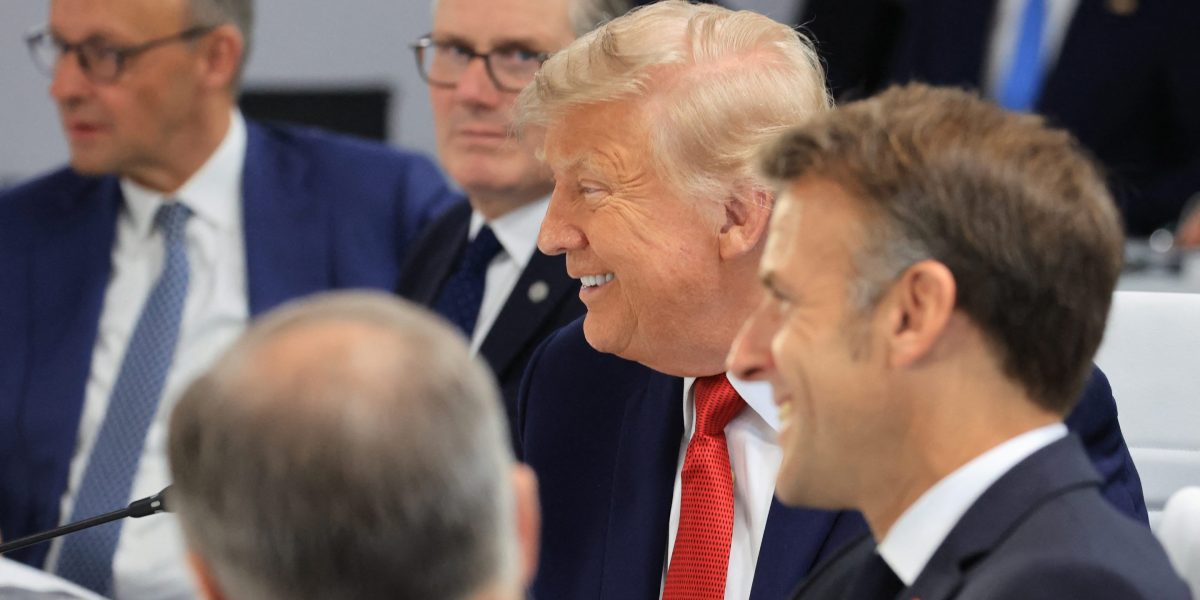
G7 leaders pledged Wednesday to reduce their dependence on China for rare earth materials used in defense systems, electric vehicles and wind turbines. The target matters because China remains the dominant producer and processor of rare earths, giving Beijing leverage over supply chains tied to national security and clean energy.
In a joint statement issued at the Group of Seven summit in France, the U.S., U.K., Canada, France, Germany, Italy and Japan said they aim to ensure no single country supplies more than 60% of their rare earth imports by 2030. The leaders also said they want to reach a 50% threshold as soon as possible, according to the statement.
China produced nearly 70% of the world’s rare earths last year, according to Fortune. The country also accounts for 95% of permanent magnet production, according to figures cited by Fortune, making it central to one of the most important uses of rare earth elements.
Rare earths are a set of 17 naturally occurring elements. After processing, some are used to make permanent magnets that help manufacturers build smaller, lighter and more powerful motors and electronics, according to Stanford Magnets. Goldman Sachs has said those magnets are used in drones and precision weapons, while European clean energy programs depend on them for electric vehicles and wind turbines.
China’s export controls add urgency
Bloomberg has reported that China is due to restore export controls on rare earths used in defense systems on Nov. 10. Fortune reported that the controls had been delayed under a yearlong trade truce with the Trump administration after U.S. tariffs helped set off a global trade fight.
A United Nations critical minerals trade report published in June said Japan, the European Union and the U.S. account for more than half of global rare earth magnet imports, with China serving as the main supplier. The same UN report said China has imposed 16 trade restrictions on critical energy transition materials since 2020.
The International Energy Agency estimated in a 2026 report cited by Fortune that full implementation of China’s export controls could put as much as $6.5 trillion in annual economic activity outside China at risk.
David Klanecky, chief executive of Cirba Solutions and a veteran of the critical minerals field, described the G7 target as ambitious in comments to Fortune. He said setting a measurable goal was necessary if governments wanted companies and agencies to act.
U.S. projects are trying to fill the gap
The UN report said China’s strength in rare earth refining creates a bottleneck because refining requires large amounts of energy and capital, making it hard for new competitors to enter. Some U.S. companies are trying to build alternatives aimed at the magnet market.
USA Rare Earth is working on a mine-to-magnet supply chain that includes extraction, processing and magnet manufacturing. The company received $277 million in federal incentives under the CHIPS and Science Act to build capacity for as much as 10,000 tons a year of rare earth metal alloy, according to the Commerce Department information cited by Fortune.
A USA Rare Earth spokesperson told Fortune the company welcomed the G7 focus on building a Western rare earth value chain. The spokesperson said the company is working to scale production of sintered neodymium-iron-boron permanent magnets.
MP Materials operates rare earth processing facilities in Fort Worth, Texas, and Mountain Pass, California. Mountain Pass is the only commercial-scale rare earth mine in the U.S., according to CNBC, and the company recently received a $150 million Defense Department loan to expand rare earth separation at the site.
MP Materials spokesperson Matt Sloustcher told Fortune the company expects to keep playing a leading role in diversifying the global supply chain. He said MP is also building another Texas facility that, together with Fort Worth, could produce 10,000 metric tons of rare earth magnets.
Meredith Schwartz, an associate fellow at the Center for Strategic and International Studies’ Critical Minerals Security Program, cautioned in comments to Fortune that the U.S. still relies mostly on light rare earths while China dominates heavy rare earth mining. She noted that Japan has spent more than 15 years reducing its reliance on Chinese rare earth materials, underscoring how long the G7 effort may take.
This story draws on original reporting from Fortune.