
Warsh’s hawkish Fed debut rattles stocks and lifts rate-hike bets
Kevin Warsh used his first Fed news conference to stress price stability, prompting a selloff as traders raised odds of a rate increase.
By Maya Lindqvist · Senior Technology Correspondent
3 min read
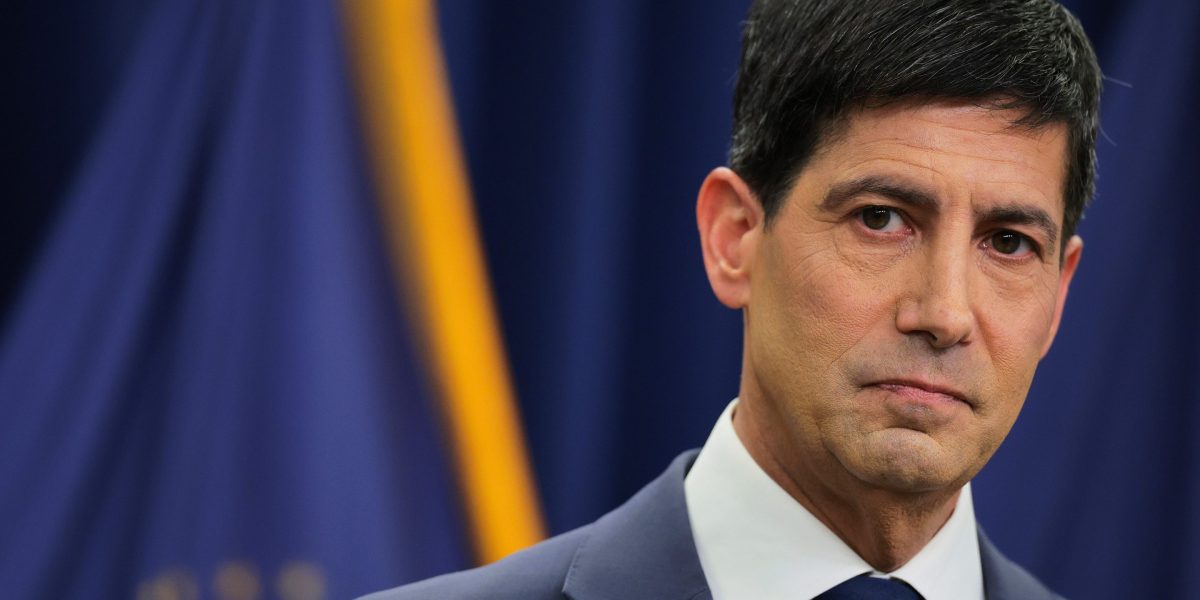
Federal Reserve Chair Kevin Warsh kept interest rates unchanged Wednesday, but his first news conference sent a tougher signal on inflation than markets had expected. Stocks fell and short-term Treasury yields rose as investors reassessed the chances of another rate increase this year.
The Fed’s policy statement said it would meet its price-stability goal, a line Warsh repeated during the press conference. Warsh said inflation, which Fortune reported has been running at about twice the Fed’s 2% target for five years, was unacceptable.
“The ‘two’ is the left of the decimal point,” Warsh told reporters. “For now, ‘zero’ is to the right.”
Markets read the message as hawkish
The Fed left its benchmark rate range steady, as expected, according to Fortune. The larger shift came in officials’ projections: nine of 18 Fed policymakers penciled in at least one rate increase this year, and the new statement removed the previous tilt toward easing.
The Dow Jones Industrial Average dropped 507 points after reaching an intraday record earlier Wednesday, Fortune reported. The S&P 500 lost 1.2%, the Nasdaq fell 1.3%, and communications services were the weakest sector.
Two-year Treasury yields, which often move with expectations for Fed policy, rose about 16 basis points to 4.21%, according to Fortune. By the end of trading, money markets put the odds of an October rate hike at slightly better than even, after pricing had shown little expectation of such a move earlier.
Jon Hilsenrath, the former Wall Street Journal reporter known for his Federal Reserve coverage, told Fortune that Warsh’s emphasis on price stability marked the return of a more hawkish Warsh. Hilsenrath said the statement language and Warsh’s repeated use of it made the message clear.
A new chair sets his distance
Warsh was appointed by President Donald Trump after Jerome Powell’s term as chair ended in May, according to the Getty Images caption published with Fortune’s report. During his confirmation, Warsh faced criticism from Sen. Elizabeth Warren, who accused him of being Trump’s “sock puppet,” Fortune reported.
Warsh did little Wednesday to suggest he would tailor Fed policy to the White House. Asked whether he had spoken to Trump, he replied, “On the president, I don’t have anything for you.”
Fortune reported that Trump had spent the past year pushing for lower rates, including threats against Powell and a Justice Department prosecution. Trump recently said Warsh should “do whatever he wants” and be “totally independent,” according to Fortune.
Warsh also moved away from earlier arguments he had made about artificial intelligence and growth. Fortune reported that he previously wrote in The Wall Street Journal that the Fed should stop treating strong growth and rising pay as causes of inflation, arguing instead that inflation comes from government spending and money creation.
Asked Wednesday whether AI-driven productivity gains gave the Fed more room to cut rates, Warsh pointed to one of several new Fed task forces, according to Fortune. On inflation, he said the commitment to return to 2% was “strong, unanimous, and unambiguous.”
Less guidance, more reviews
Warsh declined to submit his own projection to the Fed’s rate “dot plot,” though he said other officials should continue filing theirs, Fortune reported. He also scrapped forward guidance, saying, “I can’t give you any guidance on what we’re going to do next.”
The new chair announced five task forces due by year-end, covering Fed communications, the balance sheet, data sources, AI’s labor-market effects and the inflation framework. Hilsenrath told Fortune the panels could give Warsh time to defer some hard questions while the Fed weighs its next move.
This story draws on original reporting from Fortune.