
Fed chair says market financing remains easy as companies raise cash
Kevin Warsh said monetary policy is uneven as companies tap stock and debt markets at a rapid pace despite fading rate-cut hopes.
By Daniel Okafor · Business Editor
3 min read
Companies are raising money at a fast clip in public markets, complicating the case that Federal Reserve policy is tight across the economy. Fortune reported that investors have reduced expectations for near-term rate cuts and are preparing for the possibility of higher rates, even as stock and debt markets remain open to large corporate deals.
The funding surge spans initial public offerings, follow-on stock sales and corporate bonds. It has been powered in part by major technology and artificial intelligence companies seeking capital for expansion, according to Fortune.
Goldman Sachs estimated that IPOs in 2026 will bring in $225 billion, Fortune reported. That is up from Goldman’s earlier forecast of $160 billion and far above the $44 billion raised in 2025.
Companies also have been using secondary stock offerings to add cash. Alphabet, Google’s parent company, raised nearly $85 billion in net proceeds this month in what Fortune described as the largest equity capital markets transaction on record at that point.
Debt markets have been busy as well. Corporate bond issuance through May reached $1.23 trillion, up 21% from the same period a year earlier, according to the Securities Industry and Financial Markets Association.
Fortune reported that some of the borrowing is tied to heavy AI spending by hyperscale technology companies. SpaceX raised $85.7 billion in its IPO this month and is preparing a $20 billion bond sale, according to Fortune. Nvidia is seeking more than $20 billion in what would be its first debt offering since the AI boom began, CNBC reported, citing sources.
Convertible debt issuance also has climbed. Fortune reported that U.S.-listed companies have issued $54 billion in convertibles so far this year, a 43% increase from the same period in 2025.
The broader economy does not show the same ease everywhere. Fortune reported that housing has remained under pressure since the Fed’s sharp rate increases aimed at post-COVID inflation, with home sales and construction stalled. It also reported that last year’s rate cuts brought little relief after President Donald Trump’s war on Iran pushed oil prices and bond yields higher earlier this year.
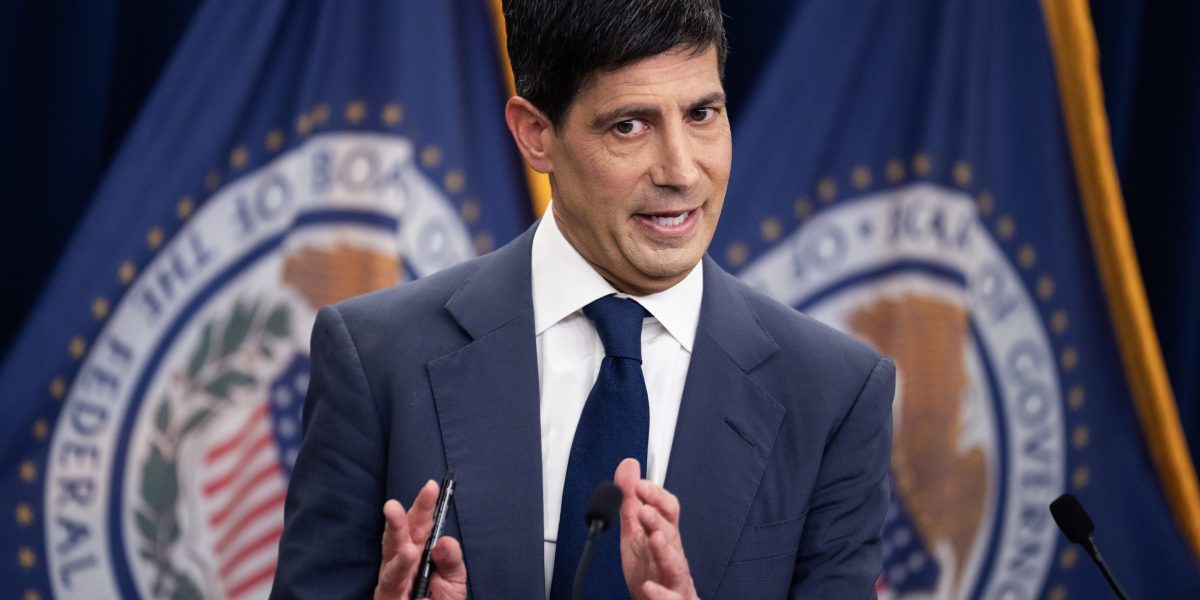
Federal Reserve Chair Kevin Warsh addressed the split at his first press briefing as chair on Wednesday. He said overall monetary policy is “somewhat restrictive,” but acknowledged that description is harder to square with activity in financial markets.
“I would have a hard time managing to say those words if I were to see what’s happening in financial markets,” Warsh said, according to Fortune. “So I’d say it’s uneven.”
Warsh said the uneven effect may reflect how monetary policy reaches the economy through interest rates and the Fed’s balance sheet. Fortune reported that his comments came alongside a firmer tone on inflation, which he described as a choice, suggesting he may favor stronger action to cool prices.
More issuance may be ahead. Fortune reported that OpenAI and Anthropic are expected to raise tens of billions of dollars when they go public later this year, while corporate debt issuance could exceed $2 trillion by year-end.
Deutsche Bank analysts added context to the record dollar amounts. In a Tuesday note cited by Fortune, they said U.S. IPO proceeds this year amount to about 0.2% of the S&P 500’s market value, compared with 2% in 1993.
Deutsche Bank said the gap reflects changes in how companies fund growth. In the early 1990s, public markets were a primary source of capital for younger companies, while today venture capital and private equity often fund that stage before mature companies list.
This story draws on original reporting from Fortune.