
FDA retracts lettuce test result while recall remains in place
The agency said a Taylor Farms lettuce sample first linked to cyclospora was a false positive, but officials are still examining the supplier.
By Daniel Okafor · Business Editor
3 min read
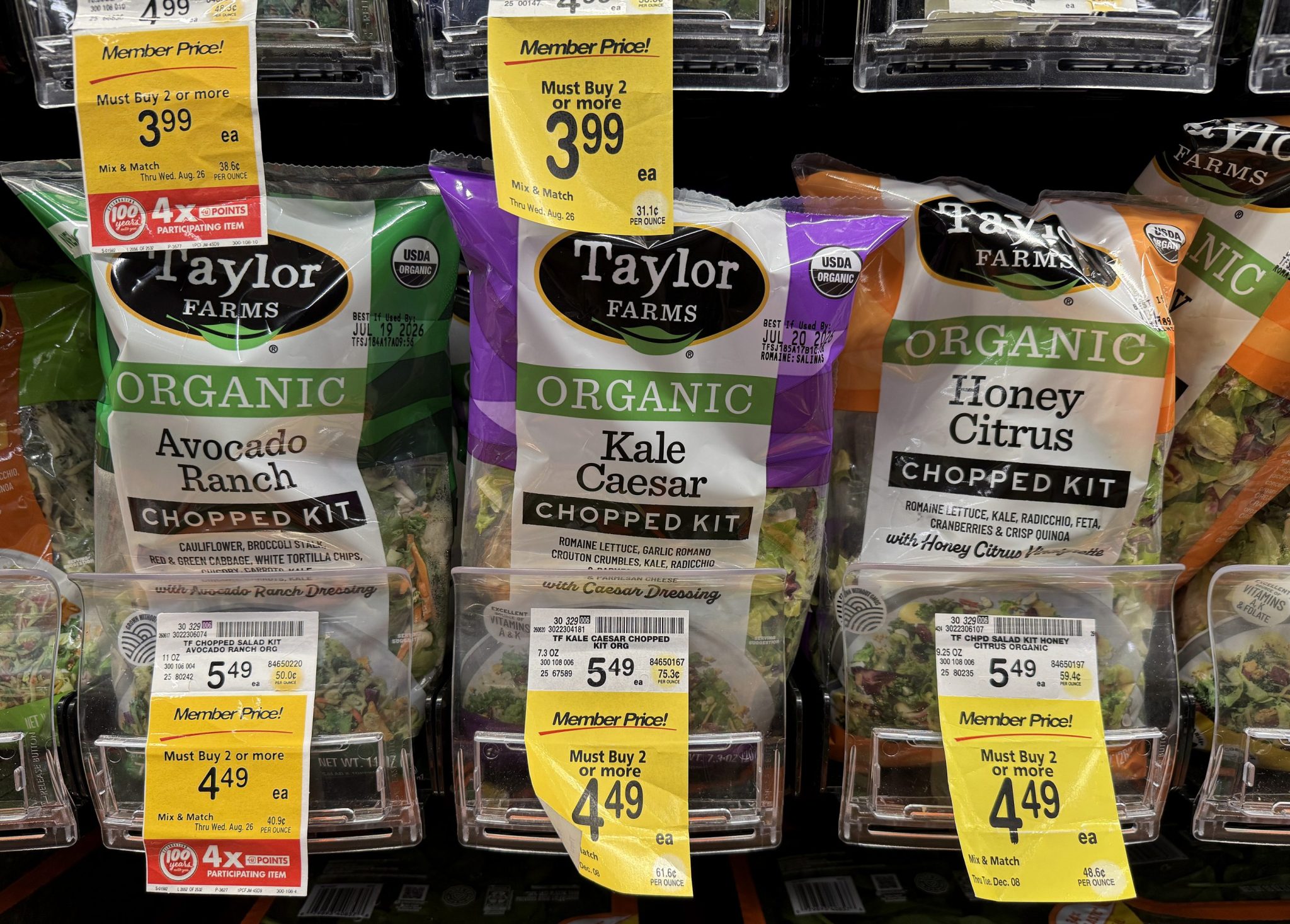
The Food and Drug Administration said Sunday that a lab result it had described as connecting Taylor Farms lettuce to a cyclospora outbreak was a false positive. The change matters because it may limit any expansion of the recall, although federal health officials still view Taylor Farms produce as part of the inquiry.
The FDA had said Saturday that cyclospora was detected in Taylor Farms lettuce outside the products already under recall, raising the possibility that more items could be pulled. By Sunday evening, the agency said its laboratory staff had reviewed the sample again and reversed that finding.
“Due to the complexity in detection of cyclospora, FDA laboratory experts re-reviewed the sample results and have concluded that the finding does not represent true amplification,” the FDA said.
Taylor Farms said the agency “has not identified a single positive product test result for cyclospora.” Fortune reported that the company did not immediately respond to a request for comment about why some health officials continue to focus on its produce.
Recall continues despite test reversal
The false positive does not alter the products already recalled, according to the FDA’s update. Taylor Farms previously recalled items from a farm in Mexico that had been distributed to 27 states.
Walmart Inc. said over the weekend that it had taken four Taylor Farms-made bagged iceberg lettuce salad products off shelves, according to the report. Health officials have also said that a lettuce supplier serving Taco Bell restaurants in the Midwest was linked to most infections.
Taco Bell, owned by Yum! Brands Inc., said it acted quickly once concerns emerged. “We moved immediately to adjust our supply chain and within 72 hours had voluntarily removed all affected Taylor Farms lettuce from every Taco Bell restaurant in the country,” the company said.
Testing limits complicate the investigation
The Centers for Disease Control and Prevention says cyclosporiasis is a gastrointestinal illness caused by swallowing a microscopic parasite. The CDC has reported infections across 34 states, with Michigan recording more than 5,000 illnesses as of July 17, the highest state count cited in the report.
The illness can cause severe diarrhea and nausea lasting from several days to as long as a couple of months, according to health officials. Symptoms can take up to two weeks to appear after exposure, which makes it harder for investigators to identify what people ate before becoming sick.
The CDC says it relies on three categories of evidence in foodborne outbreak investigations: epidemiologic data, traceback records, and testing of food or the environment. In lettuce outbreaks, direct product testing can be difficult because the product has a short shelf life and may no longer be available by the time illnesses are reported.
Stephen Ostroff, a former deputy FDA commissioner, said the absence of a positive product sample does not rule out a supplier in a cyclospora investigation. Unless investigators can test the specific lettuce lots suspected in the outbreak, he said, a company cannot rely on the lack of positive samples as proof that its products were not involved.
Ostroff said cyclospora is especially difficult to detect in both food and the environment, which helps explain why investigators may continue using traceback and illness-pattern data even after the FDA withdrew the test result.
This story draws on original reporting from Fortune.