
Ranking spotlights Europe’s chip tools and industrial innovators
A new 300-company ranking points to Europe’s strength in semiconductors, manufacturing and reinvention despite lower R&D spending than rivals.
By Maya Lindqvist · Senior Technology Correspondent
3 min read
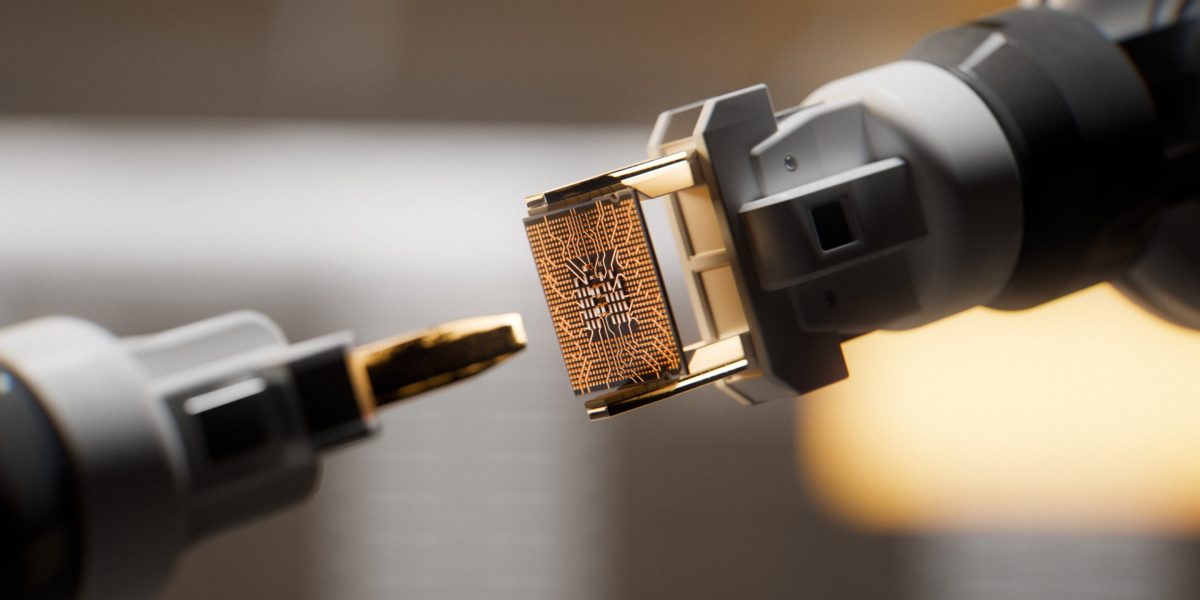
Europe’s largest innovation strengths are showing up in chipmaking equipment, advanced manufacturing and companies that have repeatedly remade themselves, according to Fortune’s 2026 Europe’s Most Innovative Companies ranking. The list matters because Fortune says the region continues to produce key technologies even while spending a smaller share of GDP on research and development than the U.S., Japan or China.
Fortune, which produced the second annual ranking with Statista, said Europe’s R&D intensity has stayed near 2.1% for years. That compares with 3.45% in the U.S. and Japan and 2.6% in China, while the European Patent Office recorded a high for patent applications last year, Fortune reported.
The ranking covers 300 companies in 18 countries and 21 industries. Fortune said companies were assessed on innovation in products, internal processes and corporate culture.
Chip equipment leads the list
ASML, the Dutch semiconductor equipment maker, ranked first. Fortune described the company as central to the advanced chip supply chain because its lithography systems help produce the tiny features used in leading-edge semiconductors.
Fortune pointed to two ASML technologies: the Twinscan XT:260, used in advanced chip packaging, and High-NA EUV systems, which help print smaller chip patterns so more processing power can fit on silicon wafers. The ranking also includes Infineon Technologies, NXP Semiconductors, ASM International, STMicroelectronics and Austria’s Ams-Osram.
Fortune said Europe has built strength around specialized semiconductor tools rather than matching the U.S. or China in large-scale chip production. It linked that approach to European Union industrial policy, including the proposed Chips Act 2.0, which aims to support chips, artificial intelligence, cloud computing and digital infrastructure.
Old companies remain prominent
Many of the companies on the list have long histories, according to Fortune. Saint-Gobain, which Fortune said began in 1665 as a French glassmaker commissioned under Louis XIV, now ranks 35th and focuses on sustainable construction materials.
Other longstanding companies on the ranking include Siemens, founded in 1847, and Rolls-Royce, founded in 1904. Fortune cited Bureau of Labor Statistics data showing that among U.S. businesses founded since 1994, only one-third lasted a decade.
Michelin, new to the ranking and in the top 10, was founded in 1832 and reincorporated as a tire company in 1889, Fortune said. The company’s early removable pneumatic tire helped Charles Terront win the first long-distance cycle race in 1891, and Fortune said Michelin is now using its materials expertise on airless Moon boots for the next Lunar Rover.
Nokia ranked 22nd. Fortune said the company began in 1865 as a paper mill before moving into rubber goods, cables and mobile phones, and now builds 5G networks.
Germany has the most entries
Germany contributed 56 companies, more than any other country on the list, Fortune said. Its entries span technology, cars, engineering and pharmaceuticals.
Bosch, based in Stuttgart and founded in 1886, has expanded from automotive work into artificial intelligence and hydrogen technology, according to Fortune. Its fuel-cell power module for heavy transport recently won Germany’s Future Prize for Technology and Innovation.
Fortune said Siemens, ranked 11th, is applying AI, automation and digital tools to factory work. The company recently introduced Digital Twin Composer, a tool for creating realistic virtual versions of physical environments so engineers can test designs before making prototypes.
Fortune also highlighted 28 companies for innovation culture, including Adidas, Ingka Group, Heineken, Lufthansa, Richemont, Celonis, Babbel and Kirkbi. Adidas uses cross-functional hackathons, Fortune said, while Ingka Group, which runs Ikea’s global retail business, is training about 30,000 employees and 500 leaders in AI literacy.
This story draws on original reporting from Fortune.