
Europe looks for energy routes beyond Hormuz after Iran war price shock
EU leaders are weighing corridors, pipelines and power links after the Iran war added $29 billion to the bloc’s fuel import bill.
By Maya Lindqvist · Senior Technology Correspondent
4 min read
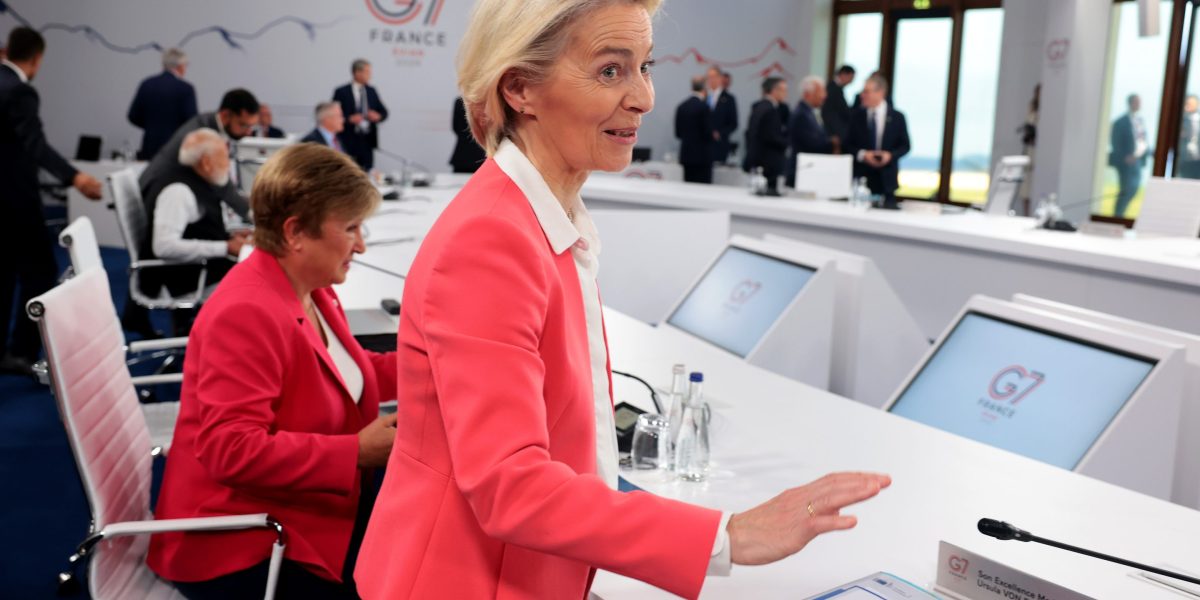
Europe is accelerating work on alternative energy and trade routes after the Iran war drove up fuel costs and exposed the bloc’s reliance on shipments through the Strait of Hormuz. European Commission President Ursula von der Leyen said the EU paid an extra 25 billion euros, or $29 billion, for oil and gas during the first 54 days of the conflict, according to the Associated Press.
The push centers on routes that could reduce exposure to Middle Eastern chokepoints, while tying Europe more closely to Gulf states, Israel and India. AP reported that EU officials and diplomats are focused on projects spanning transport, energy and digital links, though Brussels has not set a timetable.
India corridor draws renewed attention
Von der Leyen told G7 leaders this week that new export routes had been created to give countries more options and pointed to the India-Middle-East-Europe Economic Corridor, known as IMEC, as an example, AP reported. The corridor is meant to link India, the Middle East and Europe through infrastructure that could include pipelines and transmission cables.
The EU has backed IMEC through a memorandum of understanding, but AP reported that only some of the bloc’s 27 member states are formal signatories. A senior EU diplomat, speaking anonymously because the discussions were confidential, told AP that political support remains strong and that the focus is now on turning the plan into projects across transport, energy and digital connectivity.
IMEC would run through Israel, which supports the plan. Israeli Prime Minister Benjamin Netanyahu said last year that he had discussed it with Indian Prime Minister Narendra Modi, AP reported.
Lianne Pollak-David, co-founder of the Israel-based Coalition for Regional Security, told a recent online briefing that U.S. leadership would be needed to advance the corridor, especially by supporting normalization between Israel and Saudi Arabia. She said IMEC could not be fully realized without such an agreement, according to AP.
Saudi Arabia has said normalization with Israel would require a clear path toward Palestinian statehood, which Netanyahu opposes. Saudi officials declined AP’s request for comment on IMEC, and AP reported that it is unclear how the Iran war, launched by the U.S. and Israel and damaging to Gulf Arab countries, may affect Riyadh’s position.
Gulf infrastructure comes into focus
Von der Leyen and European Council President Antonio Costa said at an EU leaders’ meeting in April that the bloc was ready to work with Gulf countries on energy infrastructure that could bypass conflict zones such as Hormuz, AP reported. The concern includes a possible longer-term jet fuel shortage.
One model is Saudi Arabia’s East-West Pipeline, which carries oil from eastern fields to the Red Sea. After the war began, Aramco increased shipments on the line to its maximum capacity of 7 million barrels a day, according to AP.
French Foreign Ministry spokesperson Pascal Confavreux told AP that G7 leaders were discussing how to finance and build infrastructure, including land-based routes, that could avoid the Strait of Hormuz. EU leaders have not named specific projects, but an EU official told AP the bloc would encourage European companies to invest in Gulf renewable energy projects serving European demand.
Gabriel Mitchell, an analyst at the German Marshall Fund, told AP that EU-backed work with Gulf countries will take time. He said the most likely near-term projects are oil and gas pipelines and subsidies for repairs at Gulf facilities hit by Tehran during the war. Mitchell added that projects would need to fit EU climate policy, meaning pipelines could be designed to carry gas and possibly hydrogen later.
Power cable could link Europe, Cyprus and Israel
Another project under discussion is the Great Seas Interconnector, an EU-backed electricity cable planned to run 1,208 kilometers, or 750 miles, between continental Europe, Cyprus and eventually Israel. AP reported that financing bureaucracy has slowed the project.
Supporters say the cable could end the energy isolation of Cyprus and Israel and could also connect to India as part of IMEC. Gallia Lindenstrauss of Israel’s Institute for National Security Studies told AP that the project offers a practical answer to modern energy needs and supports the shift toward cleaner energy.
The U.S. is also promoting closer energy ties among Greece, Cyprus and Israel. U.S. Energy Secretary Chris Wright said last week that Washington sees the Eastern Mediterranean as an increasingly important region for global energy development, AP reported.
This story draws on original reporting from Fortune.