
Senator seeks federal review of fake online job listings
Sen. Ruben Gallego asked labor and consumer agencies to examine “ghost jobs” and their effect on job seekers and labor-market data.
By Daniel Okafor · Business Editor
3 min read
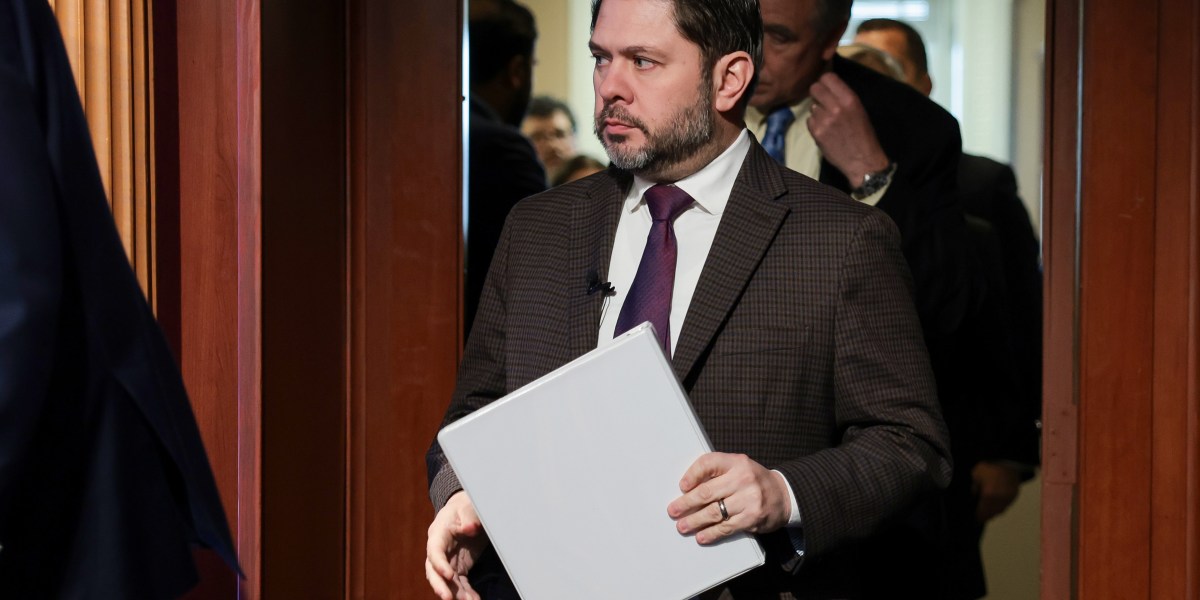
Sen. Ruben Gallego is pressing federal agencies to examine online job ads for positions employers may not plan to fill, a practice critics call “ghost jobs.” Fortune reported that the Arizona Democrat sent letters Thursday to the Department of Labor and the Federal Trade Commission seeking investigations into how common the practice is and whether it distorts official readings of the labor market.
According to Fortune, Gallego asked the agencies to explain how such listings are reflected in federal labor statistics and what powers they have to act against deceptive hiring ads. He also raised concerns about whether policymakers can rely on vacancy data if postings for non-existent roles are treated as real openings.
Gallego told Fortune that postings for jobs employers do not intend to fill are taking time and effort from young workers. He said more information is needed on the scale of the problem and on any government response.
Concern over entry-level hiring
The push comes as the labor market remains broadly resilient while some younger workers face a tougher search. Fortune cited recent Federal Reserve Bank of New York data showing unemployment among young college graduates has moved higher even as overall employment has stayed solid.
Some of the anxiety has focused on artificial intelligence and its possible effect on junior roles. Fortune reported that economists have also pointed to remote and hybrid work as a reason entry-level hiring has lagged in some white-collar fields, rather than automation alone.
In his letters, Gallego linked hiring technology to the spread of ghost jobs, according to Fortune. He argued that artificial intelligence used by online hiring platforms can make it easier for employers to post openings, recruit less aggressively and leave ads online for long periods.
Data point to a gap between openings and hires
Evidence cited by Fortune suggests many listings do not end in a hire. A 2024 Resume Builder survey found that 40% of employers said they had posted at least one job in the prior year that they did not intend to fill.
Federal data also show a wide gap between reported openings and hires. The Bureau of Labor Statistics reported that employers listed 7.6 million openings in April and hired 5.1 million workers, Fortune noted. That means about one in three reported openings did not correspond to a hire during that period, though the data do not by themselves show whether those roles were fake.
Gallego’s request places the issue before two agencies with different roles. The Department of Labor oversees major employment data programs, while the FTC has authority over unfair or deceptive practices in commerce.
Fortune also reported that employers are expressing broader worries about the economy. In a May quarterly survey by The Conference Board, nearly half of CEOs said conditions had worsened from six months earlier, with uncertainty tied to the war in Iran, higher energy costs and potential workforce changes from AI.
The agencies’ responses will determine whether Gallego’s concerns lead to formal scrutiny of online hiring practices. For job seekers, the central issue is whether advertised opportunities reflect actual hiring demand or add noise to an already difficult search.
This story draws on original reporting from Fortune.