
EU weighs faster tariff tools as China trade gap widens
European governments are debating tougher trade defenses as Chinese exports put more pressure on domestic industries.
By Daniel Okafor · Business Editor
3 min read
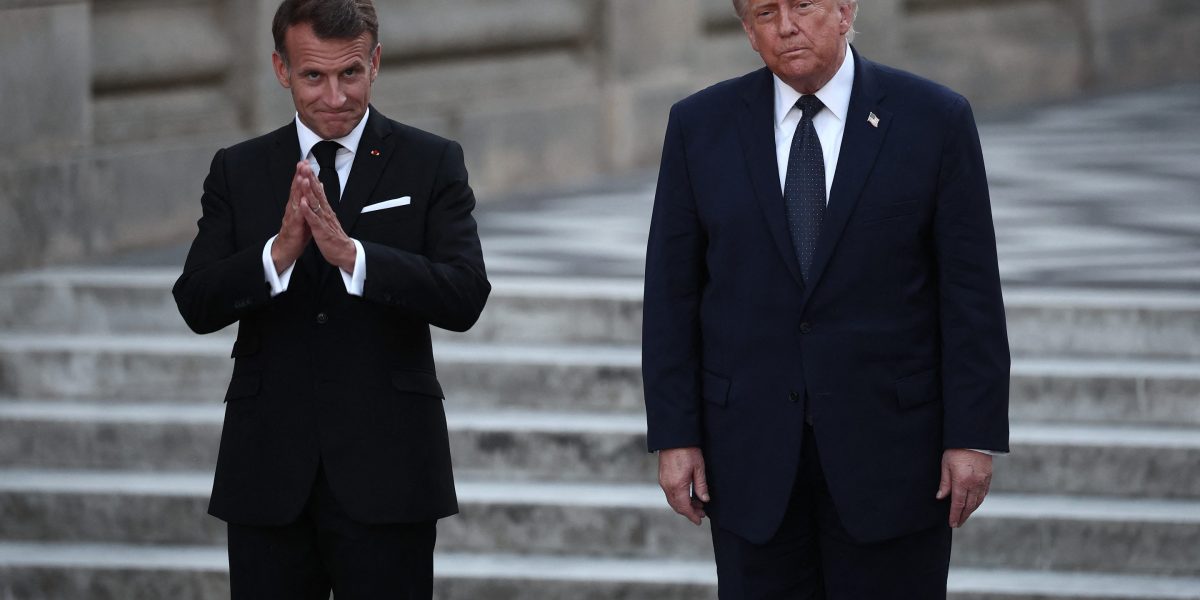
European leaders are considering faster ways to restrict Chinese imports as a widening trade gap raises pressure on the bloc’s manufacturers, Fortune reported. The debate matters because any new tariff tool could push the European Union closer to the kind of trade confrontation the U.S. has pursued under President Donald Trump.
China’s goods trade surplus with the EU reached 360.6 billion euros, or $414 billion, in 2025, up 15% from 2024, according to Fortune. Fortune reported that the gap grew another 10% in the first four months of this year.
French President Emmanuel Macron last month called for tougher defenses against imports he views as a threat to European industry. “We must take protective measures, safeguard measures,” Macron said, adding that Europe should create “the European equivalent of Section 301.”
Section 301 of the U.S. Trade Act of 1974 lets Washington impose tariffs in response to trade practices deemed unfair or discriminatory, Fortune reported. After the Supreme Court struck down Trump’s global duties imposed under the International Emergency Economic Powers Act, Trump plans to use Section 301 as a central tool in his effort to address trade deficits, according to Fortune.
Several EU countries back tougher powers
Germany, Poland, the Netherlands and Belgium supported Macron’s call for new EU authority to impose tariffs quickly on China, the Financial Times reported. In a separate paper, France, Italy, the Netherlands and Lithuania urged the EU to study a measure aimed at reducing dependence on a single country, possibly through tariffs or quotas, according to Fortune.
The EU has already imposed tariffs on Chinese electric vehicles and opened anti-dumping and anti-subsidy investigations into Beijing, Fortune reported. Those inquiries have taken time, and the bloc’s broadest safeguard measure must apply worldwide, which means it could also hit trading partners not accused of wrongdoing, according to Fortune.
For now, EU officials are not taking the most aggressive course because of concern about Chinese retaliation, Fortune reported. The bloc is instead focusing on talks with Beijing and preparing a law meant to diversify sources of key supplies, according to the Financial Times.
Reuters reported that European officials see global trade rules breaking down as China’s exports reach more markets while U.S. barriers remain high. “We live in a world of wolves now. We no longer live in a world of pink ponies and rainbows,” one EU diplomat told Reuters.
China’s export surge raises pressure
The U.S., Europe and other major economies have long urged China to rely more on domestic consumption and less on exports for growth, Fortune reported. Beijing has continued to promote key industrial sectors, while weak domestic demand has led Chinese companies to send excess supply abroad, often at prices that undercut local producers, according to Fortune.
Fortune reported that China’s shift into higher-value goods has made the current export wave a bigger concern for advanced manufacturers in Europe, Japan and South Korea. European Commission President Ursula von der Leyen last summer accused China of distorting trade and restricting access for European companies, according to Fortune.
Macron warned in the fall that the EU could impose tariffs on China to address the trade gap, Fortune reported. The new EU proposal would require companies to diversify supply chains, after von der Leyen said earlier efforts had not pushed businesses to move quickly enough, according to Fortune.
Some EU officials say the bloc has been too slow to respond. “Back in November, we were talking about how the China situation was intolerable and how we had to take action,” a senior EU diplomat told the Financial Times. “And here we are again, talking about the same thing.”
This story draws on original reporting from Fortune.