
Defense stocks fall despite Iran war spending surge
Major contractors have lagged even as the U.S. spends billions in Iran, while investors wait to see whether budgets become contracts.
By Sofia Marchetti · World Affairs Correspondent
3 min read
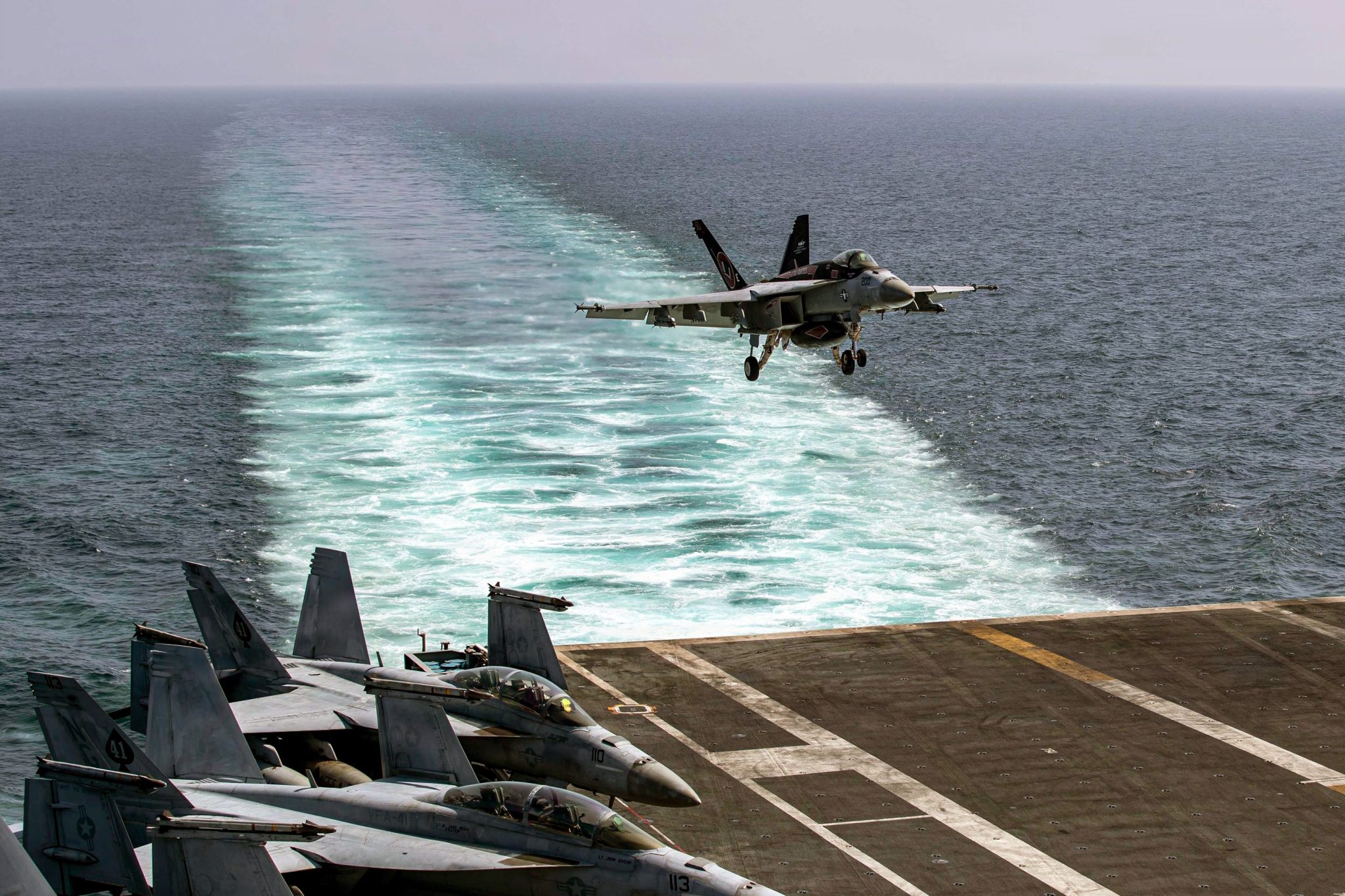
Defense stocks tied to the Iran war have disappointed investors even as U.S. military spending has climbed and weapons stockpiles have been depleted. Fortune reported that several major contractors have lost ground since President Donald Trump launched Operation Epic Fury in late February, underscoring the gap between wartime demand and stock-market returns.
The Associated Press has put the U.S. cost of the war at $37.5 billion. The Pentagon has also sought historically high defense spending, including a $1.5 trillion budget proposal reported by CBS News that would mark a 42% increase.
Early trading suggested investors expected a windfall. Fortune reported that volumes in large defense contractors jumped in the first days of the conflict, in some cases as much as 140% above their average during Trump’s second term. The rally faded: Northrop Grumman is down more than 30%, L3Harris Technologies has dropped more than 20%, and Lockheed Martin has fallen nearly 13%.
RTX, formerly Raytheon Technologies, had been down about 18% at one stage, according to Fortune. It has since recovered to a 4% gain after reporting stronger-than-expected second-quarter earnings.
Why are defense stocks down during the Iran war?
The selloff reflects investor doubts about how quickly wartime spending becomes revenue and profit. Guy Rozentsveig, a managing director at Solomon Partners, told Fortune that investors may have already built much of the expected good news into share prices.
The war has still created real demand for weapons. The Center for Strategic and International Studies said the Pentagon has fired thousands of advanced munitions, including more than 1,000 Tomahawk cruise missiles and hundreds of THAAD, Patriot and SM-3 interceptors used to defend U.S. and allied forces.
Replacing those weapons could benefit contractors, but investors are watching whether larger budgets lead to signed contracts, faster production and better earnings. Defense companies often rely on long government buying cycles, so demand in a conflict does not immediately turn into sales.
Mike Derrios, executive director of the Baroni Center for Government Contracting at George Mason University, told Fortune that the strongest defense-stock gains often come before wars and before Congress locks in extra funding. A Fisher Investments analysis of Russia’s 2022 invasion of Ukraine found that many defense-stock gains came before the invasion, with the sector later moving closer to the broader market.
What could change the outlook for contractors?
Politics and the economy remain risks. Byron Callan of Capital Alpha Partners said on the Defense & Aerospace Report podcast that a more negative public reaction to renewed fighting with Iran could hurt Republican prospects in the midterm elections and raise questions about defense spending in 2027 and 2028.
Callan also pointed to inflation and interest rates as concerns if energy prices rise again. Several contractors, however, have large backlogs: Fortune reported RTX at $289 billion, Northrop Grumman at $105 billion and Lockheed Martin at $167 billion.
Some investors are also looking beyond the largest contractors. PitchBook said venture firms invested a record $19.8 billion in defense tech across 262 deals in the first quarter of 2026, up from $17 billion a year earlier and $5.7 billion two years earlier.
Startups including Anduril, Shield AI and Saronic have drawn high valuations. Reuters reported Anduril’s valuation doubled to $61 billion, while Fortune cited Shield AI at $12.5 billion and Saronic at $9.25 billion.
Those companies still command a small share of Pentagon dollars. The Wall Street Journal reported that contracts to the 15 highest-valued defense-tech startups tripled from 2022 to the last fiscal year but remained below 1% of Defense Department contracting. A Government Accountability Office report found the Pentagon’s largest acquisition programs take more than 12 years on average to deliver new capabilities, a delay that has helped fuel interest in faster-moving defense startups.
This story draws on original reporting from Fortune.