
Colston-backed fund offers sports ownership stakes from $500
Former Saints receiver Marques Colston and Nick Edwards launched Champion Fund, a retail vehicle tied to teams, sports tech and stadium-related assets.
By Hana Yoshida · Markets Reporter
3 min read
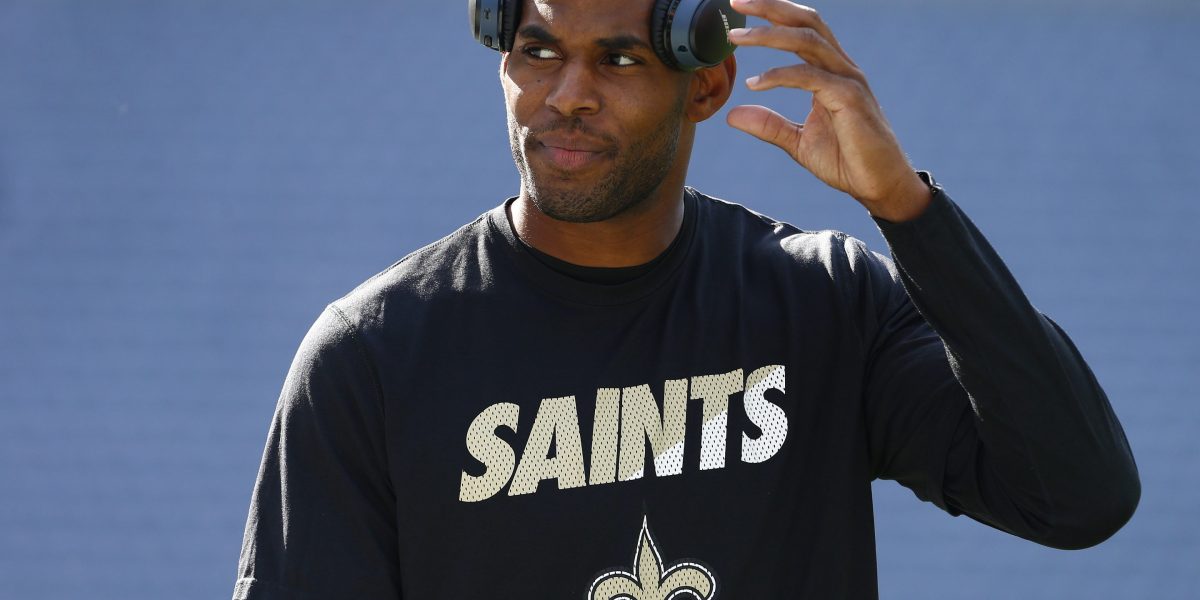
Former New Orleans Saints receiver Marques Colston and former mixed martial artist Nick Edwards have launched Champion Fund, an investment vehicle that lets individuals buy exposure to sports assets starting at $500. The pitch, Fortune reported, is aimed at fans who have long spent money on sports but have had little access to ownership stakes.
Champion Fund invests across several categories, according to Fortune and the fund’s materials: teams, sports technology, real estate around stadiums and other private sports-related deals. Fortune reported that the portfolio includes a stake in Ipswich Town, the English soccer club.
Colston told Fortune the idea took shape after he retired in 2015 and saw how little ownership was available to players, coaches and fans compared with wealthy team owners. He said value from the sports business continues to flow to a limited group of ultrawealthy owners.
A retail route into private sports deals
The fund is structured as an interval fund, a registered fund type designed to hold assets that do not trade on public exchanges, according to the prospectus. Fortune described the product as closer to a mutual fund than a wager on one franchise, because a $500 investment buys a share of the broader portfolio rather than a direct bet on one team.
Edwards told Fortune the founders see the fund as an alternative to putting the same amount of money into sports betting. He said investors are buying a diversified basket rather than trying to pick winners.
Colston made a similar point to Fortune, saying the fund gives investors access to a broad slice of sports without requiring them to select individual companies or find private deals themselves.
Sports valuations have drawn more investors
The sports business has become harder for ordinary investors to access as franchise values have climbed. Fortune reported that the four major U.S. leagues are worth close to $500 billion combined and that the average NFL team is valued at about $7 billion.
By average team value, those leagues have outperformed the S&P 500 since 2014, Fortune reported, helped by expanded media rights, sponsorships, stadium income and rising fan demand. Fortune also reported that 80 of the 100 most-watched U.S. broadcasts in 2024 were sporting events.
Private equity has also moved into team ownership. A J.P. Morgan Asset Management note cited by Fortune said that by August 2025, nearly one in five teams across the NFL, NBA, MLB and NHL had some private-equity backing. Fortune reported that MLB allowed private equity investment in 2019, the NBA and NHL followed in 2021, and the NFL opened the door in 2024 while limiting a single firm to 10% of a team.
Fees, valuations and limits on withdrawals
The fund’s structure comes with limits. The prospectus says holdings without market prices are valued at fair value using estimates approved by the fund’s board, and it says those estimates are “necessarily subjective.” Fortune reported that the same estimated value affects both manager fees and the price an investor receives when selling shares back to the fund.
Edwards told Fortune the valuations use market trends, asset developments and revenue figures, and said they are not “fluffy valuations.”
Investors also cannot cash out on demand. The prospectus says the fund plans to offer share repurchases twice a year, with the first window not opening until August 2027, and that it is obligated to buy back only 5% of shares. The filing describes the investment as illiquid and suited for investors who can keep money committed for a long period.
The fund is more expensive than many public-market funds. Fortune reported that the founders cite a 2.9% management fee, while the prospectus lists total annual expenses of 5.75% and says its fees are higher than most comparable funds. The prospectus names fintech firm Sweater as manager of record, with the founders’ firm serving as subadviser and paid from Sweater’s share, according to Fortune.
This story draws on original reporting from Fortune.