
Cognition CEO urges companies to judge AI by output, not tokens
Scott Wu said AI spending should be tied to productivity gains as companies wrestle with runaway token use and unclear returns.
By Hana Yoshida · Markets Reporter
3 min read
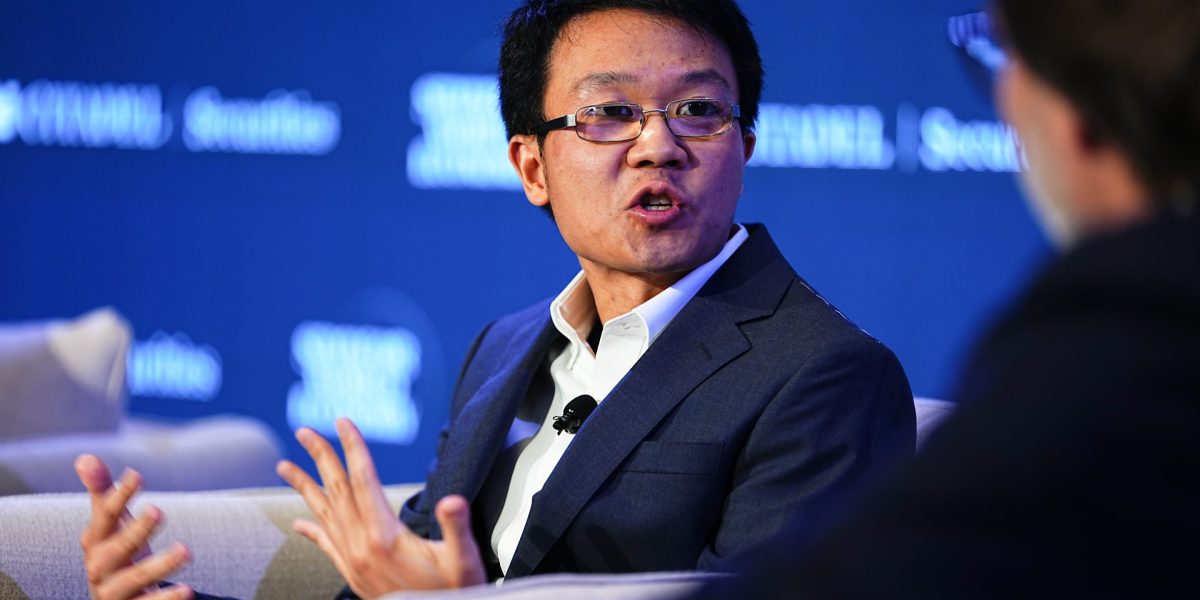
Cognition CEO Scott Wu said companies have pushed AI usage metrics too far by rewarding workers for spending more tokens rather than producing more work. His comments point to a wider problem for employers trying to control AI costs while proving that the tools improve revenue, efficiency or expenses.
Wu made the remarks on David Senra’s “Founders” podcast, where he said companies are right to measure AI use but should tie that spending to results. He said some firms have “gotten carried away” when they rank engineers by token consumption, arguing they should instead assess how much work employees complete.
Cognition builds Devin, an AI software engineering tool. IBM has described Devin as the first AI coding agent, and Fortune reported that Goldman Sachs uses the product as an AI software engineer while Mercedes-Benz and Rivian use it in research and development.
Wu said Cognition measures its own success by the added engineering capacity its software creates. He said expensive graphics processing units can be justified if engineers are able to ship three times more work, but only if companies measure the benefit correctly.
Leaderboards drew scrutiny
The discussion follows reports that some large technology companies used internal incentives to push employees toward heavier AI use. Fortune reported that Meta and Amazon created employee leaderboards and other tracking systems meant to encourage staff to find more AI use cases.
The Financial Times reported that those efforts sometimes backfired, with employees using AI tools for low-value tasks to improve their rankings. Fortune reported that the companies later ended the internal tracking after the activity failed to produce the returns they wanted.
Dave Treadwell, an Amazon senior vice president, reportedly told employees not to use AI merely for the sake of using it, according to Fortune’s account of the internal message.
The cost issue has become more visible as companies spend more on AI tools. Fortune reported that Uber used up its full 2026 AI budget in four months and later capped employee token spending at $1,500 a month, citing Bloomberg for the spending limit.
Fortune also reported that token prices have fallen 90% since 2023, even as overall company AI spending has risen. The article attributed that pattern to companies using more tokens as each token becomes cheaper.
Productivity gains remain uneven
Boston Consulting Group said in its 2026 Global AI at Work report that many employees who save time with AI do not receive clear direction on how to use those hours. The report surveyed nearly 12,000 frontline workers and found that 42% of regular AI users said the tools saved them eight hours per week.
BCG also found that 66% of workers said they had little or no guidance on what to do with the time saved, while half said they were not using that time for other strategic work. David Martin, global leader of BCG’s People & Organization practice, told Fortune that weak leadership communication is contributing to the AI productivity gap.
Martin said senior leaders are struggling to explain their AI strategy, which can increase employee anxiety and make goals harder to understand. He said companies should treat AI like other workplace tools by deciding who needs access, building a business case and holding teams accountable for targets.
This story draws on original reporting from Fortune.