
Karp’s AI lab warning draws pushback as Palantir courts enterprise deals
Fortune’s Jeremy Kahn says Palantir’s CEO overstated IP risks from OpenAI and Anthropic, though some AI partners may face real conflicts.
By Hana Yoshida · Markets Reporter
4 min read
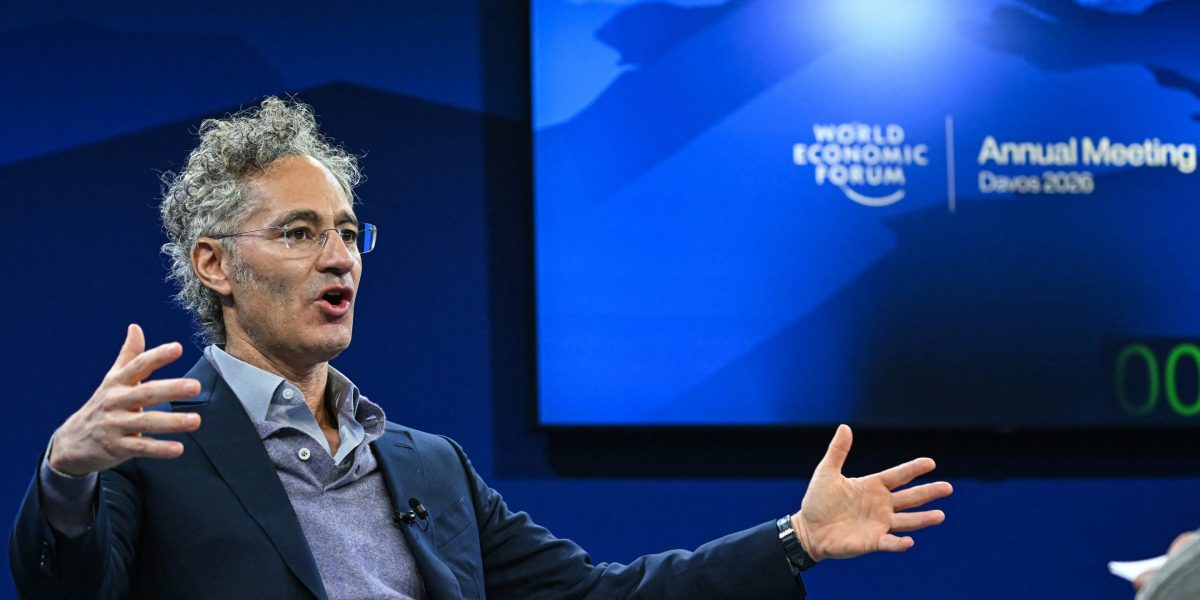
Palantir CEO Alex Karp used a CNBC appearance about a new Nvidia partnership to attack frontier AI labs over pricing and intellectual property risk. Fortune’s Jeremy Kahn wrote that Karp’s broad warning overstates the threat to most large companies, even as some close AI lab partners may have reason to worry.
Karp appeared on CNBC last Wednesday to discuss Palantir’s collaboration with Nvidia on “sovereign AI infrastructure” for the U.S. government and critical industries, according to Fortune. The effort uses Nvidia’s open source Nemotron models with Palantir’s Artificial Intelligence Platform, which connects models to data and provides security and governance functions, Fortune reported.
The Palantir chief then turned to OpenAI and Anthropic. CNBC quoted Karp as saying that “something has gone completely wrong” and that enterprises are wasting money on tokens while risking their intellectual property.
Kahn wrote in Fortune that companies are concerned about AI returns and token costs, especially when they use advanced models for agent-style tasks. But he said some companies are reporting gains, particularly in software development and customer service, citing PwC, while others have struggled because they have not picked central use cases or changed workflows broadly enough, citing Bloomberg.
Pricing and IP claims
Karp questioned why AI labs charge for tokens if their products create major value, CNBC reported. He suggested vendors could charge based on completed work or a share of the value delivered, a model Fortune said resembles Palantir’s own approach and one that some AI consulting firms are adopting.
Kahn argued in Fortune that token-based billing is closer to traditional utility or software pricing. He compared it to paying for electricity by usage or paying Microsoft a fixed amount for Word and Excel rather than a share of business results produced with those tools.
On intellectual property, Kahn wrote that major AI vendors say they do not access enterprise customer prompts, outputs or data directly, and do not train future models on those interactions unless customers opt in. Fortune reported that OpenAI and Anthropic discuss using anonymized or deidentified customer data for research on consumer services and direct APIs, while large companies often reach models through secure cloud services such as Microsoft Azure, Amazon Bedrock or Google Vertex.
For most big companies outside technology, Kahn wrote, the risk of Anthropic or OpenAI using their AI interactions to become direct competitors is remote. He cited Boeing and Archer-Daniels-Midland as examples of companies whose core businesses are unlikely targets for an AI lab.
Where the risk may be sharper
Fortune said the issue looks different for companies that act as “design partners” for AI labs and test early models or tools. Those relationships can give labs more insight into how partners use AI systems, Kahn wrote.
The Information reported last month that Anthropic had worked with Figma and Canva on a Claude for Design tool. According to The Information, Figma later withdrew from the launch and Anthropic product chief Mike Krieger stepped down from Figma’s board after Figma concluded the tool competed more directly with its own features than expected.
The Information also reported that Figma CEO Dylan Field told attendees at a private Sequoia Capital event that Anthropic had not been consistently candid with Figma about the tool’s scope. Fortune cited that case as one example in which partner access may have raised competition concerns.
Fortune also noted claims from investors with links to Palantir. Venture capitalist Jason Calacanis, described by Fortune as an early Palantir backer, has alleged that Anthropic used data from Cursor to help develop Claude Code. Chamath Palihapitiya, also described as an early Palantir investor, has pointed to Anthropic’s partnerships with Eli Lilly and other drugmakers before Anthropic discussed building its own drug development program.
Kahn wrote that the clearest industry example of AI labs using copyrighted material to build competing products is media, where AI models have trained on large collections of published work and now compete as sources of factual information. He said similar concerns apply to publishing, music and fine art.
This story draws on original reporting from Fortune.