
Chemours to pay at least $450M in PFAS settlement
The chemical maker will fund penalties, pollution controls and water programs tied to PFAS discharges in West Virginia, North Carolina and New Jersey.
By Hana Yoshida · Markets Reporter
3 min read
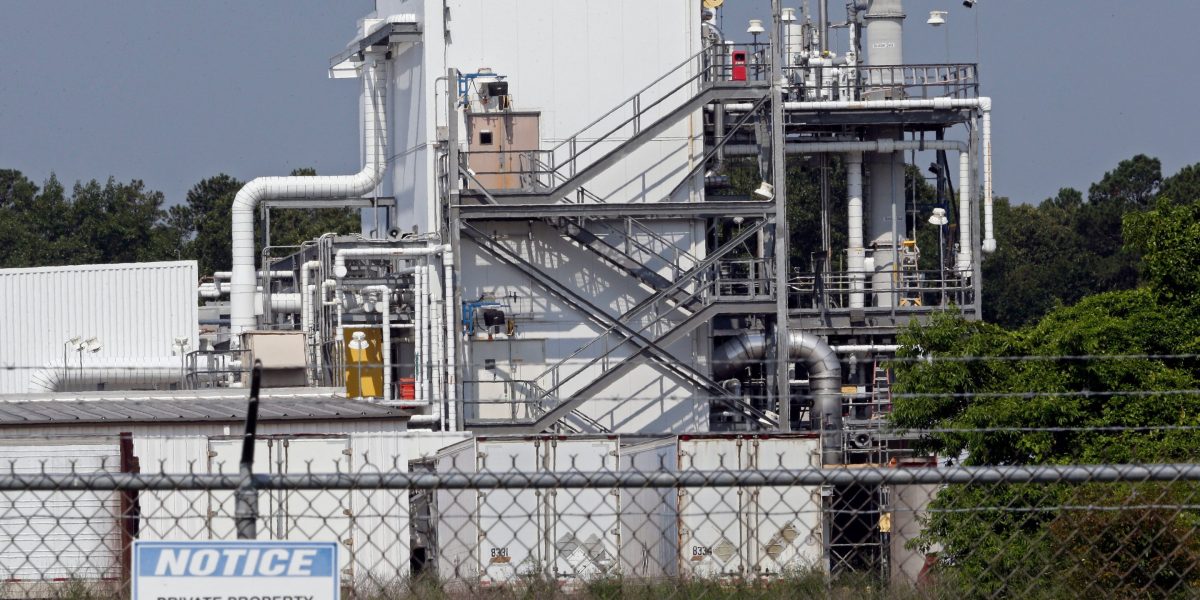
Chemours Co. has agreed to pay penalties and fund cleanup-related programs valued at at least $450 million to settle federal claims over PFAS pollution in three states, the Justice Department said Wednesday. The case matters because federal officials described it as the government’s first enforcement settlement against a manufacturer of the chemicals widely known as “forever chemicals.”
The agreement, filed in federal court in West Virginia, covers Chemours facilities in West Virginia, North Carolina and New Jersey. The Justice Department said the sites released PFAS into the Ohio River, Cape Fear River and Delaware River in violation of Clean Water Act permits, state laws and federal Toxic Substances Control Act requirements.
Chemours is a DuPont spinoff. Federal officials said the facilities had been owned for decades by DuPont before Chemours, and the settlement does not resolve any DuPont liability for earlier PFAS violations.
What Chemours agreed to pay for
Under the consent decree, Chemours will pay a $22.5 million civil penalty for alleged violations, according to the Justice Department. The company also agreed to spend $90 million over 15 years on work meant to reduce PFAS discharges in West Virginia, North Carolina and New Jersey.
The Justice Department said Chemours will install pollution controls for surface-water discharges and air emissions at its West Virginia site, with that work estimated at $60 million. The company also agreed to provide clean drinking water to communities near its West Virginia and New Jersey facilities, a program estimated at $280 million.
At the company’s North Carolina facility, Chemours will put in place measures to cut releases of PFAS and other toxic chemicals, the Justice Department said. The scope of that work depends on a pending independent assessment.
The consent decree calls for 14 specific treatment systems at the West Virginia plant to address PFAS in wastewater, stormwater and groundwater. Chemours also must test drinking water near its West Virginia and New Jersey sites and provide treated or alternative water where required, according to federal officials.
Federal officials defend the deal
Adam Gustafson, principal deputy assistant attorney general for the Justice Department’s Environment and Natural Resources Division, said the settlement allows Chemours to keep producing PFAS for commercial and military uses while addressing contamination and protecting nearby communities. Jeffrey Hall, the Environmental Protection Agency’s assistant administrator for enforcement and compliance assurance, said the agreement would reduce PFAS releases to water, land and air and require Chemours to comply with the law.
Chemours spokeswoman Jess Loizeaux said in a statement that the company has already started planning and carrying out operational improvements at its facilities. She said the settlement gives the company clearer compliance requirements and supports what she called responsible long-term manufacturing.
Federal officials said the alleged violations lasted more than a decade and exposed nearby residents to unlawful PFAS. The EPA says PFAS are used in many products and studies have linked exposure to some PFAS in the environment with harmful effects in people and animals.
North Carolina objects
North Carolina Attorney General Jeff Jackson, a Democrat, criticized the agreement, calling it “an insult to the people of eastern North Carolina.” Jackson said his state has been at the center of GenX contamination and argued that the federal settlement does too little to clean up water there.
GenX is a Chemours trade name for a synthetic chemical developed as an alternative to PFAS that has raised health and environmental concerns, according to officials cited by The Associated Press.
The settlement follows other PFAS litigation involving Chemours and related companies. The Associated Press reported that a federal judge last year ordered Chemours to stop releasing unlawful levels of cancer-causing chemicals into the Ohio River from its Washington Works plant in West Virginia. DuPont, Chemours and Corteva also agreed last year to pay New Jersey up to $2 billion to settle environmental claims tied to PFAS, according to the AP; the new federal settlement does not affect that state case.
This story draws on original reporting from Fortune.