
Tribes mark 150 years since Little Bighorn with rides and reenactments
Native communities gathered in Montana and North Dakota to commemorate the 1876 defeat of Custer’s forces and preserve oral histories.
By Hana Yoshida · Markets Reporter
3 min read
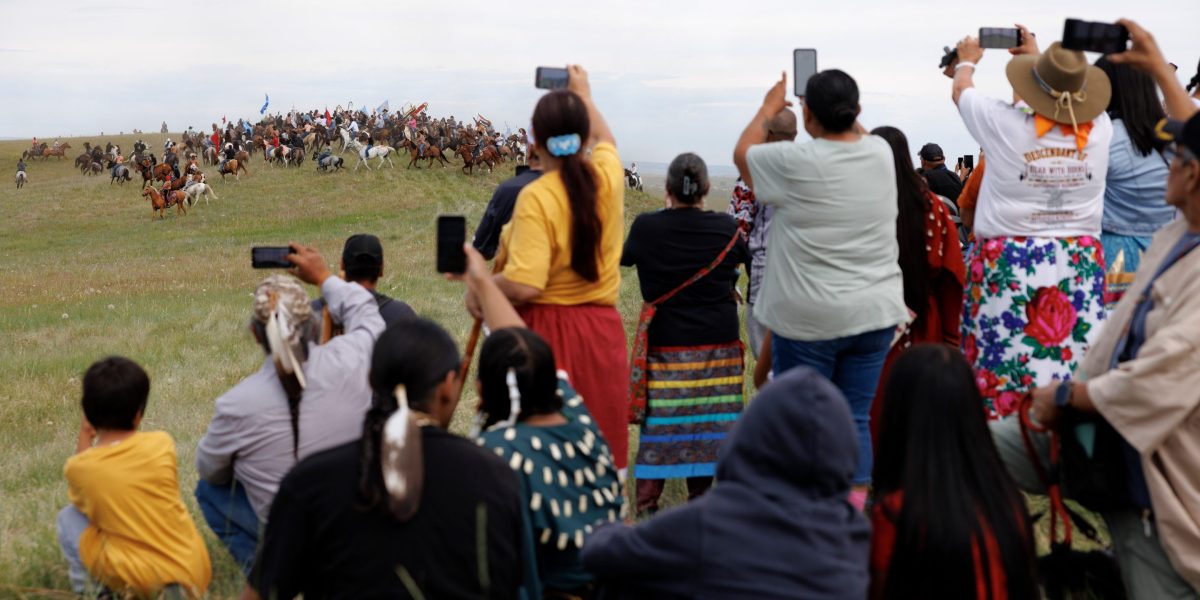
Native American communities marked the 150th anniversary of the Battle of Greasy Grass, more widely known as the Battle of Little Bighorn, with horse rides, reenactments and intertribal gatherings, The Associated Press reported. The commemorations centered on a Native victory over U.S. Army forces in 1876 and on the survival of tribal histories passed down through families.
The anniversary fell Thursday at the battlefield area near the Little Bighorn River in present-day Montana, according to AP. Allied Native warriors defeated Lt. Col. George Armstrong Custer and killed more than 200 of his troops during a fight tied to U.S. westward expansion and federal pressure to force Plains tribes onto reservations.
At Crow Agency, Montana, AP reported, hundreds of people from numerous tribes camped near the battlefield, where riders charged up hills, singers performed and flags from tribal nations flew. Riders traveled from the Cheyenne River Reservation in South Dakota and other places to join the events.
William Good Bird, a traditional singer from the Spirit Lake Dakota Nation in North Dakota, told AP that gathering there showed Native people had endured. He said he was celebrating his people’s victory, his life and his place on the earth.
Battle remembered through Native accounts
Historian Dakota Goodhouse told AP that Custer’s earlier expedition confirming gold in the Black Hills helped drive a military campaign against Great Plains tribes. Goodhouse said the battle is known to many Native people as Greasy Grass, a name tied to the slick grass along the river.
Goodhouse told AP there were other Native victories and larger or longer battles between March 1876 and June 1877, but Little Bighorn became nationally known because Custer died there. At the time, AP reported, Lakota leaders included Sitting Bull and warriors such as Crazy Horse, and Native fighters quickly overran Custer’s divided command in the hilly terrain.
AP reported that the defeat shocked Americans during the nation’s centennial year. The federal government then intensified efforts to end Native resistance, and Native communities faced years of upheaval and deprivation. Crazy Horse was killed in 1877, and hunger contributed to the surrender of others in 1881, according to AP.
Jon Eagle Sr., a former Standing Rock tribal historic preservation officer from the Hunkpapa band of the Oceti Sakowin, told AP that Sitting Bull’s surrender is remembered differently in tribal accounts than in many history books. Sitting Bull was killed in 1890 along with about a dozen other people when agency police tried to arrest him, AP reported.
Commemorations focus on language and descendants
Near the battlefield, reenactments have been held for more than 30 years, AP reported. The events involve hundreds of warriors and use choreography based on Northern Cheyenne oral history, with attention to horsemanship and language preservation.
Jim Real Bird, a Crow tribal member and reenactment coordinator, told AP that Native language remains central to cultural survival. He also described the U.S. semiquincentennial as a marker of injustice for Native people rather than a cause for celebration.
At the Standing Rock Sioux Reservation in North Dakota, AP reported, commemorations included horse races, songs, dances and oskáte, a traditional celebration of oral histories and victory songs. Eagle said the races honor the horses that carried ancestors to victory and give younger generations a way to understand that they descend from powerful Native nations.
Theresa Long Turkey of the Lower Brule Sioux Tribe in South Dakota told AP the gathering renews participants. Goodhouse said family stories about ancestors who were present in the Hunkpapa camp still carry force because they were handed down directly through generations.
This story draws on original reporting from Fortune.