
CEO and Dartmouth student daughter weigh AI’s productivity tradeoffs
Syndio CEO Maria Colacurcio says AI made her far more productive, while her daughter Sofia Frei warns students feel pressured to rely on it.
By Sofia Marchetti · World Affairs Correspondent
3 min read
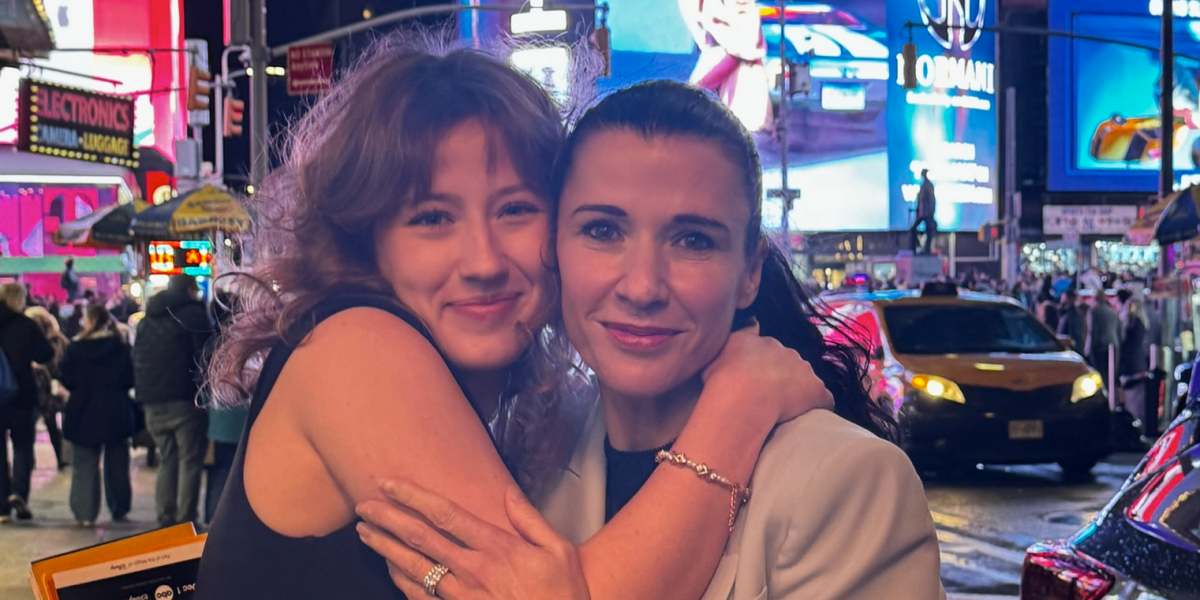
Syndio CEO Maria Colacurcio says a year of building AI agents has sharply increased her productivity while raising new worries about judgment and dependence. Her daughter, Dartmouth College student Sofia Frei, says the same technology is already reshaping campus life before students have agreed on what they are giving up.
Their separate essays, published by Fortune on June 28, present a family-level version of a broader debate in business and education: whether AI makes people better at hard work or nudges them to outsource too much of their thinking. Fortune identified Colacurcio as chief executive of Syndio, a decision intelligence company focused on pay, and Frei as having just completed her first year at Dartmouth.
CEO says AI changed how she runs her company
Colacurcio wrote that she spent the past year taking courses, building AI agents and weaving the tools into the way she runs Syndio, which she described as a 140-person company. She said the systems became able to produce drafts in her voice, close enough that she had trouble identifying where her own work ended and the machine’s output began.
In her account, the tools can produce drafts and models in an afternoon that previously required a month. She said that, on strong days, the change has made her roughly three times as effective as she was a year earlier.
Colacurcio said Syndio’s work centers on pay decisions, including raises, offers and promotions. She wrote that AI systems can preserve the reasoning behind those decisions, creating a record that allows companies to examine judgment, outcomes and potential bias after the fact.
She also said she urged her leadership team to learn the tools and build with them, arguing that people who adopt AI will gain a large advantage over those who wait. At the same time, Colacurcio cautioned that her use case takes place inside a company she controls, with a purpose she chose.
Daughter says students feel pressure to adopt
Frei wrote that she arrived at Dartmouth as AI was becoming a regular part of school and social life. According to her essay, Dartmouth is launching AI initiatives, professors are changing assignments and grading standards, and students are testing tools such as ChatGPT and Claude.
Frei said she understands her mother’s argument that AI can organize information, identify patterns and challenge assumptions. Her concern is that students may lose track of whose judgment they are relying on when they use the tools to write, research or learn faster.
For a class project on generational views of AI, Frei said she interviewed dozens of students. Almost all used AI in some form, she wrote, and few expected it to disappear, but many told her they would stop using it if others did as well.
Frei listed several concerns: environmental costs, the use of creative work to train systems, uncertainty over whether AI-assisted work still feels like her own, and fear of rapid change. She compared the moment to social media, saying young people have already lived through a technology that promised connection while producing isolation.
Research points to overreliance
Colacurcio cited a 2026 Wharton study by Steven Shaw and Gideon Nave that found participants accepted ChatGPT’s answer more than 80% of the time even when it was wrong. The researchers used the term “cognitive surrender” for the tendency to defer to AI rather than reason independently.
Colacurcio said she has felt that pull herself: accepting an adequate answer and skipping the checking she would otherwise do. Frei framed the generational divide differently, saying her mother’s peers are asking how AI can improve decisions while her peers are asking how to make sure people are still making them.
This story draws on original reporting from Fortune.