
Iran strikes Gulf states as U.S. attacks put talks at risk
Iran hit targets in Bahrain and Kuwait after U.S. airstrikes, escalating a fight over the Strait of Hormuz and threatening ceasefire negotiations.
By Maya Lindqvist · Senior Technology Correspondent
4 min read
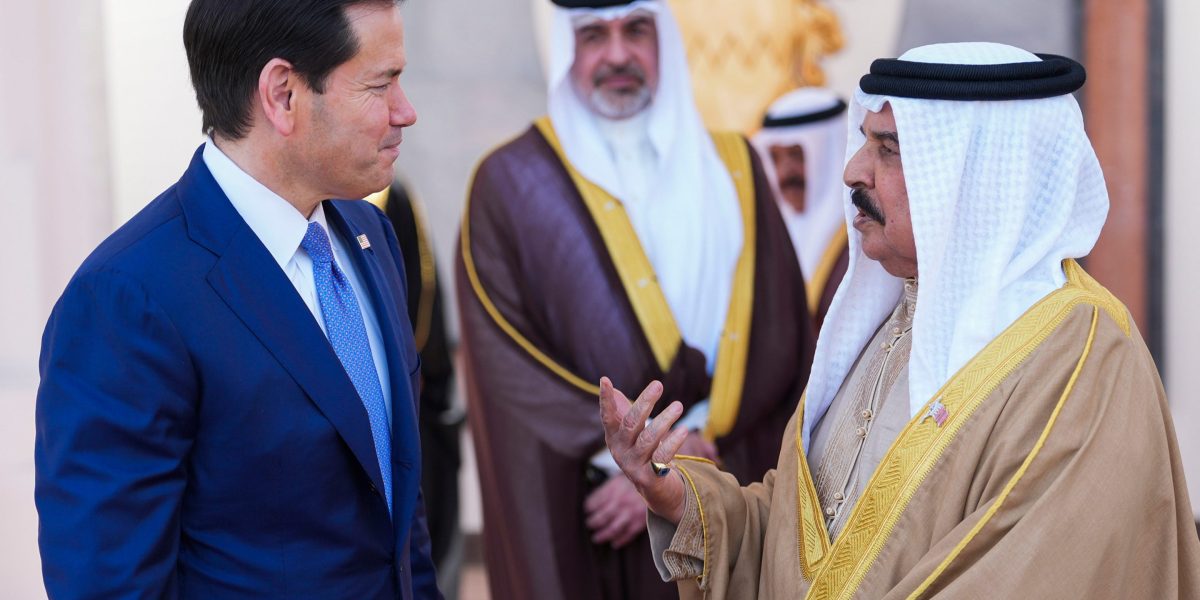
Iran launched drone and missile attacks on Bahrain and Kuwait on Sunday after U.S. strikes on Iranian military sites, the Associated Press reported. The attacks widened a regional conflict centered on the Strait of Hormuz and put fragile U.S.-Iran negotiations under new strain.
Iran warned that talks to end the war could stop completely if Washington continues its attacks, according to AP. The two countries are still working through an interim peace arrangement that includes shipping rules in the strait, U.S. sanctions and blockade issues, and the future of Iran’s stockpile of highly enriched uranium.
Gulf states report strikes
Kuwait’s military said its air defenses intercepted incoming Iranian drones and missiles Sunday morning, shortly after U.S. strikes, AP reported. Kuwait said it detected and intercepted two ballistic missiles and reported no injuries or damage.
Bahrain’s Interior Ministry said an Iranian strike damaged a residential building near the country’s international airport, with no deaths reported. The ministry released images showing heavy damage to the top floor of an eight-story building, according to AP.
Both Gulf states host major U.S. military facilities. Kuwait has a large U.S. Army base, while Bahrain is home to the U.S. Navy’s 5th Fleet; AP reported that the damaged building in Bahrain was not near the fleet’s headquarters in downtown Manama.
Bahrain’s Foreign Ministry condemned the strike as a dangerous escalation and described Iran’s actions as part of a repeated pattern of aggression, AP reported. Iran’s paramilitary Revolutionary Guard claimed responsibility for the attacks on both countries.
Hormuz dispute drives escalation
The fighting has intensified around efforts to reopen the Strait of Hormuz without Iran’s direct control, AP reported. A U.S. Navy-overseen multinational maritime body said Saturday it would expand a route near Oman for ships traveling both into and out of the Persian Gulf.
Iran says it alone should oversee the strait, a narrow waterway between Iran and Oman that has long been treated internationally as a passage for global shipping. AP reported that Iran has twice attacked vessels in recent days using a route on the Omani side that is backed by a United Nations agency.
Iranian Foreign Minister Abbas Araghchi repeated Tehran’s position during a visit to Iraq on Sunday. He said any outside effort to create separate arrangements would complicate efforts to reopen the strait, delay progress and raise tensions, according to AP.
U.S. cites tanker attack
U.S. Central Command said Sunday that American forces struck Iranian surveillance infrastructure, communications systems, air defense sites, drone storage sites and minelaying capabilities, AP reported. The U.S. said the action followed an attack early Saturday on the Panamanian-flagged tanker Kiku, which was carrying crude oil for Qatar’s state-run energy company.
President Donald Trump said on Truth Social that the U.S. had hit Iranian missile and drone storage locations and coastal radar sites because Iran had again violated the ceasefire agreement. He warned that the U.S. could be forced to “militarily complete the job” if Iran continued, AP reported.
The weekend exchange followed another round of attacks days earlier, when AP reported that an Iranian drone hit a merchant vessel off Oman and the U.S. military responded with strikes.
Lebanon remains a sticking point
Iran has said any ceasefire must also stop fighting in Lebanon, where Israel is fighting Hezbollah, AP reported. Hezbollah began firing at Israel after the U.S. and Israel launched the war against Iran in February, and Israel responded with an invasion of parts of southern Lebanon.
Israel and Lebanon’s government signed a framework agreement last week, but AP reported that it did not include Hezbollah or Iran. Hezbollah’s leader said Saturday the group would keep fighting until Israel withdraws from Lebanon, while Israel says it will not pull out until Hezbollah is disarmed.
The Israeli military said Hezbollah militants killed an Israeli soldier overnight in Deir Siryan in southern Lebanon. Lebanon’s Health Ministry said Israeli strikes killed at least one person Saturday, and Lebanon’s National News Agency reported two more Israeli strikes in the south on Sunday, with no immediate casualty report.
This story draws on original reporting from Fortune.