
California mail ballots rejected at record level in June primary
California rejected 148,241 mail ballots in June, with late postmarks driving the increase, state election data show.
By Sofia Marchetti · World Affairs Correspondent
3 min read
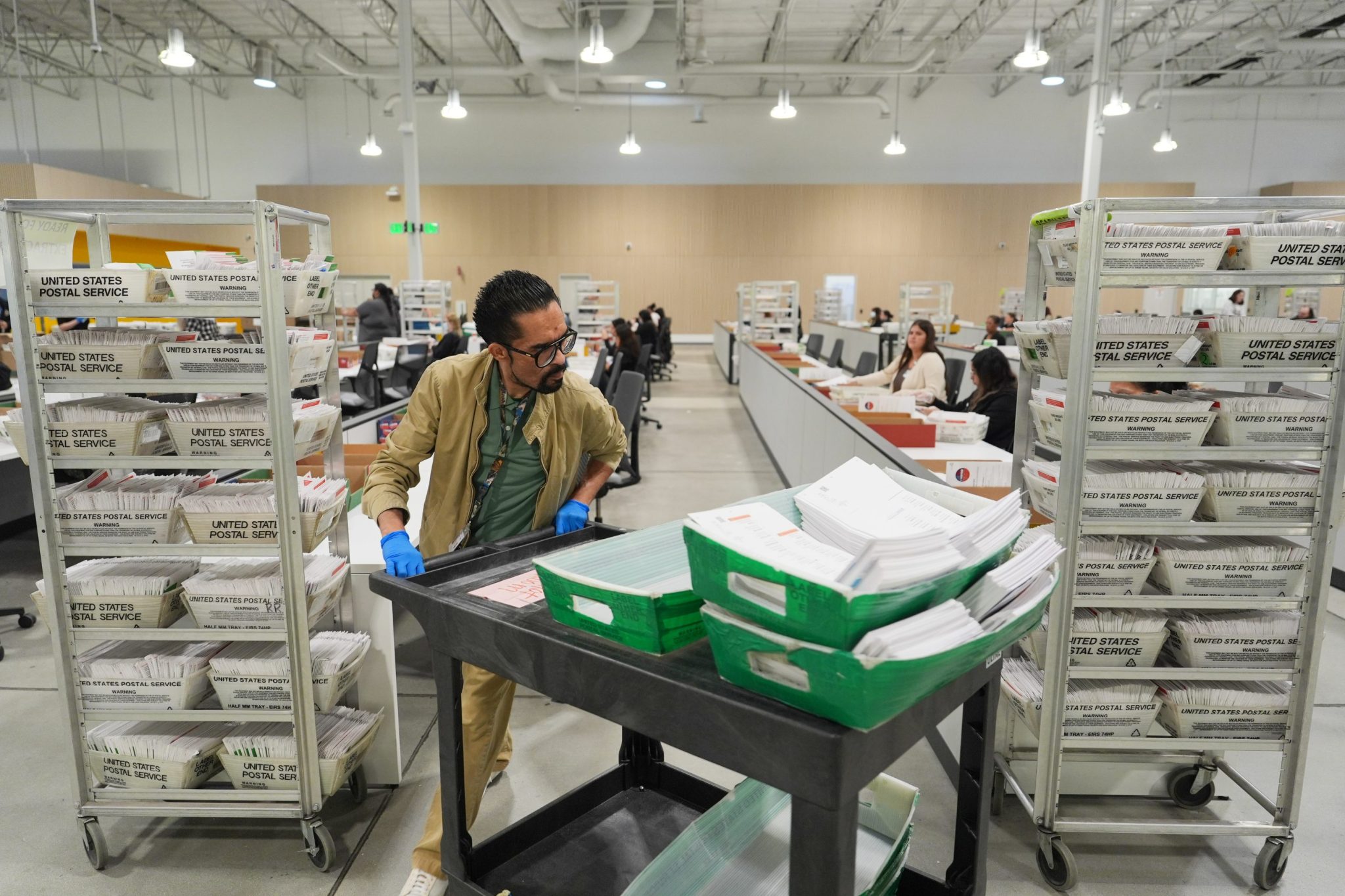
California mail ballots rejected in the June primary reached 148,241, a record high driven mainly by ballots disqualified for lateness, according to data compiled by the California secretary of state’s office. The figures matter because California has expanded mail voting rules to make casting a ballot easier, while its vote counts still often take weeks to finish.
The state reported that rejected mail ballots accounted for 1.73% of all mail ballots in the June election. That was up from 108,982 rejected mail ballots in the 2024 primary, a 1.56% rejection rate, and from 105,818 in the 2022 primary, according to state data.
Why were California mail ballots rejected?
Lateness was the largest reason mail ballots were thrown out. State data show 93,479 ballots were rejected for arriving too late to qualify, compared with about 76,000 in the 2024 primary and about 70,000 in the 2022 primary.
California allows a mail ballot to be counted if it reaches an election office up to seven days after Election Day, as long as the return envelope carries an Election Day postmark or earlier. Voting experts cited in the data review said many late rejections likely involved ballots postmarked after Election Day, which makes them ineligible.
Kim Alexander, president of the nonpartisan California Voter Foundation, said in an email that late rejections are primarily tied to postmarks that are too late, rather than ballots arriving after the state’s seven-day window. She also said the increase could be connected to Postal Service procedures and to voters waiting until the end of the campaign to decide in a crowded governor’s race.
Mindy Romero, director of the nonpartisan Center for Inclusive Democracy, said rejection rates have varied over time, but the rise in ballots rejected for lateness compared with recent elections raises a question about what caused the shift.
Postal Service changes drew warnings before the vote
California election officials warned voters earlier this year to mail ballots early because changes at the U.S. Postal Service could slow delivery. In January, a group of mostly Democratic U.S. senators also wrote to the Postal Service with concerns that mail-processing changes could affect postmark dates for ballots in an election year that will decide control of Congress.
Under updated Postal Service policy, a postmark may reflect the day mail is processed at a facility rather than the first day the agency received it. Recent consolidation of processing centers could place those facilities farther from some communities, according to the concerns raised by lawmakers.
The highest county rejection rate in California’s June primary was in Tulare County, at 3.52%, according to state data. Alpine County and Merced County followed, each at 3.36%.
Other reasons ballots were not counted
Nearly 44,000 mail ballots were rejected because the voter’s signature did not match the signature on file with county officials, according to the state data. More than 8,300 ballots lacked a signature on the return envelope.
In 743 cases, election officials rejected a mail ballot because the voter had already cast a ballot. Other rejected ballots involved missing ballots inside return envelopes or multiple ballots returned in one envelope. The data did not sort rejected ballots by party registration.
California’s slow vote counts have drawn criticism, including from President Donald Trump after the June primary. The U.S. Department of Justice also opened an investigation into Los Angeles County elections, according to the Associated Press.
There is no indication of widespread problems with mail voting. A 2025 Brookings Institution report found mail voting fraud cases were rare, at about four cases per 10 million mail ballots.
This story draws on original reporting from Fortune.