
Brown says rapid change is straining workers’ mental health
The researcher told Fortune that uncertainty around politics, markets and AI is taking a toll on employees and challenging leaders.
By Hana Yoshida · Markets Reporter
3 min read
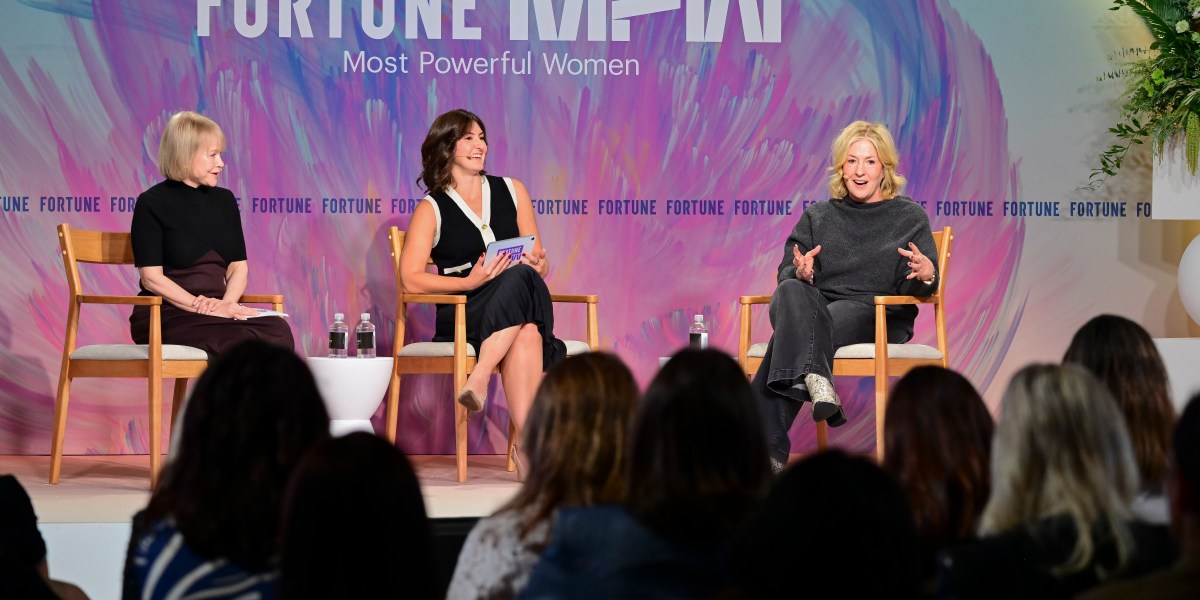
Brené Brown says workers are under pressure from a pace of change that many people are not equipped to absorb. The author, researcher and professor told Fortune that instability around politics, markets and artificial intelligence is worsening workplace stress and testing leaders.
Brown spoke at Fortune’s Most Powerful Women Summit in Washington, D.C., in October 2025. She said executives who manage people should recognize that many employees are struggling emotionally.
“If you’re leading people, you probably know people are not okay,” Brown said at the event, according to Fortune. She described people as “emotionally dysregulated, distrustful, and disconnected,” and pointed to public anger and disconnection as signs of a wider strain.
Work stress is showing up in attendance and morale
Fortune reported that mental health concerns are already affecting how often some employees feel able to work. In the U.K., the typical worker feels unable to work for almost 50 days a year because of mental health struggles, according to Fortune.
Younger workers also appear willing to trade money for better support. Fortune reported that half of American Gen Zers and millennials said they would accept lower pay if their manager helped improve their well-being at work.
Brown linked the pressure to several forces hitting workers at once. She cited geopolitical instability, shifting markets and advanced technologies such as AI as factors behind weaker well-being among American employees, according to Fortune.
Fortune also reported that a majority of U.S. workers said workplace tension had increased since the new administration took office. The publication said trade policies and tariffs have unsettled markets, while AI-driven automation has added anxiety about job security.
Brown said the current environment makes courage harder for employees and managers. “It is extraordinarily difficult to be brave right now for a lot of different reasons,” she said, according to Fortune, naming politics and fast-changing markets among them.
Brown says certainty is scarce
Brown said people seek stability when faced with ambiguity. “We are wired for certainty, and we’re wired to get to certainty as soon as possible,” she said, according to Fortune.
She added that prolonged uncertainty can create a physical response. Brown said leaders are being asked to operate in conditions that run against that wiring, and that many organizations are not prepared for the kind of leadership the moment requires.
The pressure comes as business leaders disagree over how quickly AI will reshape work. Fortune reported that Goodwill’s CEO is preparing for more Gen Z workers who may be displaced as white-collar roles are automated, while Jeff Bezos has predicted AI could help enable millions of people to live in space as robots take on more tasks.
Bill Gates has also warned that AI is advancing faster than expected. “It’s improving at a rate that surprises me,” Gates told CNN in 2025, according to Fortune. Gates said people in the field disagree on whether AI will be able to replace complex human work within a year or two, or closer to 10 years.
Brown said executives can still help employees handle disruption by building trust and clarity. She said leaders should talk directly with staff about how the business should work and how colleagues should work with one another.
She also argued that leaders need a stronger grasp of how connected systems affect each other. “If you don’t understand that the world that we’re operating in today is built of systems inextricably connected to other systems,” Brown said, according to Fortune, small changes can cause fallout elsewhere.
This story draws on original reporting from Fortune.