
Brexit decade brings UK leadership churn, aging strain and GDP loss
Keir Starmer’s planned exit caps 10 years of political turnover as studies point to demographic pressure and a Brexit-linked economic hit.
By Hana Yoshida · Markets Reporter
3 min read
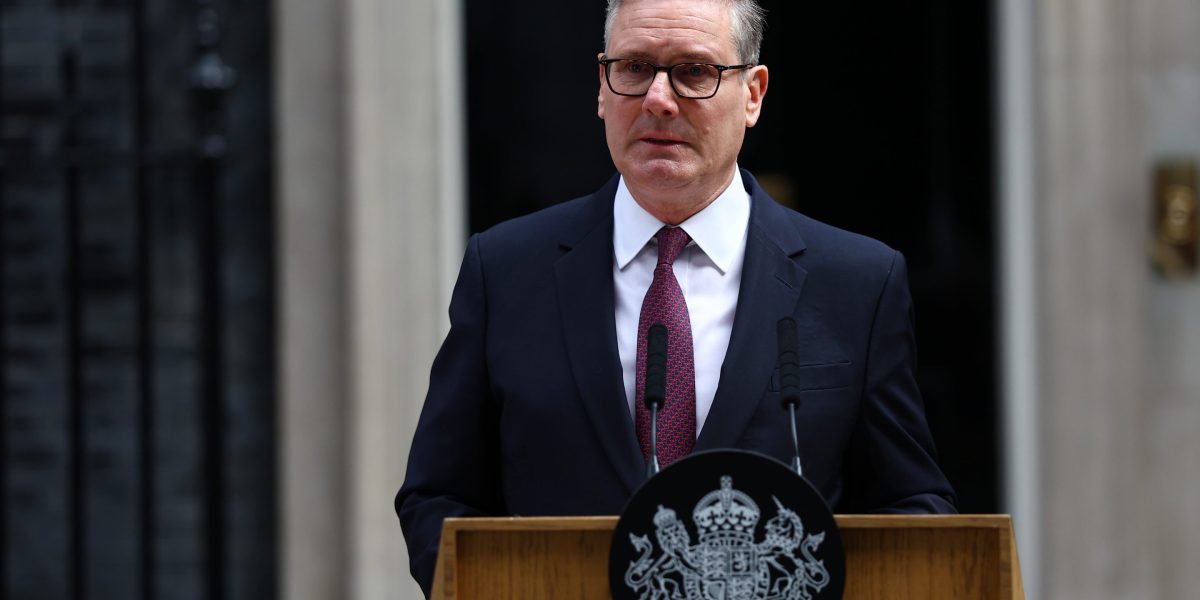
Keir Starmer’s resignation announcement has pushed Britain toward another change at the top, adding to a decade of political instability since the 2016 Brexit referendum. Fortune reported that the next Labour leader could become the seventh prime minister to hold office since voters chose to leave the European Union.
The anniversary falls 10 years after 52% of British voters backed leaving the EU on June 23, 2016, according to Fortune. The vote reshaped British politics and set off years of disputes over trade, governance and the country’s economic direction.
A revolving door at Downing Street
Starmer said Monday he would resign after less than two years as prime minister, Fortune reported. Nominations for his successor are expected to open next month, with a new Labour leader likely to be chosen soon after.
Fortune reported that Andy Burnham, the former mayor of Greater Manchester, is positioned as a possible successor. If Labour selects him, he would be the seventh person to serve as prime minister since the referendum.
David Cameron left office after losing the referendum he had called, according to Fortune. Theresa May then spent three years trying to secure parliamentary approval for a Brexit agreement, including a defeat in the House of Commons that the BBC has described as the largest loss for a sitting government in modern British history.
Boris Johnson won power on a promise to complete Brexit, Fortune reported, before resigning after the Partygate scandal. Liz Truss served 49 days, and Rishi Sunak followed before the Conservatives suffered what the BBC reported was their worst parliamentary election defeat, clearing the way for Starmer in 2024.
Population pressures are building
The Office for National Statistics has projected that deaths in the U.K. will exceed births from 2026 onward, Fortune reported. The ONS forecast marks a demographic shift that leaves future population growth dependent on migration.
Between 2024 and 2034, the ONS projects 6.4 million births and 6.85 million deaths, a natural decline of about 450,000 people, according to Fortune. The statistics agency also expects the population to be 1.7 million larger by 2034, nearly half the increase it projected a year earlier, mainly because of lower assumptions for migration and fertility.
James Robards, head of population projections at the ONS, said in comments reported by the Guardian that the agency’s latest figures show slower growth than previously expected because of lower migration and fertility assumptions. Fortune also reported that the number of people of pensionable age is expected to rise by 1.8 million over the next decade, while the number of children falls by 1.6 million.
Researchers put a cost on Brexit
A working paper published by the National Bureau of Economic Research found that Brexit has reduced U.K. GDP by 6% to 8% over the past decade, Fortune reported. The paper’s authors used Bank of England data to assess the effect of the vote and its aftermath.
The NBER paper found that investment was down 12% to 13%, employment fell 3% to 4%, and productivity declined 3% to 4%, according to Fortune. The researchers attributed about half of the GDP loss to years of elevated policy uncertainty and the rest to higher costs tied to new trade barriers.
Fortune reported that businesses ranked Brexit uncertainty among their top three concerns for nearly five years after the vote. That pressure eased somewhat in 2021 after a new trade agreement with the EU took effect, according to the NBER analysis cited by Fortune.
This story draws on original reporting from Fortune.