
Brexit at 10 leaves Britain counting economic and political costs
Experts cited by the Associated Press estimate Britain’s economy is 4% to 8% smaller than it would have been without Brexit.
By Sofia Marchetti · World Affairs Correspondent
4 min read
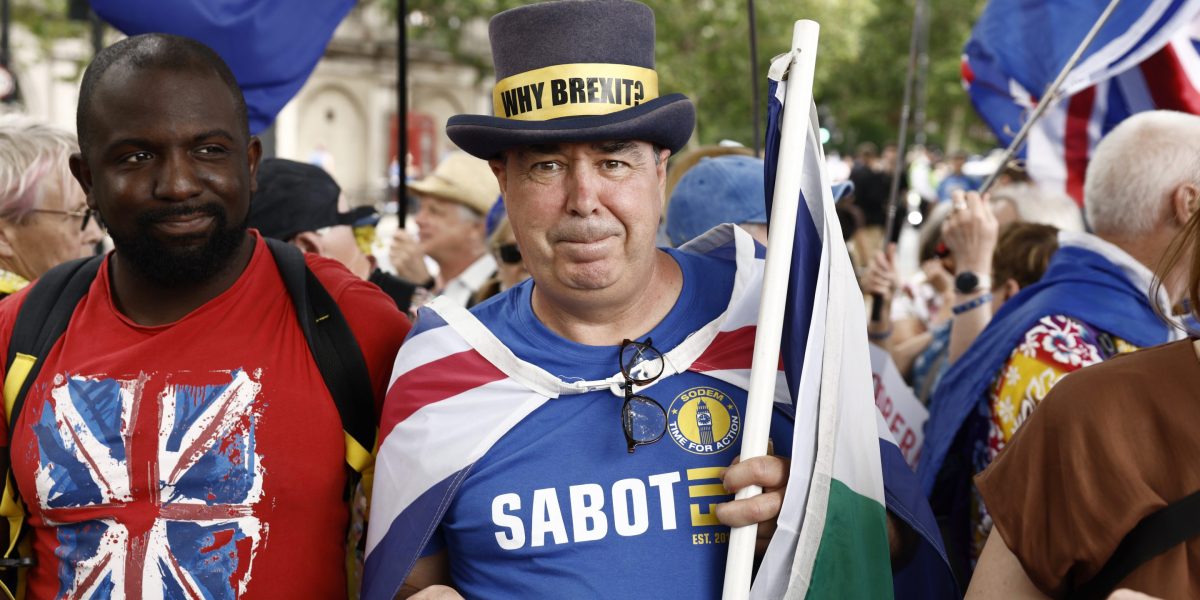
Britain is marking 10 years since its vote to leave the European Union with weaker growth, a changed migration system and renewed pressure over its place in Europe. The anniversary has sharpened debate over whether Brexit delivered the control its supporters promised or left the country poorer and more divided.
The United Kingdom voted on June 23, 2016, to leave the EU, with 52% backing departure, according to the Associated Press. More than 17 million people voted to leave, setting off a break with the bloc that took nearly five years to complete.
Brexit supporters argued that Britain could use independence from EU rules to focus on domestic priorities and set its own policies. Opponents warned before the vote that leaving would damage trade and reduce the country’s influence abroad, the AP reported.
Trade frictions weigh on growth
The economic record has become one of the central disputes. The AP reported that the 27-country EU remains Britain’s largest trading partner, while companies have complained about customs forms, border checks, certifications and visa limits that now complicate business with Europe.
British goods entering the EU do not face tariffs, but non-tariff barriers have added costs for exporters, according to the AP. Several trade agreements promoted by Brexit supporters, including a deal with the United States, have not been completed.
Experts cited by the AP estimate that Britain’s economy is 4% to 8% smaller than it would have been if voters had chosen to remain in the EU. Jonathan Portes, a professor at King’s College London, wrote for the UK in a Changing Europe think tank that Brexit has reduced the size of the economy through a “gradual and cumulative drag on trade, investment and productivity.”
The AP noted that other shocks, including the COVID-19 pandemic, the war in Ukraine and the U.S.-Israeli war on Iran, have also hit Britain’s economy. Brexit supporters say the policy should be judged over a longer period and that short-term disruption was part of regaining authority over areas such as migration.
Migration debate has shifted
Leaving the EU ended free movement between Britain and the bloc, one of the main goals of the Leave campaign. The AP reported that net migration from Europe has fallen, while arrivals from non-EU countries rose after visa changes introduced by the previous Conservative government to support sectors needing migrant workers, including elder care.
Overall net migration has since dropped sharply, from more than 900,000 in 2023 to 171,000 last year, according to figures cited by the AP. Even so, migration remains a major political issue, especially crossings by people arriving in small boats across the English Channel.
Small boat crossings peaked at 46,000 in 2022 and reached 41,000 last year, the AP reported. Anger has focused on asylum seekers housed at public expense, with some protests outside hotels turning unruly and, in some cases, attempts to set buildings on fire.
Public opinion has moved
Brexit has also reshaped party politics. The AP reported that the Conservatives lost power in 2024 after 14 years in government, much of it marked by arguments over Britain’s relationship with Europe, while Labour Prime Minister Keir Starmer has struggled and is expected to announce his resignation soon.
Reform U.K., led by Nigel Farage, has attracted millions of voters and has led in nearly every opinion poll for more than a year, according to the AP. Farage was one of the best-known campaigners for Brexit.
Ipsos polling cited by the AP found that 52% of people in Britain would support rejoining the EU, while 33% would oppose it. Ipsos also found that 48% think Brexit has gone worse than expected, compared with 9% who think it has gone better, and that 48% would support another referendum on EU membership while 27% would oppose one.
Labour has ruled out reversing Brexit or rejoining the EU single market, according to the AP, while seeking a reset in relations with Brussels. Andy Burnham, who won a special election Thursday and is described by the AP as Starmer’s most likely successor, said during the campaign that he was not proposing that Britain consider rejoining the EU and said the 2016 vote should be respected.
This story draws on original reporting from Fortune.