
Brazil gold fingerprinting targets illegal Amazon mining
Brazil’s federal police are using forensic gold tests to trace seized metal to protected Amazon areas and build illegal mining cases.
By Daniel Okafor · Business Editor
4 min read
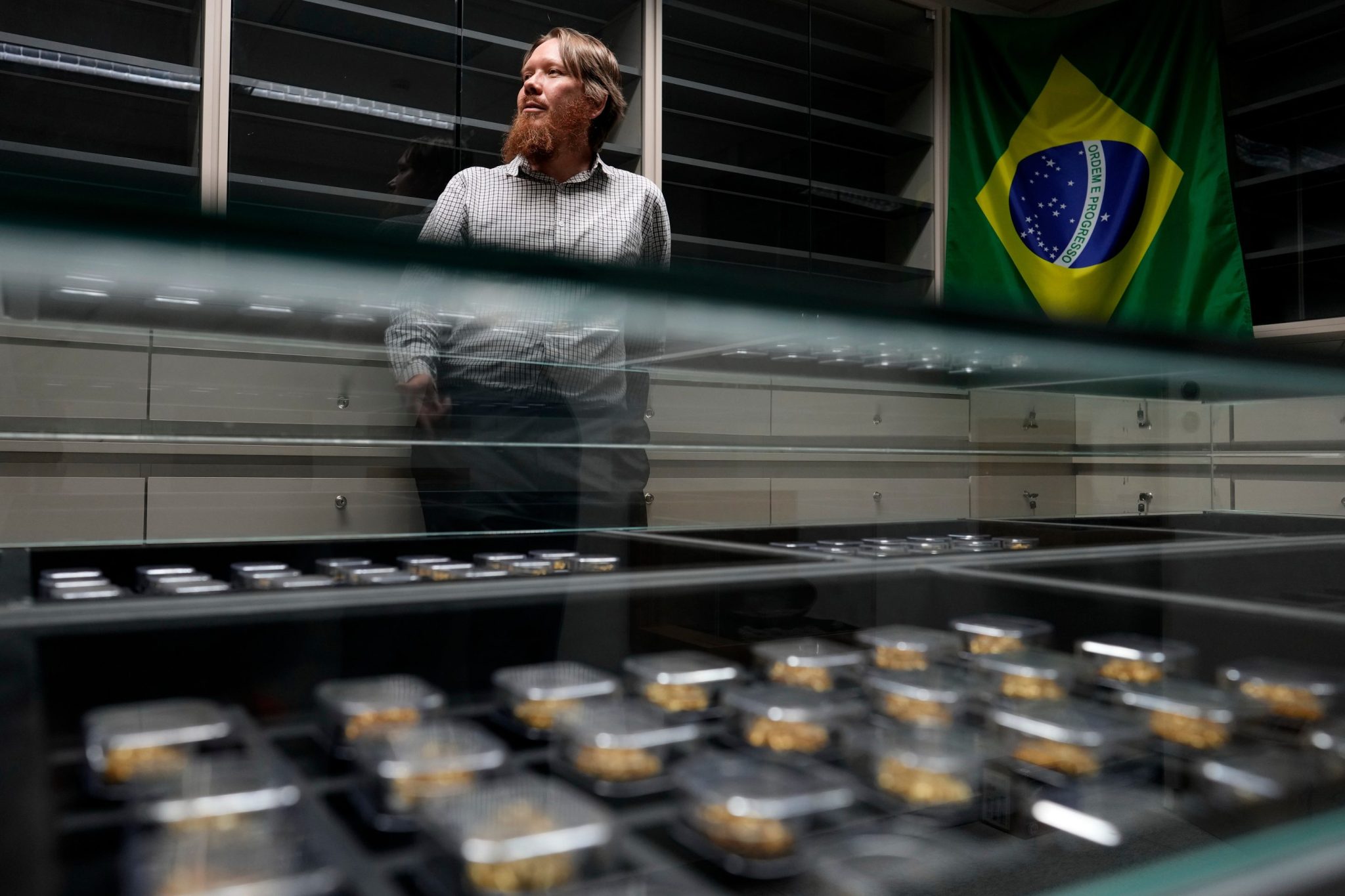
A Brazil gold fingerprinting program is helping federal police test seized gold and trace where it was mined, The Associated Press reported. The work targets illegal Amazon mining, which has damaged rainforest areas, threatened Indigenous communities and spread mercury contamination.
The tests are run at the National Institute of Criminalistics in Brasilia, where federal police have built a lab that collects gold samples from across Brazil. Investigators compare seized gold with stored samples to determine whether it came from a protected area, such as Indigenous land or a national forest.
How does gold fingerprinting work?
Gold carries chemical clues from the place where it formed. According to federal police forensic expert Gustavo Geiser, deposits absorb traces of elements such as silver and copper from nearby rock or riverbeds, creating a profile that can be compared with known samples.
Geiser told the AP that the method has been developed since 2019 with Brazilian universities. The lab uses techniques including X-ray fluorescence spectrometry, scanning electron microscopy and laser ablation mass spectrometry.
If a seized sample matches gold from a protected area, the finding can support a police investigation and possible charges. Geiser said the central question for investigators remains where the gold came from.
How illegal gold reaches legal markets
Authorities and environmental groups say criminal groups use fraud to move illegally mined gold into legal trade. Brazil’s Federal Court of Accounts said last year there was evidence that small-scale mining permits issued by the National Mining Agency were being used to disguise gold extracted from protected Amazon areas.
Greenpeace described the scheme in a May report based on public records, satellite images and aerial surveillance. The group said a permit holder may report production from an authorized mine even when imagery shows no mining there, while nearby Indigenous lands show active mining despite legal bans.
Amazon Mining Watch, which uses satellite imagery to track mining, estimates that about 496,000 hectares, or 1.2 million acres, of rainforest have been cleared for mining since 2023. The group said roughly 223,000 hectares, or 551,000 acres, were in the Brazilian Amazon.
A federal court in Pará, a northern state heavily affected by illegal mining, ordered institutions including the Central Bank and National Mining Agency this month to put effective controls and traceability in place for gold from mine to market. Federal prosecutors have also sued the National Mining Agency seeking tighter oversight of mining permits.
Prosecutor André Porreca, who is leading the case, told the AP the permits have become a way to launder gold taken by criminal groups from Indigenous territories and protected areas.
Mercury raises the stakes in the Amazon
Researchers say the Amazon is the world’s largest rainforest and helps regulate the global climate. A 2023 analysis by MapBiomas, a nonprofit land-use monitor, said more than 90% of mining in Brazil occurs in the Amazon region and nearly 40% of that mining is illegal in protected areas.
Illegal gold mining is a smaller source of deforestation than agriculture, but the mercury used to separate gold creates lasting harm. After extraction, mercury can enter rivers, contaminating water and fish that Indigenous communities rely on.
Fiocruz, a Brazilian science institute, said in a 2023 study that 21.3% of fish sold in Amazonian markets exceeded the World Health Organization’s mercury safety limits. The study found children ages 2 to 4 could consume mercury at levels up to 31 times the recommended maximum.
Brazil has signed the Minamata Convention on Mercury, a U.N. agreement that commits countries to eliminate mercury use in gold mining. The Ministry of Mines and Energy has published a draft plan to phase it out, with debate scheduled until Aug. 7; federal prosecutors have urged consultation with Indigenous groups, but the AP reported that has not yet happened.
Geiser said a mercury ban would also help forensic investigations because the lab can detect mercury traces in samples. He said the database is expanding, including samples from neighboring countries such as Venezuela, French Guiana and Suriname, as crime networks use cross-border routes to launder gold.
This story draws on original reporting from Fortune.