
Bitcoin slump persists as analysts point to rates, leverage and market cycles
Analysts cited four-year trading patterns, inflation-driven rate concerns and leverage as Bitcoin remains near half its $126,000 peak.
By Daniel Okafor · Business Editor
3 min read
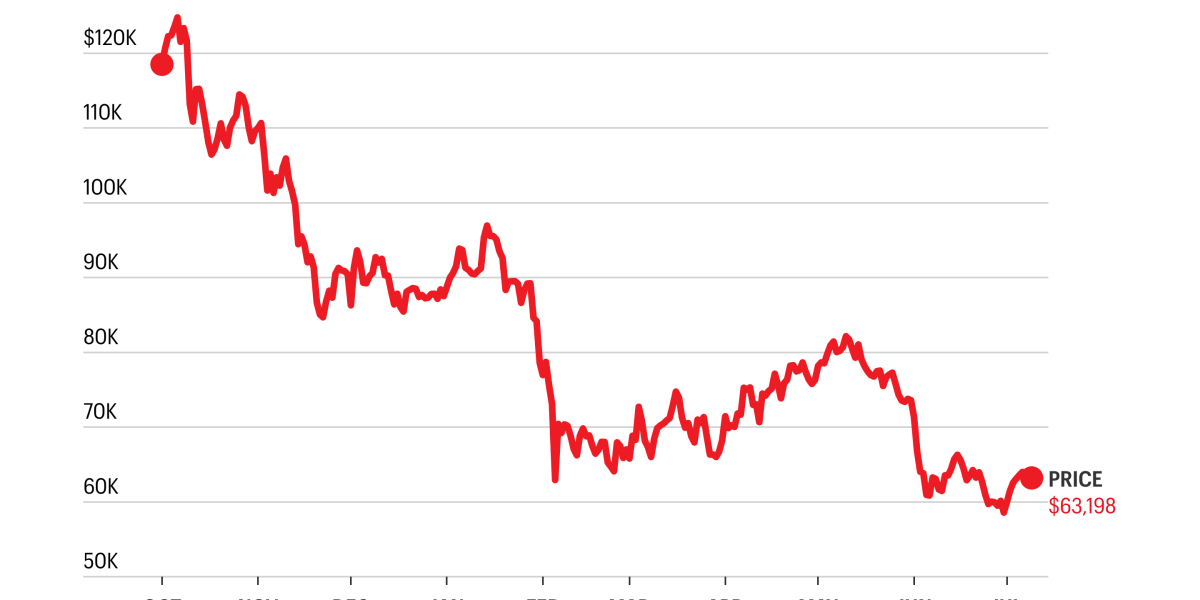
Bitcoin remains under pressure months after an October selloff, leaving the largest cryptocurrency near half of its $126,000 record high, according to Fortune. The weakness matters because it has arrived despite a friendlier political and institutional backdrop for digital assets.
Fortune reported that Bitcoin has been trading around $60,000 for the past month, with analysts describing the market as stuck in a bear phase. The publication said the last comparable extended downturn came in 2022, when failures across major crypto firms, including FTX, helped drag Bitcoin down 76% from its 2021 peak to about $16,000.
The setup in 2026 is different, according to Fortune. President Donald Trump has become a major public supporter of the crypto industry, while firms including BlackRock and JPMorgan Chase have been announcing blockchain-based products.
Cycles still shape investor behavior
Matt Hougan, chief investment officer at Bitwise, told Fortune that Bitcoin’s recurring four-year pattern remains a factor. Fortune reported that Bitcoin has historically posted three strong years followed by a down year, with previous declines in 2014 after Mt. Gox collapsed, in 2018 after the initial coin offering boom faded, and in 2022 after major crypto failures.
Hougan said investor expectations can reinforce that pattern. As 2025 drew to a close, he told Fortune, some long-term Bitcoin holders started reducing exposure, helping weigh on the market.
Inflation and rate worries hit demand
Zach Pandl, head of research at Grayscale, told Fortune that macroeconomic conditions are a central reason for Bitcoin’s weakness this time. Fortune cited U.S. Commerce Department data showing year-over-year inflation rose to 4.1% in June, more than twice the Federal Reserve’s 2% long-term target, amid oil-price increases tied to the U.S. conflict with Iran.
Fortune reported that Bank of America has forecast Fed Chair Kevin Warsh will raise interest rates later this year. Higher rates tend to hurt risk assets such as cryptocurrencies because investors can earn more from lower-risk debt, Pandl told Fortune.
Pandl pointed to recent history in comments to Fortune, saying Bitcoin rose when the Fed cut rates to zero during COVID and fell when the central bank later raised rates sharply.
Borrowed money is being squeezed out
Hougan and Julio Moreno, head of research at CryptoQuant, also cited leverage as a drag on the market, according to Fortune. During bull markets, investors often borrow against holdings to buy more, which can deepen losses when prices turn lower.
Fortune highlighted Strategy, the largest digital asset treasury company, as an example. The company bought heavily in 2024 and 2025, building a position equal to about 4% of Bitcoin’s total supply, and funded much of that buying through equity and debt sales, Fortune reported.
Other companies copied that treasury approach, according to Fortune, but the model came under strain as Bitcoin declined. Strategy’s shares have fallen 75% since October, and Fortune reported that the company recently sold part of its Bitcoin holdings, a move Hougan said likely added pressure to demand.
Analysts see more weakness before a rebound
Pandl told Fortune he expects Bitcoin could bottom near $58,000. He cited possible rate increases, Strategy’s effect on investor confidence and U.S. Senate progress on a major crypto bill as factors affecting near-term trading.
Adrian Fritz, chief investment strategist at 21Shares, gave Fortune a more upbeat year-end view. He expects Bitcoin to bottom during the summer and move toward $100,000 by the end of the year, citing eventual rate cuts and an end to the Iran war as possible catalysts.
This story draws on original reporting from Fortune.