
AWS chief says cutting junior roles for AI would hurt companies
Matt Garman said companies still need young workers for ideas and talent pipelines as AI reshapes software and office work.
By Daniel Okafor · Business Editor
3 min read
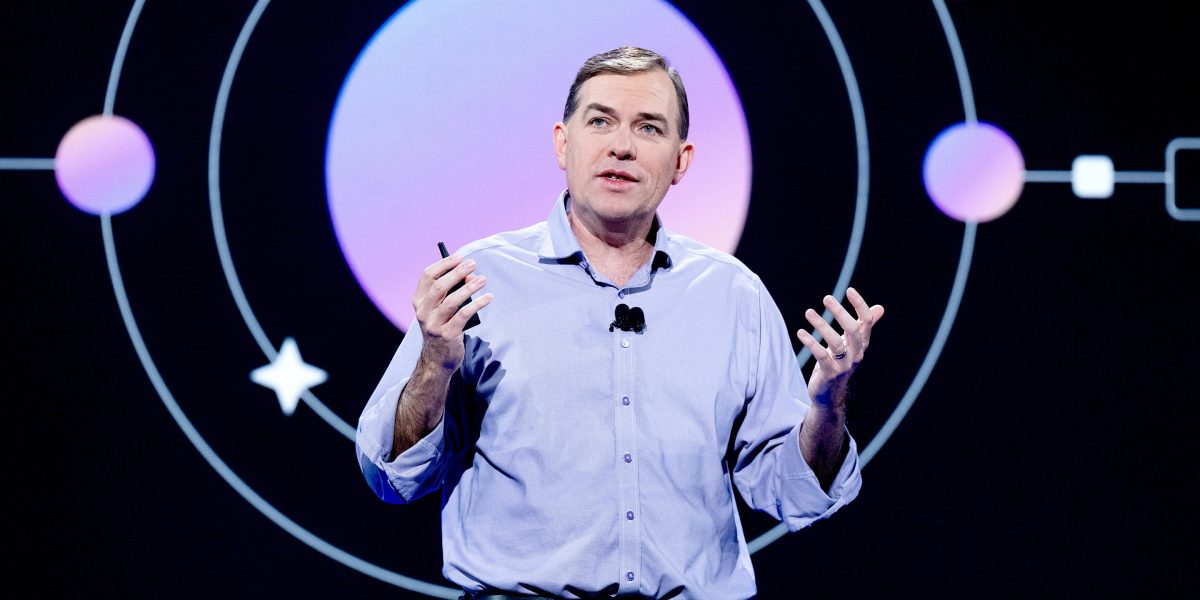
Amazon Web Services CEO Matt Garman is pushing back against the idea that companies should replace junior employees with artificial intelligence. In interviews cited by Fortune, Garman said cutting entry-level roles would weaken businesses by shrinking their future talent pools and removing workers who often bring new ideas.
Garman has previously called the idea of replacing junior software developers with AI “one of the dumbest things I’ve ever heard,” according to Fortune. In an interview with Wired, he said the same logic applies more broadly to junior engineers and other early-career staff.
His argument is partly financial. Garman said entry-level employees are generally among the lowest-paid workers, so eliminating those roles while keeping more expensive senior staff is a poor cost-saving strategy. He also said recent graduates often arrive with enthusiasm and strong knowledge of AI tools.
“At some point that whole thing explodes on itself,” Garman told Wired, according to Fortune. He said companies that stop developing junior employees lose the mentoring systems that produce future leaders and, in AWS’s experience, some strong ideas.
Garman added that companies need to consider long-term health rather than short-term cuts. He told Wired that a blanket decision to stop hiring junior workers is a “nonstarter” for businesses trying to last.
Amazon still plans campus hiring
On a Platformer podcast episode released this week, Garman said Amazon plans to hire 11,000 interns and recent graduates in 2026, Fortune reported. He also said Amazon has more software developers now than it did two years ago, even as AI coding tools have advanced.
Those comments contrast with warnings from other technology and business leaders. Fortune reported that Anthropic CEO Dario Amodei has warned about AI displacing entry-level workers, while Ford CEO Jim Farley has said the technology could wipe out half of white-collar jobs.
Research on AI’s labor effects remains mixed. Fortune cited a Stanford University study published last August that found AI was having a significant and disproportionate impact on entry-level workers in the U.S. labor market, especially 22- to 25-year-old software engineers and customer service workers.
Other data points are less clear. Fortune reported that recent college graduates face an unemployment rate of about 5.6%, compared with 4.2% overall, but that the gap appeared six months before ChatGPT’s November 2022 release and has not grown much since. Apollo economist Torsten Slok has attributed young workers’ struggles to broader economic pressures rather than AI, Fortune reported.
Automation remains a pressure inside Amazon
Garman’s defense of junior hiring comes after job cuts at Amazon. Fortune reported that Amazon cut thousands of roles last fall and in January, including an October announcement affecting 14,000 jobs, mostly in middle management. Earlier cuts hit smaller numbers of workers in units including AWS, Wondery and consumer devices.
Amazon said those layoffs were tied to efficiency after a period of growth and to cultural issues, Fortune reported. CEO Andy Jassy said at the time that the cuts were “not really financially driven” and “not even really AI-driven” then, describing them as a culture matter.
Still, Amazon has linked AI to a leaner corporate structure. Fortune reported that a June 2025 company memo said AI-driven efficiency gains would reduce Amazon’s total corporate workforce. A New York Times investigation cited by Fortune reported that Amazon had an internal goal to automate 75% of its work, equal to about 600,000 jobs the company would not need to hire for.
Garman told Platformer that AI will change many roles, but he rejected predictions of broad job elimination. “I do think that half of white-collar jobs may change, but wipe out and change are different,” he said, according to Fortune.
This story draws on original reporting from Fortune.