
Asian arms makers gain ground as military spending rises
Defense demand is lifting Asian manufacturers as the U.S. and Europe look for more capacity, Fortune commentator Chris Oberoi writes.
By Hana Yoshida · Markets Reporter
3 min read
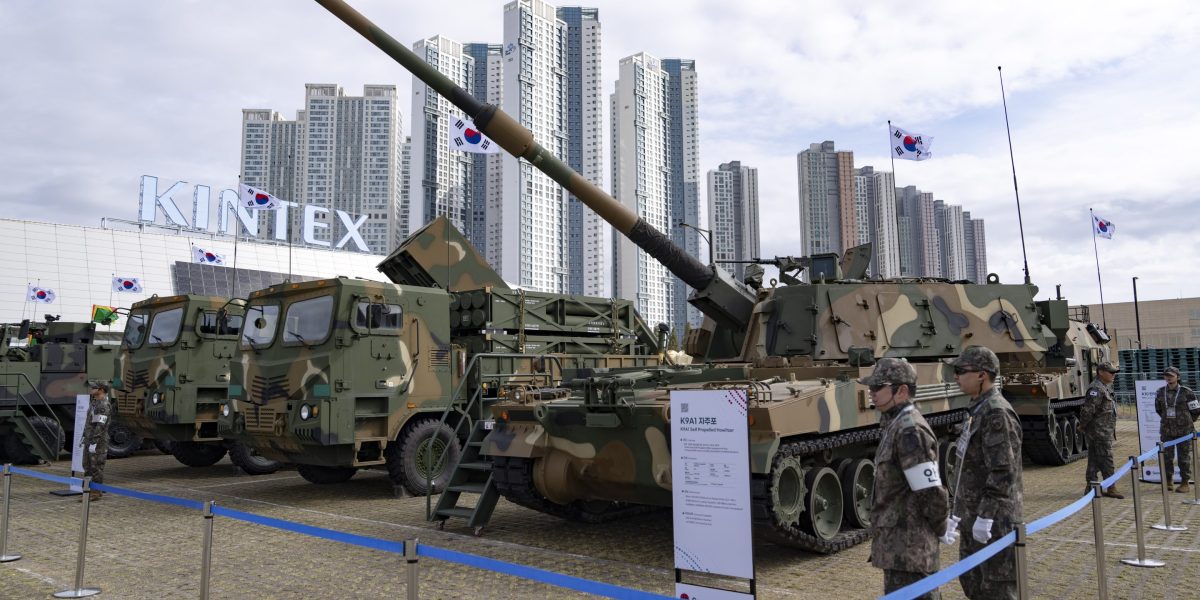
Asian defense companies are taking a larger role in global weapons production as military spending rises and Western inventories face strain, Fortune commentator Chris Oberoi wrote. The shift matters because the U.S. and Europe are increasingly looking to Asian manufacturers for capacity, cost control and faster delivery.
Oberoi wrote that arms flows long ran mainly from the U.S. and Western Europe to Asian buyers, but that pattern is changing as Asian countries become producers and exporters. He pointed to Japan’s easing of arms export limits as a sign of the region’s changing place in the defense market.
South Korea is also becoming more prominent, Oberoi wrote. He cited Hanwha Aerospace’s 2022 move into land systems exports to Europe and LIG Defense & Aerospace’s role as a supplier of MSAM-II missile interceptors.
Asian defense spending rose 6% in 2025 to about $573 billion, outpacing global defense spending growth, with worldwide spending at about $2.6 trillion, according to Oberoi. He wrote that further growth is likely as the region invests in new technologies, broadens into air and naval systems and builds partnerships with global allies.
U.S. strategy is pushing production outward
Oberoi wrote that the U.S. National Defense Strategy places the Indo-Pacific at the center of long-term planning and urges allies to build what U.S. policymakers call “sovereign resilience.” He described that as the ability to design, build and sustain key defense systems without relying entirely on outside suppliers.
Several Asia-Pacific economies are moving toward defense spending of at least 3% of GDP, Oberoi wrote, while investing in larger production capacity, advanced systems and exports. He added that the U.S. will need close cooperation with Asian partners because it lacks enough manufacturing scale to meet its own requirements and those of allies.
In early 2026, the U.S. Department of Defense announced plans to expand Asian production of solid rocket motors used in guided weapons, drones and ammunition, according to Oberoi. He wrote that the move reflects a broader turn toward spreading defense manufacturing across more countries.
Europe’s shortages add demand
Oberoi wrote that Asia is becoming an important supplier not only to the U.S. but also to Europe, the Middle East and Southeast Asia. He said the region’s appeal rests on its ability to produce at scale and at lower cost while Western inventories remain under pressure.
European defense stockpiles are still far below historic levels after years of low investment and large equipment transfers to Ukraine, Oberoi wrote. Even with higher defense budgets, he said Europe faces production delays and factory bottlenecks that limit quick replenishment.
China remains a major defense producer, but Oberoi wrote that its industry follows different customer, export and interoperability patterns from NATO-standard supply chains. He said much of the current spending acceleration is tied instead to Europe’s response to the Ukraine war and continued U.S. investment.
Technology and shipbuilding shape the next phase
Asian defense investment is moving beyond conventional hardware, Oberoi wrote, with air defense systems, drones, autonomous ground vehicles and autonomous naval systems among the faster-growing areas. He said higher software content also creates more demand for support, upgrades and maintenance.
Artificial intelligence is being applied to decision-support tools that combine sensor data, assist logistics and support operations in complex settings, according to Oberoi. He wrote that this could add a recurring revenue stream for companies that previously focused more heavily on artillery and other traditional equipment.
Oberoi also identified naval shipbuilding and maintenance across Northeast Asia and Australia as a capital-heavy area this year. Because warship programs require large upfront spending, long construction schedules and decades of upkeep, he wrote, they can resemble infrastructure projects lasting 10 to 20 years.
This story draws on original reporting from Fortune.