
AI startups pitch world models as next step beyond chatbots
Researchers and investors are turning to AI systems designed to understand space, time and physical cause-and-effect, the Associated Press reported.
By Daniel Okafor · Business Editor
3 min read
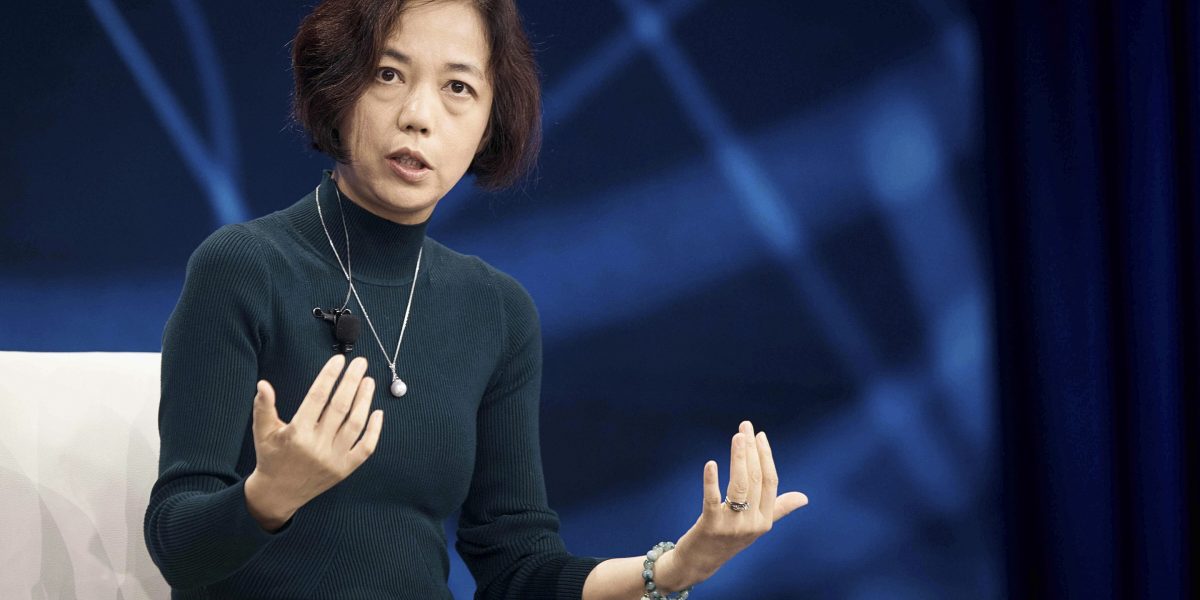
A growing group of AI researchers and startups is shifting attention from text-based chatbots to “world models,” systems meant to understand physical environments and predict what happens inside them. The push matters because backers say today’s language models have limits for robots, games and other tools that must reason about space, motion and cause-and-effect, the Associated Press reported.
Louis Castricato, a computer scientist who had been studying large language models for eight years, told the AP he concluded that the field had moved past much of its basic research phase and into applications. He left doctoral work at Brown University and founded Overworld, a Rhode Island startup focused on AI that can work with simulated environments rather than only text.
Large language models still draw heavy investment, with AP reporting that investors have committed trillions of dollars to companies including OpenAI and Anthropic. But some entrepreneurs and scientists now describe world models as a next research frontier: AI systems, and in some cases robots, trained to respond to the world around them.
Fei-Fei Li, the computer scientist often called the “Godmother of AI” and founder of San Francisco-based World Labs, has become one of the best-known advocates for the approach. In an essay published this month, Li described world models as a widely used and often loosely defined term in AI, according to AP.
Li wrote that language models learn patterns in text, while world models try to learn patterns across space and time, such as lighting, perspective, object behavior and physical forces. Her point, as reported by AP, is that AI systems need more than written knowledge if they are to act reliably in physical or simulated settings.
Yann LeCun, who left his role as Meta’s chief AI scientist last year to start Paris-based Advanced Machine Intelligence Labs, is another prominent supporter of the idea. On the “Unsupervised Learning” podcast, LeCun said world model has quickly become a popular label, and he described it as a system that helps an AI agent anticipate the results of its actions, AP reported.
Robotics researchers see a clear use case. Martial Hebert, dean of computer science at Carnegie Mellon University, told AP that a chatbot cannot pick up a coffee mug because that task involves geometry, hand movement and physical contact with an object.
Hebert, who has worked in robotics for more than four decades, said world models could help develop what the tech industry calls physical or embodied AI. He told AP that some AI advances behind chatbots could also help create robot systems with enough environmental awareness to serve as a kind of control center.
Overworld is applying the concept first to video games, according to AP. Castricato said the company is building virtual scenes that change as characters move through them and interact with objects, with the startup prioritizing interaction.
Investors are also showing interest. Steve Jang, co-founder and managing partner at Kindred Ventures, told AP his firm is backing Overworld and other companies focused on world models, including Causal Labs, which is working on weather prediction models, and Extropic, which is developing specialized chips suited to the field.
Jang said he expects the future of AI to include many model types with different designs rather than one dominant architecture, according to AP.
Li has proposed sorting world models into three broad groups. As AP reported, she described renderers as systems that emphasize realistic visuals, simulators as virtual training spaces that aim to match real-world physics, and planners as systems that predict what an AI agent or robot should do in open-ended conditions.
Li wrote that planning ability is central to useful robots, and that companies across the field are competing to reach that capability first, according to AP.
This story draws on original reporting from Fortune.