
NASA watchdog report details delays behind Artemis cancellations
A NASA inspector general memo says canceled Artemis projects had doubled in value and were still years from delivery.
By James Whitfield · Staff Writer
3 min read
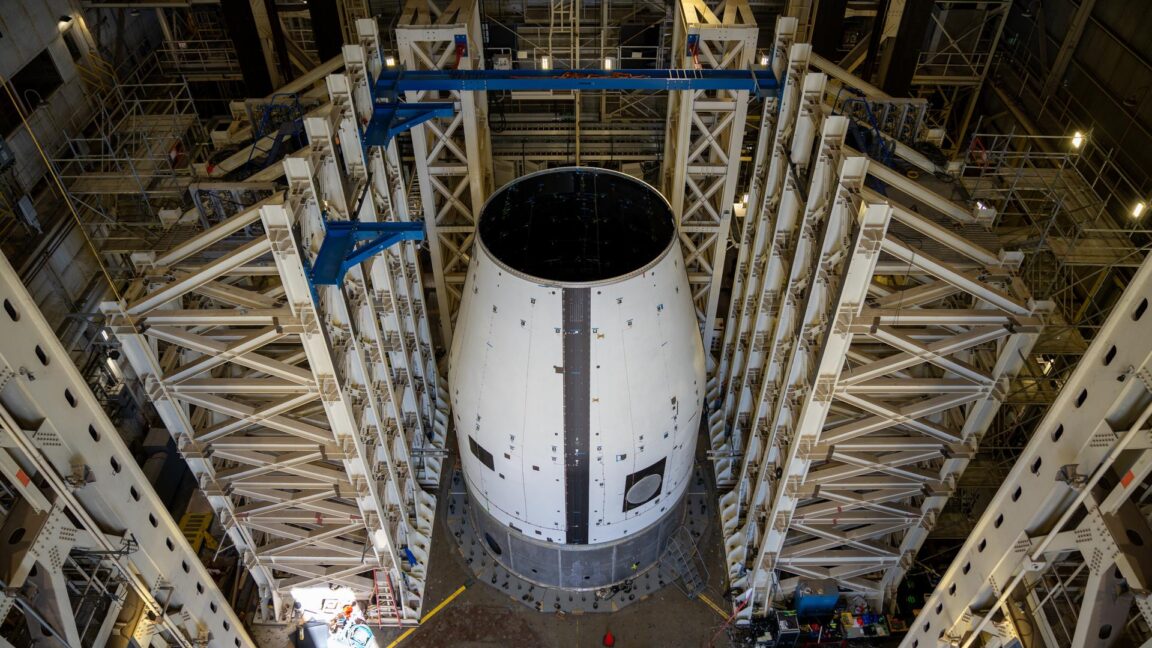
NASA’s decision to drop several Artemis hardware projects is backed by a new inspector general review showing steep cost growth and long delays. The findings matter because the canceled work was tied to NASA’s previous plan to build a lunar-orbiting Gateway before putting more emphasis on a Moon surface base.
NASA Administrator Jared Isaacman announced the shift in March during an event called Ignition, saying the agency would move away from a lunar space station and toward a base on the Moon. NASA had also said it would end work on a new upper stage for the Space Launch System rocket.
Some contractors connected to the programs argued after the decisions that NASA was abandoning hardware it needed for Artemis, Ars Technica reported. Isaacman said the canceled programs were not required for returning astronauts to the lunar surface and had run over budget and behind schedule.
Four canceled efforts reviewed
NASA’s Office of the Inspector General reviewed four Artemis elements that were cut as part of the agency’s shift in direction:
- Exploration Upper Stage, an upgrade for the Space Launch System rocket
- Universal Stage Adapter, which connects Orion to the Exploration Upper Stage
- Mobile Launcher 2, a larger launch tower for the upgraded Space Launch System
- Habitation and Logistics Outpost, a module for the Lunar Gateway
The inspector general said the projects had seen major overruns and repeated schedule slips over roughly a decade. According to the memo, their combined contract values rose from nearly $2.8 billion to $5.9 billion, while contracted delivery dates moved as much as seven years later.
The watchdog also said its projections showed the work would have taken even more time and money if NASA had carried it through to completion. The memo did not say the programs were close to being finished.
Lori Glaze, who leads NASA’s Human Spaceflight Directorate, said in a written response that the findings supported the agency’s March decisions. Glaze said the problems cited by the inspector general, including cost increases, delays, contractor performance issues and changing mission needs, reinforced NASA’s move to streamline Artemis and focus on a sustained lunar presence.
Adapter projected near $500 million
The Universal Stage Adapter showed how far some contracts had moved from their starting points, according to the inspector general. NASA awarded Dynetics a contract in June 2017 to design, test and build the adapter, a mostly composite structure meant to stand 33 feet tall and weigh 9,650 pounds.
The original Dynetics contract was valued at $131 million, and NASA later added $9 million for a payload separation system. By the time NASA canceled the work earlier this year, the contract value had reached $353 million and delivery had slipped to September 2028.
The inspector general projected that the adapter would likely cost $497 million and would not be delivered until May 2030. That would have put completion about 13 years after the contract award.
The review also raised doubts about the schedule for the Lunar Gateway. Based on delays to the Habitation and Logistics Outpost, the inspector general said the Gateway was unlikely to be operational before at least 2032.
Ars Technica reported that NASA recently directed Northrop Grumman to stop work on that habitation module. The agency’s broader Artemis changes leave NASA concentrating its lunar plans on the surface rather than on a station in lunar orbit.
This story draws on original reporting from Ars Technica.