
Apple suit puts OpenAI’s Jony Ive hardware push under pressure
A trade-secret case has complicated OpenAI’s effort with Jony Ive to build AI devices before its first product reaches consumers.
By Daniel Okafor · Business Editor
3 min read
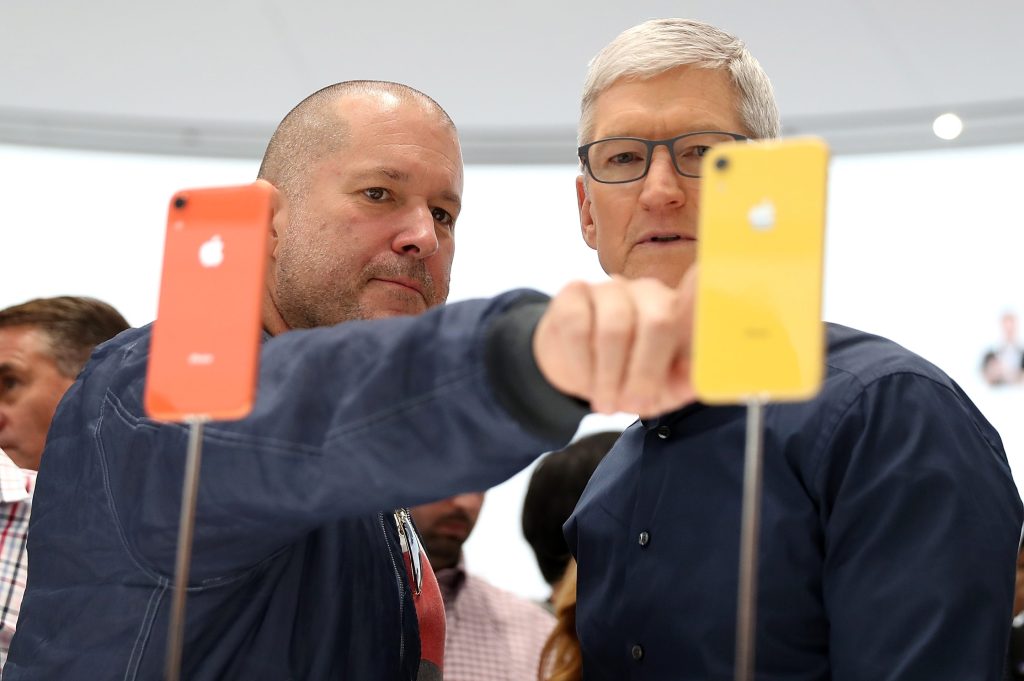
Apple’s trade-secret lawsuit against OpenAI has added legal risk to one of the AI company’s most ambitious projects before its first device has shipped. Fortune reported that OpenAI is counting on a Jony Ive-led hardware effort to bring its AI directly to consumers and make its products harder to displace.
OpenAI acquired io Products, the hardware startup founded by Ive, for $6.5 billion after announcing the deal in May 2025, according to Fortune. Ive, known for his work on the iPhone at Apple, is leading the design push through his firm LoveFrom, though Fortune reported he is not formally an OpenAI employee.
The first device remains largely under wraps. Bloomberg, citing unnamed sources, reported that it is expected to resemble a screenless home speaker, act as an AI companion and include moving mechanical components meant to suggest human behavior. Fortune reported that a person familiar with OpenAI’s plans said the initial design has been finalized and that work continues on a wider set of AI devices.
The effort has become a major strategic bet for OpenAI, which faces competition from other companies building large language models. Anshel Sag, a principal analyst at Moor Insights & Strategy, told Fortune that hardware would give OpenAI more control over how people use its AI, while adding that the company still must create something consumers want to buy.
OpenAI’s hardware group now has more than 400 employees and works from the former io office in San Francisco’s Jackson Square, Fortune reported. OpenAI’s main offices are across town in Mission Bay. LoveFrom is setting the design direction, creating a structure that combines OpenAI employees with Ive’s independent design firm.
Apple’s complaint accuses two former Apple employees now at OpenAI of improperly taking confidential information, including supply-chain vendor and contractor details, unreleased hardware information and technical specifications, according to Fortune. The lawsuit names OpenAI chief hardware officer Tang Tan, former Apple employee Chang Liu, io and OpenAI. Ive is not named in the complaint.
OpenAI denied wrongdoing in a statement reported by Fortune, saying it was unaware of evidence supporting Apple’s claims and had no interest in other companies’ trade secrets. “We believe in fair competition and allowing people the freedom to work wherever they choose,” the company said.
Saurabh Vishnubhakat, an intellectual property law professor at Cardozo School of Law, told Fortune the case is more likely to slow or reshape the hardware project than end it. He said OpenAI could be forced to isolate files or employees, redo engineering work, drop a manufacturing process or change suppliers.
The consumer challenge is also steep. Fortune noted that other AI-first hardware products, including the Rabbit r1 and Humane AI Pin, struggled after launch. Humane’s clip-on assistant, built by two former Apple employees, raised $241 million in venture funding, according to Fortune.
Privacy could be another hurdle if OpenAI’s device records or senses activity in the home. Elena Wagenmans, co-founder and CEO of AI-necklace maker TAYA, told Fortune that people feel uneasy when they have to wonder whether an AI device is recording them.
Altman described early versions of the device in a November 2025 on-stage interview with Ive as “simple” and less distracting than a smartphone, Fortune reported. He said users would come to trust it over time and that it would have broad contextual awareness of their lives.
This story draws on original reporting from Fortune.