
AIPAC spending puts Michigan Democratic Senate primary under scrutiny
Haley Stevens has drawn nearly $30 million in backing from AIPAC-linked groups as Abdul El-Sayed makes outside money central to the race.
By Daniel Okafor · Business Editor
4 min read
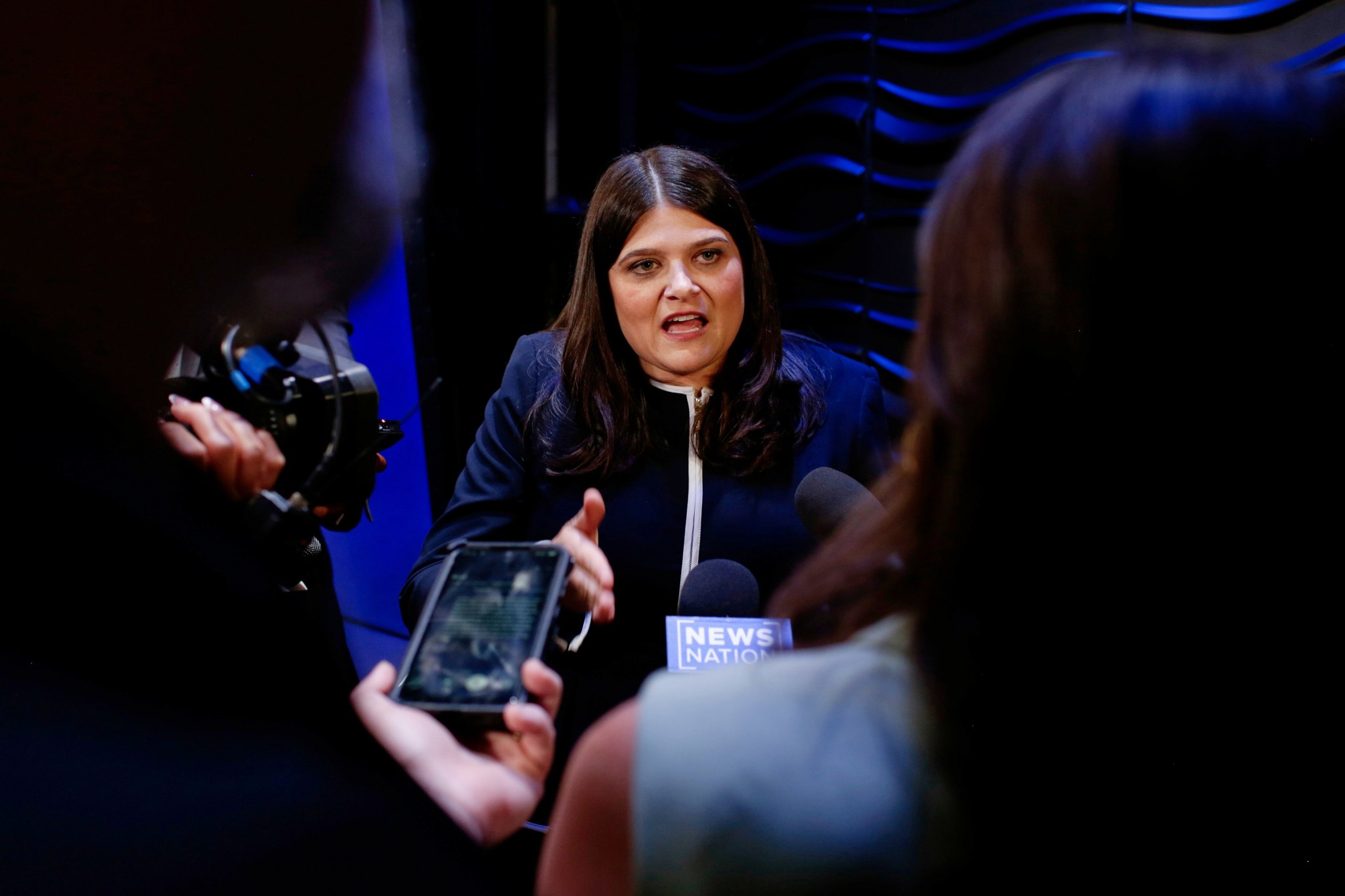
Michigan’s Democratic Senate primary has become a test of money, Israel politics and party divisions over the war in Gaza. The Associated Press reported that AIPAC and affiliated groups have spent close to $30 million to help elect Rep. Haley Stevens, the organization’s largest investment in a single race.
The spending is aimed at defeating Abdul El-Sayed, a progressive Democrat and former health official, in the Aug. 4 primary. AP reported that Stevens has largely avoided directly discussing AIPAC, even when asked about the group during a July campaign stop in western Michigan.
Asked by AP whether she welcomed AIPAC’s support, Stevens said, “Anyone who supported me is supporting me because of my dedication to the people of Michigan, and the things that I have done for Michiganders.” AP reported that in two answers totaling more than 800 words, she did not name AIPAC.
AIPAC, the American Israel Public Affairs Committee, works to elect candidates who support a strong U.S.-Israel relationship, according to AP. The group did not respond to AP’s request for comment, and its super PAC, United Democracy Project, declined to comment.
Outside groups dominate the ad fight
Stevens, a four-term congresswoman, raised about half as much as El-Sayed in the fundraising period ending June 30, according to AP. Her campaign said it is “raising the resources we need to win this race.”
AdImpact data cited by AP showed Stevens had spent only $12,000 from her campaign on advertising through early July before increasing that total to nearly $1 million. Outside organizations have spent close to $50 million supporting her, including roughly $12 million from A Stronger Michigan, a group that has not disclosed its donors, AP reported.
El-Sayed has made the pro-Stevens spending a central argument in his campaign. Sen. Bernie Sanders, who is campaigning with El-Sayed in Detroit, Lansing and Grand Rapids, called Stevens “nothing more than an employee of these billionaires,” according to AP.
New York Rep. Alexandria Ocasio-Cortez, also campaigning for El-Sayed in Michigan, framed the primary as a broader fight over political power. “One of the laws of nature in politics is whoever spends the most money wins,” she said, according to AP. “It is an opportunity to show that things other than money can win in America.”
AP reported that many of the ads supporting Stevens do not mention Israel or AIPAC. Former Rep. Andy Levin, whom Stevens defeated in a 2022 Democratic primary after redistricting, said AIPAC-backed ads usually focus on other issues. “If you’re just a voter and you see a million ads, you don’t know who paid for it,” Levin told AP.
Israel divides the field
The race is unfolding in a state with the nation’s largest Arab American population, according to AP. It also has significant Muslim and Jewish communities, making the candidates’ positions on Israel especially visible.
Stevens has described herself as a “proud pro-Israel Democrat,” AP reported. She has also criticized Israeli Prime Minister Benjamin Netanyahu, saying in a recent debate that he “has not made us safer, has not brought us closer to peace, and he’s endangered Jews here in America and around the world.”
El-Sayed, the son of Egyptian immigrants, has called Israel’s military campaign in Gaza a “genocide” and described the Israeli government as “evil,” according to AP. During a debate, he said AIPAC’s role in U.S. politics helped explain why the war has continued.
The war began after Hamas killed about 1,200 people in Israel and took 251 hostages on Oct. 7, 2023, AP reported. Gaza’s Health Ministry says Israel’s retaliatory offensive has killed more than 73,000 Palestinians.
If elected, El-Sayed would become the first Muslim U.S. senator, according to AP. His campaign says it has recruited more than 10,000 volunteers statewide, while Stevens’ campaign told AP it has hundreds across Michigan.
Michigan political strategist Adrian Hemond told AP that AIPAC is not likely to be the deciding issue for most primary voters. “But this doesn’t even register as an issue that’s influencing voting behavior for the overwhelming majority of primary voters,” he said.
This story draws on original reporting from Fortune.