
AI homework use tied to higher marks but lower exam scores
A CEPR study of Chinese students found AI use raised homework results while later exam performance fell sharply.
By Sofia Marchetti · World Affairs Correspondent
3 min read
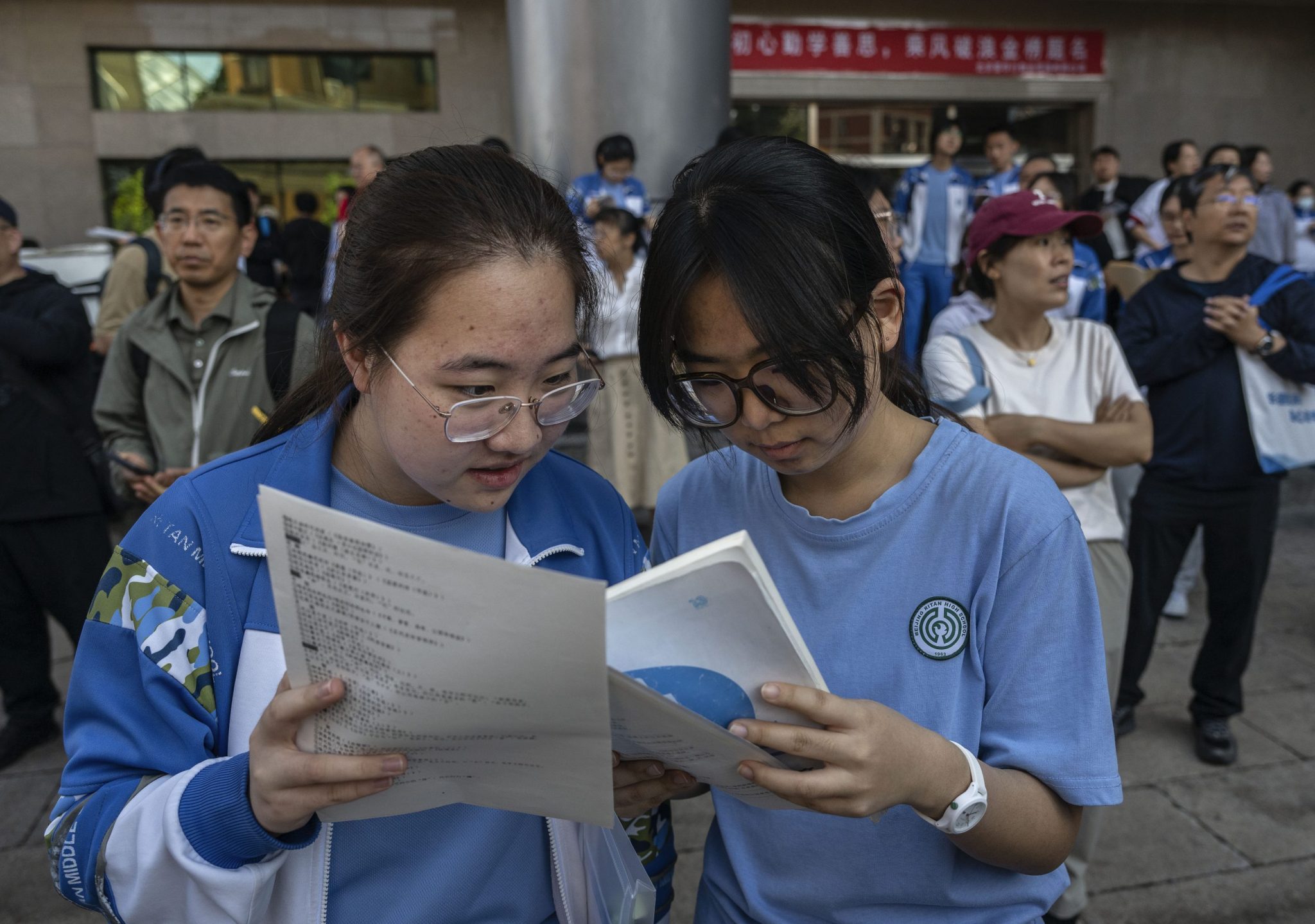
Students who used generative AI on homework earned better homework marks but later scored worse on exams, according to new research published by the Centre for Economic Policy Research. The findings add evidence to a growing concern among educators: tools that speed up assignments may weaken the learning those assignments are meant to build.
The study examined 26,811 students in grades seven through 12 in China, according to CEPR. Researchers from Stockholm University and the University of Hong Kong found that AI use raised homework scores by 18% and reduced the time needed to finish assignments by 30%.
Those gains did not carry over to tests, the researchers reported. Within six months, monthly exam scores were down 20%, and college entrance exam scores fell by 18% to 24%, with the weakest results appearing after two years.
Students who outsourced the work drove the decline
The researchers identified a group of students who appeared to use AI to complete homework accurately and quickly rather than to help them learn the material. According to the study, about 80% of the drop in test performance came from students in that group.
The researchers wrote that efficiency is not the purpose of homework for students. “For students, completing these tasks efficiently is not the goal; learning from them is,” they wrote, adding that their findings show generative AI can have “a substantial negative impact on student learning.”
AI use for schoolwork is already common in the United States. A College Board survey of more than 1,000 high school students found that 84% said they had used AI for homework.
Jacob Shelley, an associate professor of health law at Western University, told Fortune in May that he believed students in one of his classes had cheated on a final exam, including with AI. Shelley said 8% received perfect scores on the multiple-choice section, then struggled on the essay section and submitted material that had not been taught in the course.
“The results were anomalous,” Shelley told Fortune. “That just never happened in 20 years of teaching.”
Pressure to use AI extends beyond school
Shelley told Fortune that students still bear responsibility for cheating, but he said he understands why some feel pushed toward AI. Anxiety about automation remains high among young workers, even as some tech executives have softened earlier warnings about AI’s effect on jobs.
Monster, the job-search platform, found that almost 90% of graduates in the class of 2026 were worried that AI or automation could replace entry-level jobs. Shelley said that fear can make students feel they must use AI to avoid falling behind.
Neuroscientist Jared Cooney Horvath told Fortune that the CEPR findings fit a long pattern in education technology. In testimony to the U.S. Senate Committee on Commerce, Science, and Transportation, Horvath argued that automated teaching tools have often produced performance that does not transfer well once students lose access to the tool.
Horvath pointed to early “teaching machine” experiments by Sidney Pressey in the 1920s and B.F. Skinner in the 1950s. According to Horvath, students could perform well with the machines but struggled to apply the material independently.
Some teachers have reported benefits from AI, including adapting texts for students at different reading levels, Fortune reported. Horvath argued, however, that tools designed to make experts more efficient can create dependency when used by beginners who are still trying to acquire the underlying skill.
This story draws on original reporting from Fortune.