
AI growth could reshape autocratic power in China
José Kaire argues economic opening can make dictatorships more repressive, and says AI may create new elite coalitions in China.
By Sofia Marchetti · World Affairs Correspondent
3 min read
Economic opening has not reliably pushed authoritarian states toward democracy, according to Arizona State University political scientist José Kaire. His argument matters as democracy monitors warn that authoritarian pressure is spreading and as artificial intelligence creates new sources of wealth and political influence.
The V-Dem Project, which tracks democracy worldwide, says 41% of the global population lives in countries becoming more authoritarian. In its 2026 report, V-Dem says a “third wave of autocratization” has pushed democracy back to levels last seen in 1978, while many of the world’s 92 autocracies are growing more repressive.
Kaire’s book, “The Road to Repression,” challenges a long-held view that market reforms weaken authoritarian rule. That view, associated with economists Milton Friedman and Friedrich Hayek and later tied to the Washington Consensus, held that privatization, deregulation and trade would reduce citizens’ dependence on the state and give them more room to demand political freedoms.
Why liberalization can fuel crackdowns
Kaire argues the political effects of economic liberalization depend on the balance of power inside a regime. When ruling-party officials, military officers and other insiders are strong, they may see reforms as a threat because new business groups or opposition figures can gain influence.
In that situation, Kaire says dictators may use repression to reassure insiders that their position remains protected. Crackdowns can help rulers keep elite backing while still satisfying outside powers that want economic reform.
Kaire points to Mexico, Malaysia and Senegal as cases where human rights abuses rose after liberalization, according to his research. He says about half of autocracies have followed a similar path after opening their economies.
In Mexico, Kaire says presidents targeted opposition groups they had previously tolerated as they sought to compensate party elites for accepting reforms that weakened their influence. He frames repression as a tool of internal coalition management, as well as a method for suppressing dissent.
Cuba and Venezuela face risks from reform pressure
Kaire applies the same framework to Cuba and Venezuela, both of which he says have faced U.S. pressure connected to economic reform. The key question, in his view, is whether regime insiders are strong enough to demand protection from leaders.
In Cuba, Kaire says former leader Raúl Castro strengthened the role of the Communist Party in the late 2010s, while the military gained more autonomy and more durable economic privileges. Those shifts, he argues, gave elites more power to press leaders, raising the risk that further liberalization could bring more repression.
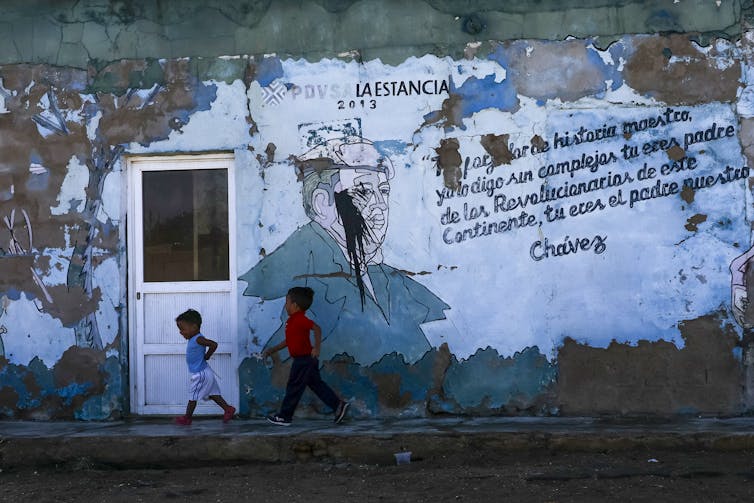
For Venezuela, Kaire says the removal of Nicolás Maduro in a U.S. raid in January 2026 could allow regime insiders to gain more independence and influence. If that happens, he says deregulation could worsen human rights conditions rather than improve them.
AI may give leaders new allies
Kaire says the rise of artificial intelligence could produce a related dynamic, even though his book focuses on economic liberalization. New industries can create new elites whose fortunes depend on the ruler, giving leaders another base of support.
China is the most relevant case, Kaire says. Under Xi Jinping, he says Beijing has moved to centralize oversight of AI, including through the Central Science and Technology Commission, which is led by one of Xi’s close allies.
Kaire also says the Chinese state has supported AI firms aligned with Xi’s priorities while disciplining more independent technology entrepreneurs. If AI produces elites tied closely to the leader, he says, those groups could give Xi more room to deal with older power centers inside the regime.
Kaire says the long-term political effects remain uncertain. His broader warning is that changes sold as economic modernization can, under some authoritarian conditions, strengthen repression instead of weakening it.
This story draws on original reporting from Fortune.