
World Cup hydration breaks draw criticism over ads and disrupted play
FIFA says the mandatory pauses protect players, but players, coaches and fans have questioned their use in every match.
By Lucas Ferreira · Science & Environment Writer
3 min read
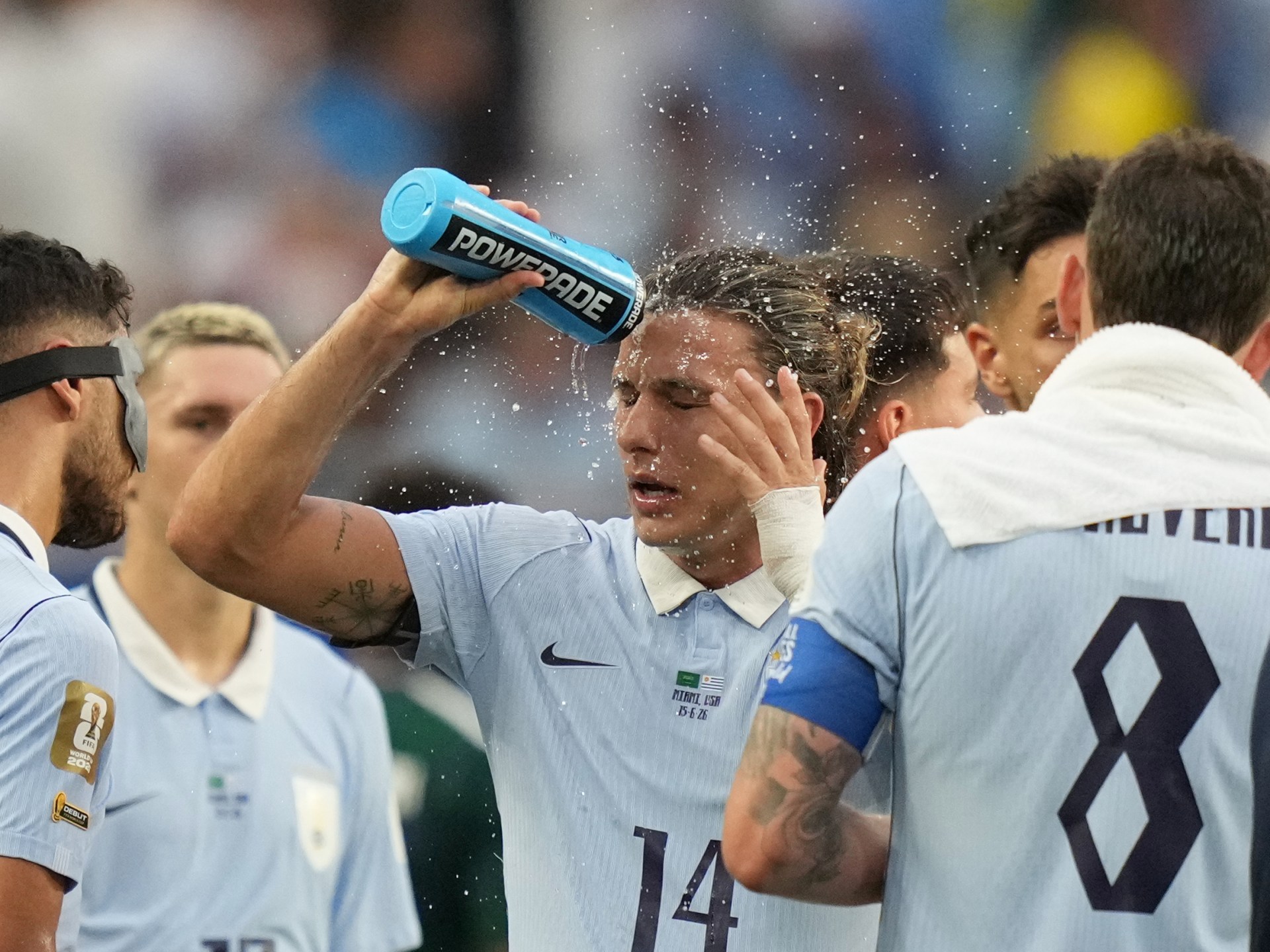
Mandatory hydration breaks at the World Cup have become a flashpoint, with players, fans and coaches questioning FIFA’s decision to stop every match twice for three minutes. FIFA says the policy protects player welfare and keeps conditions equal, but critics cited by Al Jazeera and Reuters say the rule has interrupted matches and created new advertising windows.
FIFA announced the measure in December, saying referees would call a three-minute break in each half of every game. The organization said last year that the pauses would apply without weather or temperature thresholds so all teams would play under the same conditions.
Several players have said the policy should depend on conditions at each venue. Netherlands defender Virgil van Dijk said breaks make sense in high heat but should be assessed game by game. Belgium midfielder Youri Tielemans said the policy can be useful in some cities, though he also said consistency across matches was part of FIFA’s reasoning.
Everton Fox, a senior meteorologist, told Al Jazeera that only some venues have had weather that would justify cooling pauses. He named New York, California, Miami and Mexican stadiums as hot enough, while saying air-conditioned stadiums in Dallas, Houston, Atlanta and Vancouver did not need them.
Fox also questioned whether the policy was mainly about player welfare, telling Al Jazeera it was difficult to see the universal approach as anything other than a commercial opportunity for television advertising in the United States and abroad.
Commercial concerns have driven much of the backlash. BBC Sport reported last week that a 30-second World Cup ad slot on Fox Sports costs between $200,000 and $300,000, with prices rising as high as $750,000 for United States matches and later tournament rounds. The report said advertising during hydration breaks in the U.S. alone could bring in more than $250 million.
Canada defender Alistair Johnston also linked the pauses to revenue, saying this week that the breaks were probably earning FIFA more money. His comments came before Canada played Qatar indoors in Vancouver, a match Canada won 6-0, according to Al Jazeera.
Broadcast decisions have added to the complaints. Al Jazeera reported that some channels stayed with live pictures during the pauses while others cut to commercials. Viewers in the United States criticized Fox after it moved to full-screen advertising and missed some live play during the second half of the Mexico-South Africa opener, according to Al Jazeera.
The rule has also changed the rhythm of games. Al Jazeera cited Curacao’s group opener against Germany, when Livano Comenencia scored an equalizer in the 21st minute before a hydration break soon followed. Germany coach Julian Nagelsmann then had a chance to speak with his players, and Germany went on to win 7-1. Bosnia and Herzegovina were also described by Al Jazeera as losing momentum around a hydration pause.
Fans in stadiums have booed the stoppages since group-stage matches began on June 11, according to Al Jazeera. Social media users have also mocked the breaks with AI-generated national stereotypes involving teams from England, the United States and Japan.
Some coaches have welcomed the added pause. Belgium coach Rudi Garcia told Al Jazeera he sees it more as a coaching break than a cooling break and said it gives him a chance to deliver tactical instructions. France coach Didier Deschamps also said the stoppages allow staff to speak to players and make adjustments before play resumes.
This story draws on original reporting from Al Jazeera.