
World Cup viewing in Gaza is strained by outages, displacement and fear
Displaced fans in Gaza told Al Jazeera that football still offers brief relief, but war has drained much of the tournament’s usual joy.
By James Whitfield · Staff Writer
3 min read
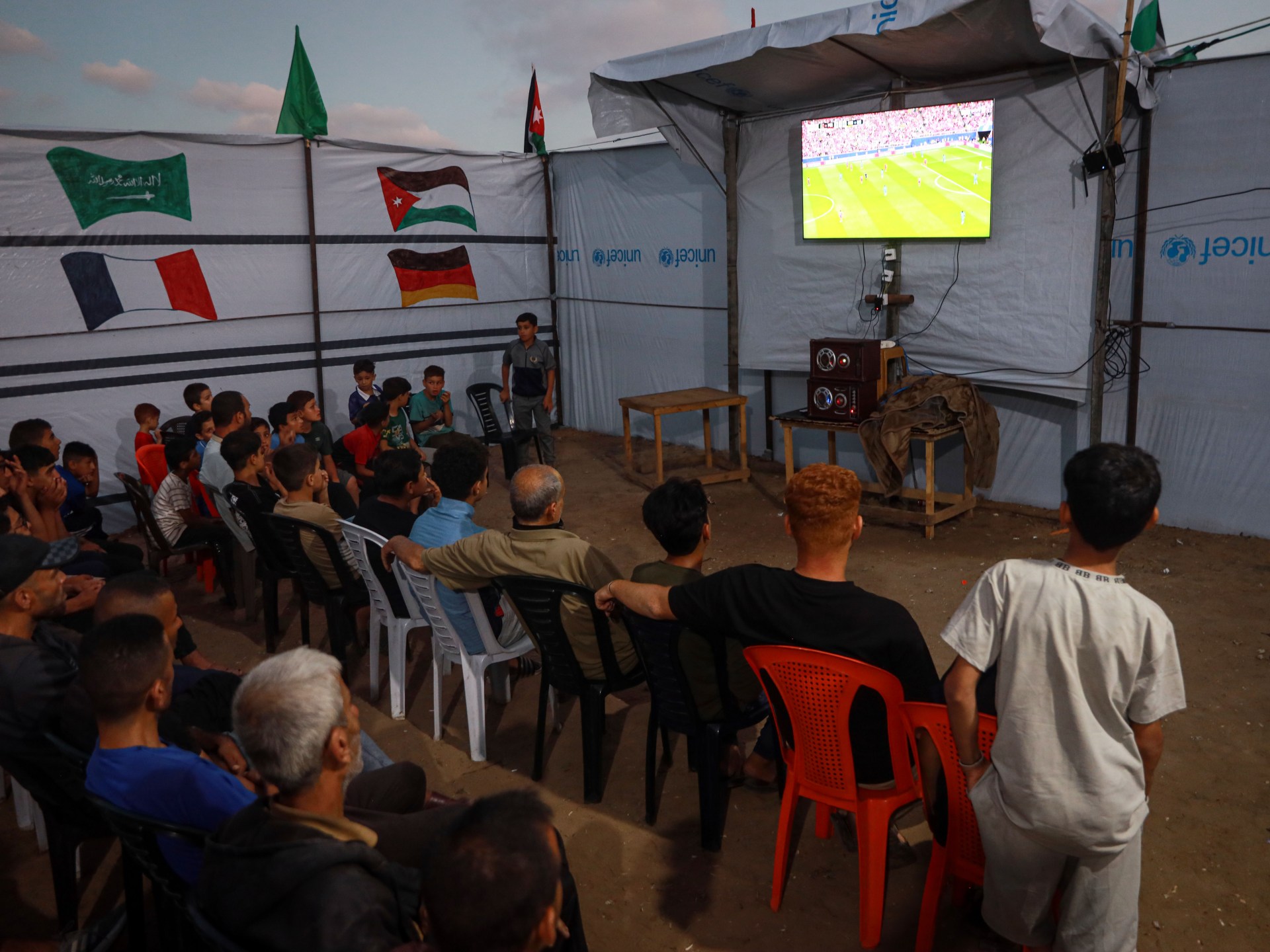
In Gaza City, displaced residents are watching the World Cup on phones, delayed clips and screens inside makeshift cafes as power cuts, weak internet and fear of attacks interrupt the tournament. The struggle shows how Israel’s war has changed even routine social rituals, while football remains one of the few brief distractions from life in displacement camps, residents told Al Jazeera.
Sameeh Totah, 43, told Al Jazeera he often cannot watch matches live from his tent near Yarmouk Stadium because internet service and electricity keep failing. Instead, he follows games after they have ended, through highlights or delayed broadcasts.
Totah, a father of six, said watching after learning the score removes much of the excitement. He compared the current tournament with the 2022 World Cup in Qatar, when he was still living in Gaza City’s Zeitoun neighbourhood and could gather with relatives and friends to watch matches.
He has since been displaced, and his home is in an Israeli-designated forced displacement zone, according to Al Jazeera. The outlet reported that Israel’s war in Gaza has killed more than 73,000 Palestinians since October 2023.
Totah said football still gives him short breaks from stress. But he told Al Jazeera that tent life lacks privacy and comfort, and that the experience of following the World Cup no longer resembles the communal celebrations Gaza residents remember from before the war.
Fans search for screens and power
Yousef al-Nuaizi, 21, from Gaza City, told Al Jazeera that he has long supported Portugal’s national team, but watching the tournament now takes effort that often outweighs the enjoyment. He said he and friends once walked a long distance to a cafe for a match, arriving around dawn only to find it closed because there was no electricity.
When they later found somewhere to watch, al-Nuaizi said they lasted about 40 minutes before fatigue set in. He said daily life in displacement has become exhausting, including waits for basic needs such as using a toilet.
Al-Nuaizi also lives near Yarmouk Stadium after being forced from his home in the Shujayea neighbourhood, Al Jazeera reported. He said the stadium used to be a place where people watched local football, but it is now a shelter for displaced families.
Al Jazeera reported that many sports facilities and stadiums in Gaza have been turned into shelters, while many others have been destroyed or are out of service. Al-Nuaizi said he still watches matches when he can, mostly to pass the time, but said much of the old passion has faded.
Makeshift cafes offer a fragile escape
Some residents are trying to rebuild a version of the World Cup atmosphere inside displacement camps. Al Jazeera described a temporary cafe made from tarpaulins and wooden planks, with national flags and football-themed decorations on its fabric walls.
Tariq al-Jadba, 26, who runs the venue, told Al Jazeera that dozens of fans gather for major matches, but fear remains present, especially during late-night or pre-dawn games. He said people watch while worrying about nearby bombardment or attack.
Keeping screens running is also difficult. Al-Jadba said the cafe depends on neighbourhood generators, but fuel shortages mean generator owners cannot always provide electricity during matches, and solar power is not enough late at night.
Al Jazeera reported that chronic shortages of electricity and fuel are linked to Israeli restrictions. Despite that, al-Jadba said he wants to keep the cafe open because football remains important to Gaza’s social life, especially when Arab teams play and crowds briefly recover some of the tournament’s energy.
This story draws on original reporting from Al Jazeera.