
Visa fights shadow World Cup as US co-hosts tournament
The 2026 World Cup opened in Mexico amid disputes over US entry rules affecting teams, officials and fans.
By James Whitfield · Staff Writer
3 min read
The 2026 FIFA World Cup began June 11 in Mexico, with the United States and Canada also serving as hosts. Al Jazeera columnist Belén Fernández said the tournament’s shared-hosting model has been strained by US border and visa policies that affect who can attend and take part.
Fernández wrote that the event, billed as a display of continental unity, is unfolding alongside US travel restrictions, immigration crackdowns and a heavily controlled border with Mexico. She argued that those policies undercut FIFA’s message of global inclusion.
The column pointed to several World Cup-related entry disputes. Iran’s football federation said shortly before the tournament that the United States had revoked its supporters’ ticket allocation for Iran’s three matches in the US, according to Al Jazeera. Reuters reported that visas were also denied to 15 Iranian federation staff.
Al Jazeera also reported that Omar Artan, a Somali referee selected to work at the tournament, was denied entry to the United States. Fernández added that Haitian fans face a separate barrier because Haitian nationals are barred from entering the country under US policy.
Iran’s team has been based in Tijuana, Mexico, amid the visa dispute, according to Al Jazeera. Fernández wrote that the team was permitted to enter the US only for matches before returning to Mexico.
The column also placed the tournament against the broader US-Mexico border debate. Fernández cited Al Jazeera reporting on President Donald Trump’s threats involving Mexico and noted that The New York Times reported in 2019 that Trump had suggested soldiers shoot migrants and that an alligator-filled moat be installed at the border.
Fernández said Trump, after returning to office last year, effectively shut the US border to asylum seekers and economic migrants. She connected that policy to wider US detention and deportation practices, citing Al Jazeera coverage of immigration detention abuses and deportations.
Mexico’s role as co-host has also drawn criticism in the column. Fernández cited Amnesty International’s figure of more than 134,000 disappeared people in Mexico and said many Mexicans view spending on the tournament as misplaced while families continue searching for missing relatives.
She also wrote that the deployment of Mexican security forces around World Cup sites has angered critics because of those forces’ human rights record. The column linked many disappearances to the period after the US-backed launch of Mexico’s “war on drugs” in 2006.
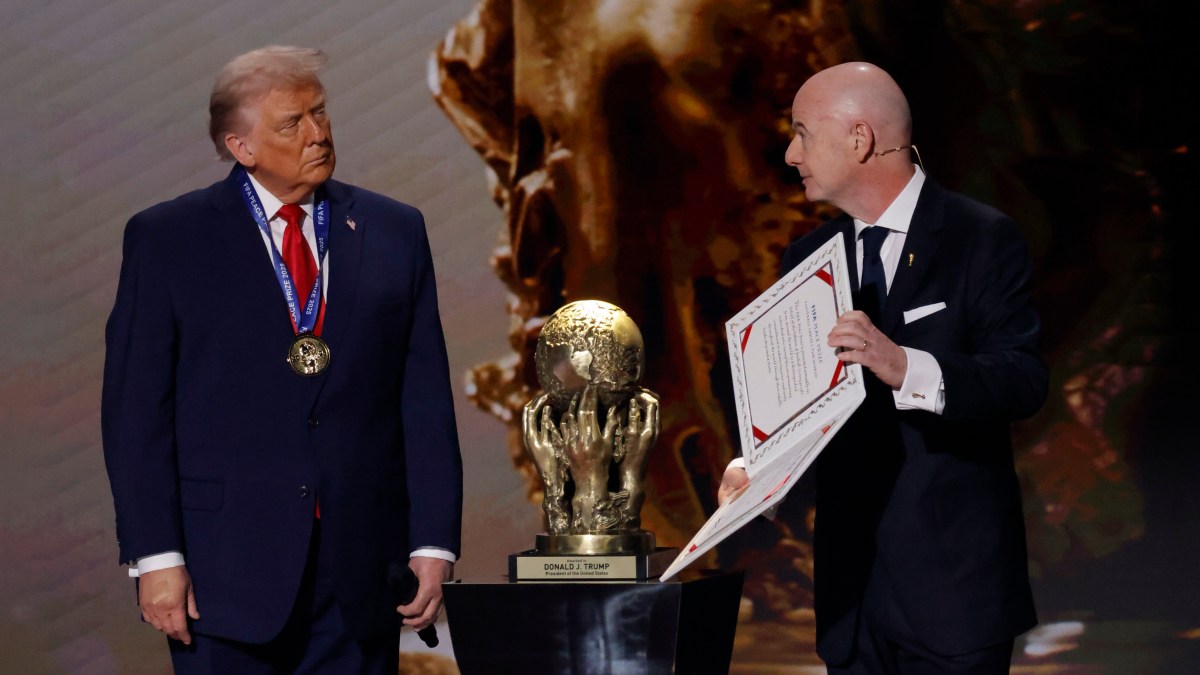
FIFA’s relationship with Trump was another focus. A Reuters photo caption showed Trump receiving the FIFA Peace Prize from FIFA President Gianni Infantino during the 2026 World Cup final draw at the John F. Kennedy Center for the Performing Arts in Washington on Dec. 5, 2025.
Fernández criticized that award and connected it to US support for Israel. She wrote that Israel has killed about 73,000 Palestinians in Gaza since October 2023, including at least 421 footballers, and also cited Oxfam Canada’s criticism of Canadian arms-related support for Israel.
The opening match between Mexico and South Africa went ahead in Mexico as the disputes continued. Fernández concluded that politics and border policy are shaping access to this World Cup as much as the sport itself.
This story draws on original reporting from Al Jazeera.