
Venezuela quakes expose risks near Caribbean plate boundary
USGS said shallow faulting drove the twin quakes, as officials warned of aftershocks and a rising toll.
By Sofia Marchetti · World Affairs Correspondent
3 min read
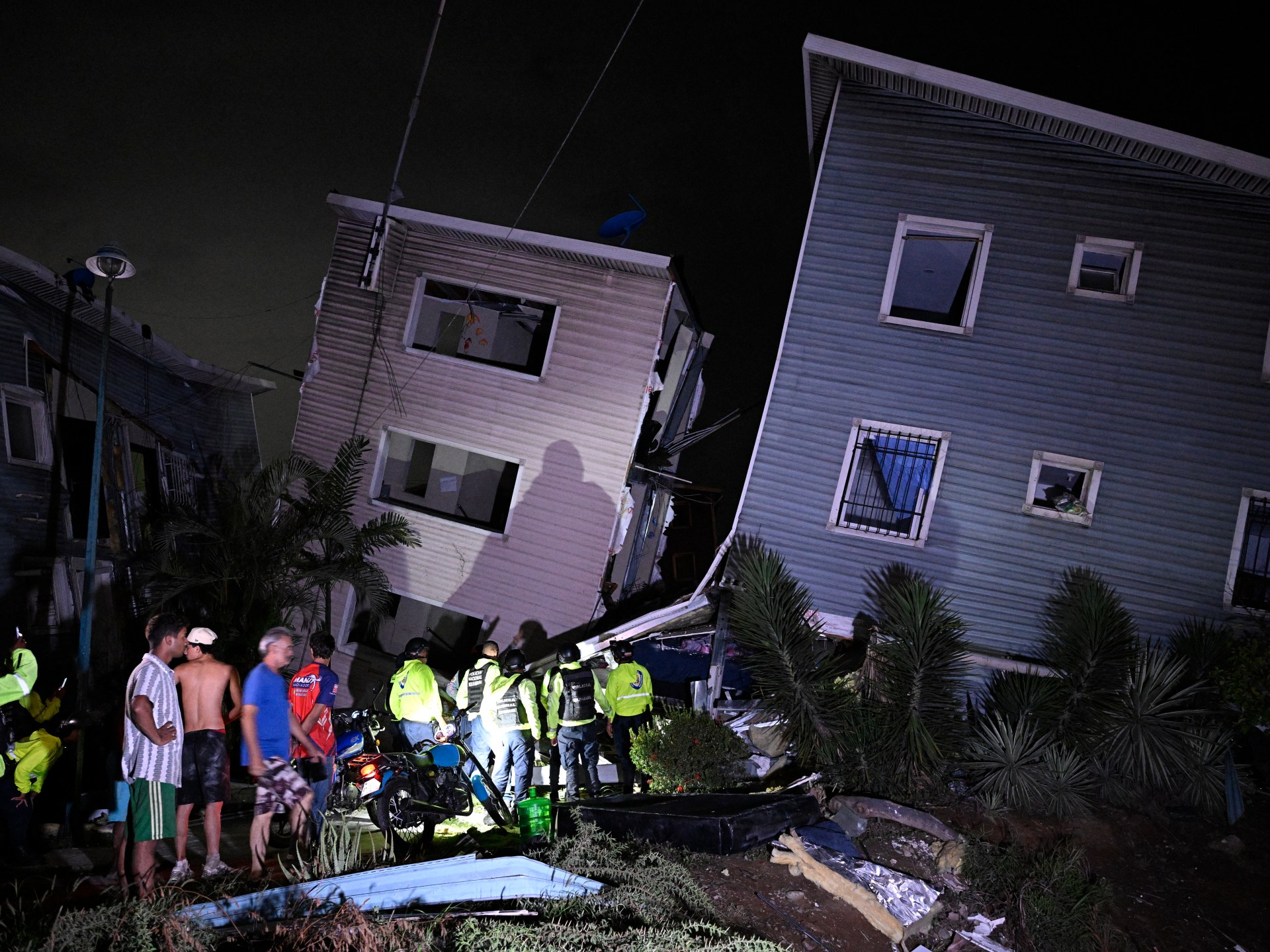
Two powerful earthquakes struck Venezuela on Wednesday, killing at least 164 people and injuring 971, according to Al Jazeera. The disaster has renewed attention on seismic risk near the Caribbean and South American tectonic plates, where shallow quakes can cause severe damage in populated areas.
The United States Geological Survey said a magnitude 7.2 earthquake hit about 160km west of Caracas at about 6:04pm local time, followed less than a minute later by a magnitude 7.5 quake. The Venezuelan government declared a state of emergency, and the USGS warned that strong aftershocks could follow in the coming days.
Al Jazeera reported that dozens of buildings collapsed into broken concrete and steel in and around Caracas. Teresa Bo, reporting for Al Jazeera from Bogota, said the worst damage was in the capital, especially the Altamira district, where emergency crews pulled survivors from the wreckage of a 22-storey building while relatives looked for missing family members.
Officials said they were still assessing the scale of the destruction, according to Al Jazeera. The USGS said its predictive models showed the death toll could rise into the thousands and that there was a substantial probability deaths could exceed 10,000.
Why Venezuela faces major quake risk
The USGS said Venezuela has a long history of destructive earthquakes because it sits near the boundary of the Caribbean and South American tectonic plates. That boundary can generate powerful shaking when stress builds and faults rupture.
The agency said the larger of Wednesday’s earthquakes was caused by shallow strike-slip faulting near those plate boundaries. In a strike-slip fault, two blocks of rock move past each other, releasing energy that spreads through the ground as seismic waves.
Shallow earthquakes can be especially damaging because the energy travels a shorter distance before reaching the surface, according to the explanation cited by Al Jazeera. That can mean stronger shaking for buildings, roads and people close to the rupture.
Venezuela has suffered deadly quakes before, according to the USGS. In 1812, an earthquake struck Merida and Caracas and killed about 30,000 people; in 1967, a quake in Caracas collapsed several high-rise buildings and killed 240 people.
Why Central America is also exposed
Al Jazeera reported that Central America is highly vulnerable because it lies where several tectonic plates meet. The region includes a subduction zone where the Cocos Plate is forced beneath the Caribbean Plate.
A subduction zone forms when one tectonic plate is pushed below another into the Earth, according to Al Jazeera’s explanation. Such boundaries are known for producing strong earthquakes.
Al Jazeera also reported that the region, home to about 50 million people, faces added danger because many residents live in informal housing or older buildings that were not designed to withstand intense shaking. In inland earthquakes, deaths and injuries often come from the collapse of weak structures rather than from ground motion alone, according to the report.
- Al Jazeera said a magnitude 7.6 quake struck near Costa Rica’s Pacific coast in September 2012.
- Al Jazeera reported that Guatemala was hit by a magnitude 7.4 earthquake in November 2012, killing at least 52 people.
- In June 2017, at least five people died when a magnitude 6.9 quake struck western Guatemala near Mexico, according to Al Jazeera.
- A magnitude 7.6 earthquake hit near Honduras in January 2018, with shaking felt across northern Central America, Al Jazeera reported.
Where the global risk is highest
Al Jazeera reported that the Pacific Ring of Fire is the world’s most seismically active zone and accounts for roughly 90 percent of earthquakes. The belt stretches from South America to the Russian Far East and includes Japan, the Philippines, Indonesia and the western Americas.
Japan shows how preparation can reduce losses, according to Al Jazeera. The country has strict building codes and has invested heavily in seismic research and engineering, including base isolation systems that use steel or rubber shock absorbers beneath buildings.
This story draws on original reporting from Al Jazeera.