
U.S. to resume Hormuz blockade as Iran claims control of strait
CENTCOM says the operation targeting Iranian shipping starts Tuesday, after new strikes around a waterway vital to global energy flows.
By James Whitfield · Staff Writer
4 min read
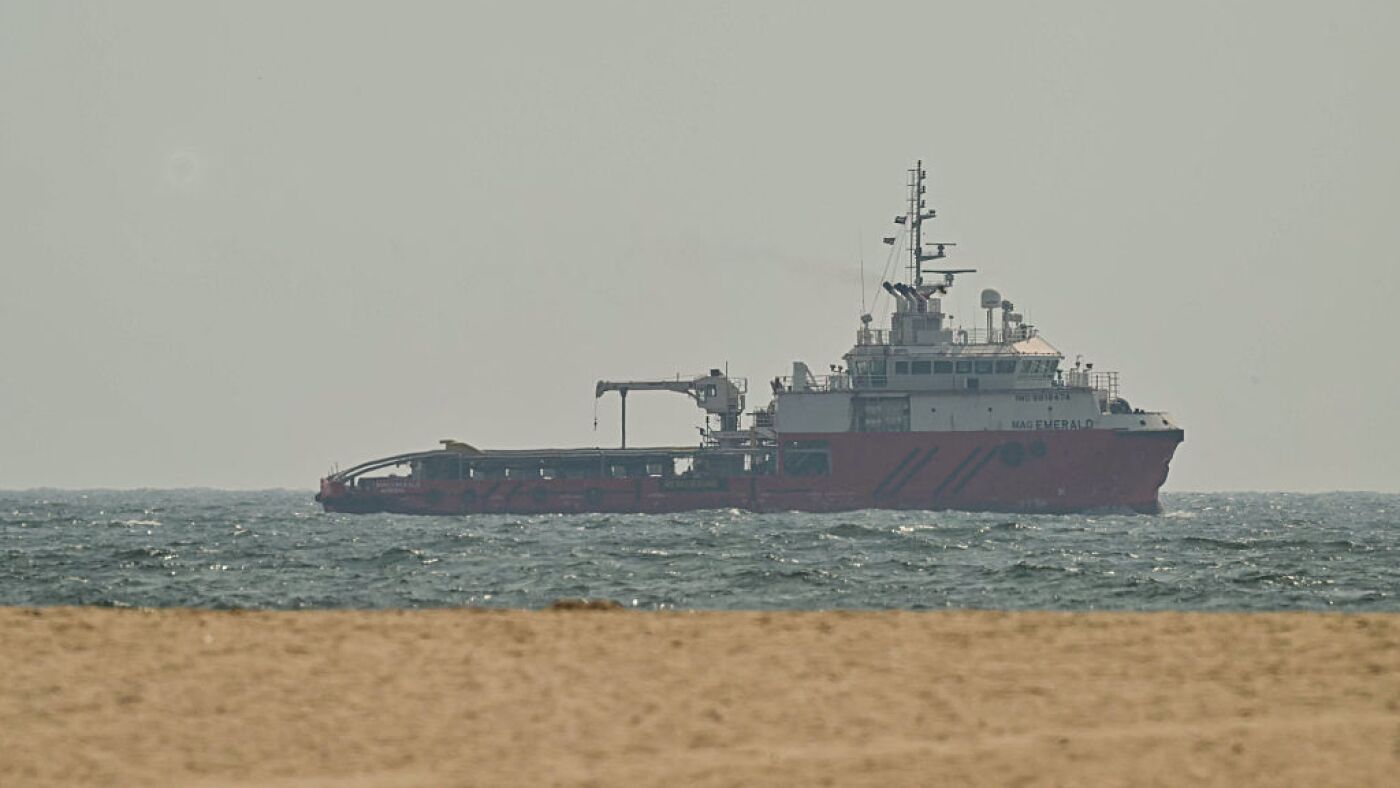
The U.S. military plans to restart a naval blockade targeting Iranian shipping in the Strait of Hormuz on Tuesday, escalating a fight over one of the world’s most important energy routes. CENTCOM said the operation will begin at 4 p.m. ET as Iran says it will keep asserting authority over the international waterway.
CENTCOM said U.S. forces previously blocked maritime traffic to and from Iranian ports from April 13 through June 18. The new move follows a weekend of strikes that NPR reported put a June ceasefire under severe strain and raised the risk of a wider regional war.
On Monday, the U.S. carried out another round of attacks on Iran. The U.S. military said it hit Iranian air defense systems, missile and drone sites, and maritime capabilities in an effort to reduce Iran’s ability to threaten commercial shipping.
Iran reports attacks on tankers and U.S.-linked sites
The Iranian Revolutionary Guard said Tuesday it struck two supertankers in the Strait of Hormuz that it described as non-compliant, according to Iranian state media. Iran also said it launched missiles and drones at U.S. military infrastructure in Bahrain, which hosts the U.S. Navy’s Fifth Fleet, and at U.S. military outposts in Jordan.
The United Arab Emirates’ defense ministry said two UAE tankers were hit by Iranian cruise missiles while passing through Omani waters in the strait, killing one person. Bahrain authorities said sirens sounded and told residents to move to safe areas, while Jordanian state media said air defenses intercepted four Iranian missiles entering Jordanian airspace early Tuesday.
The fighting comes midway through a 60-day ceasefire the U.S. and Iran agreed to in June, when both sides signed a 14-point memorandum of understanding meant to guide talks on a final deal and reopen the Strait of Hormuz. President Donald Trump said at a NATO summit in Turkey last week that the ceasefire was over, while leaving open the possibility of more negotiations, NPR reported.
Iranian Foreign Minister Abbas Araghchi said Monday that Tehran remained in contact with mediators including Oman, Qatar and Pakistan, describing their role as de-escalation. NPR reported that the status of direct negotiations with Washington was unclear.
A dispute over control and costs
The Strait of Hormuz carries about 20% of global energy supplies, according to NPR, and the conflict has already slowed traffic through the route. Kpler, a data and analytics firm that tracks commodity and shipping markets, said Monday that crossings fell to 22 ships last week, nearly 85% below pre-war traffic.
Since the war began Feb. 28, Tehran has claimed control over the strait and has required vessels to seek permission and follow approved routes, NPR reported. Iran has attacked ships it says failed to comply with its orders.
Trump said Monday that the United States would stop Iranian ships from using the strait while allowing other countries to pass. In an online post, he said the U.S. would charge a 20% toll on cargo to cover what he described as the cost of providing security in the area.
CENTCOM did not mention tolls in its announcement. It told mariners approaching the Gulf of Oman and the Strait of Hormuz to contact U.S. naval forces on bridge-to-bridge channel 16 and said more instructions would follow through a formal notice.
Araghchi responded online that Trump was right to say safe passage should be compensated, but he argued Iran has been and will remain the guardian of the strait. He also wrote that a 20% charge was too high and said Iran would be fair.
Ambiguous deal fuels dispute
Michael Singh, managing director of the Washington Institute for Near East Policy, told NPR that the June memorandum’s language left room for conflicting interpretations. He pointed to a provision saying Iran would use its best efforts to arrange safe passage for commercial vehicles, saying the wording appeared closer to Tehran’s view that responsibility for the strait rests with Iran.
Before announcing the renewed blockade, the U.S. urged ships to use a southern route near Oman’s coast. Iran said that advice violated the memorandum, while CENTCOM accused Iran of breaching the same agreement.
Iranian Parliament speaker Mohammad Bagher Ghalibaf posted an image of the preliminary deal online and highlighted language saying Iran would make arrangements for passage. Qatar’s foreign minister, whose country has mediated in the conflict, had said ceasefire talks would continue after last week’s funeral for Iranian Supreme Leader Ayatollah Ali Khamenei, whom NPR reported was killed in U.S.-Israeli airstrikes at the start of the war.
This story draws on original reporting from NPR.