
Gulf air defenses tested as Iran targets US bases across region
Iran’s latest missile and drone attacks have put Gulf states’ reliance on US-backed air defenses under renewed strain.
By James Whitfield · Staff Writer
4 min read
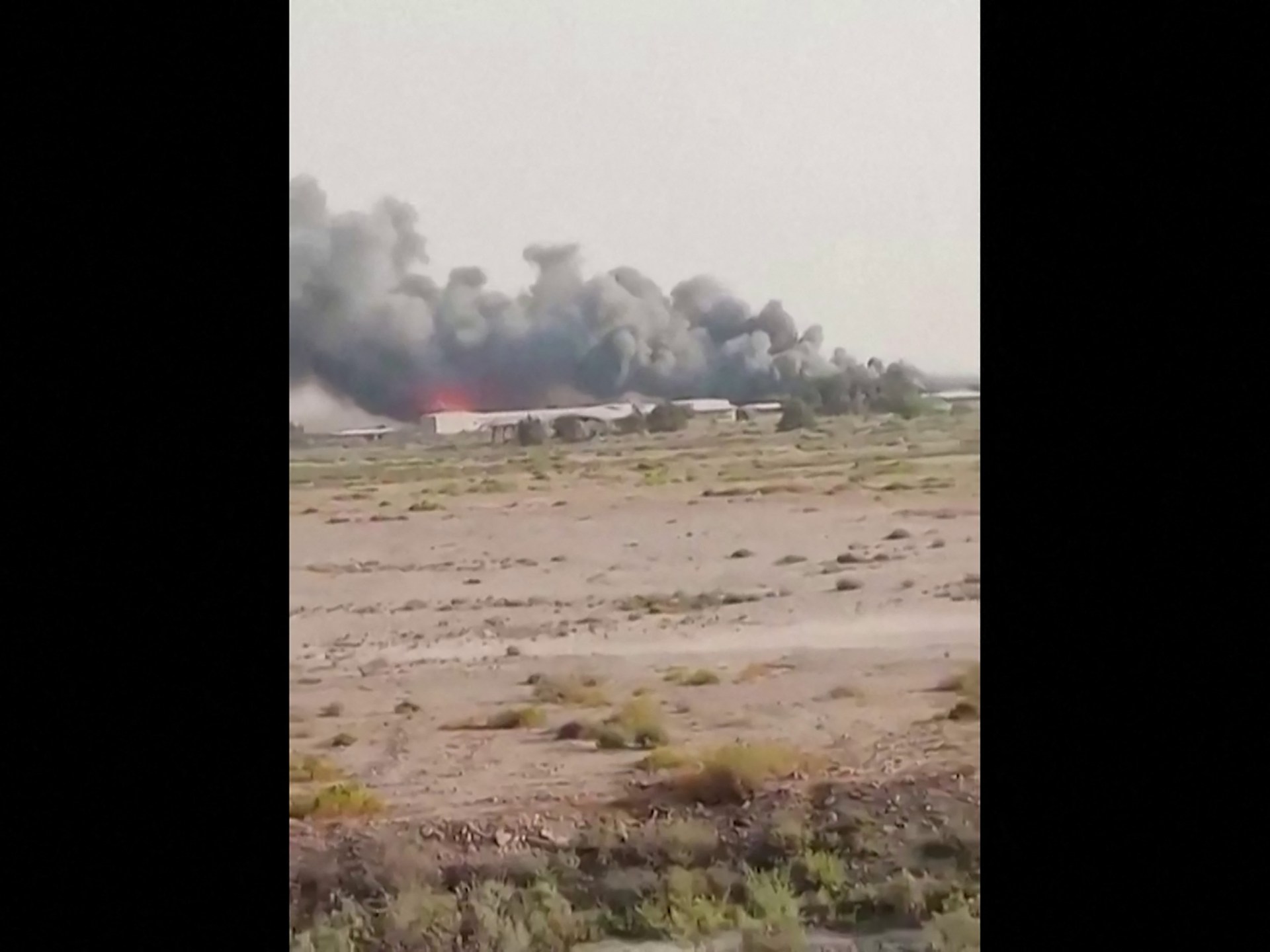
Air defense systems were activated this week in Bahrain, Kuwait, Oman, Qatar, the United Arab Emirates and Jordan after Iran launched another round of attacks that it said targeted US military sites, Al Jazeera reported. The strikes matter for Gulf governments because US bases on their territory can draw Iranian fire even as US defenses help shield their cities and infrastructure.
The latest exchanges followed renewed US bombing of Iran’s southern coast, including areas near Bandar Abbas, Sirik, Jask and Qeshm island, according to Al Jazeera. They came less than a month after Washington and Tehran signed a memorandum of understanding meant to halt a war that began on February 28 after US and Israeli strikes on Iran.
Both sides have accused the other of breaching that agreement. Al Jazeera reported that the renewed escalation has focused partly on the Strait of Hormuz, where the memorandum says Iran controls international maritime traffic.
Attacks across the Gulf
Governments and militaries in Bahrain, Qatar, Kuwait, Oman, the UAE and Jordan said they faced incoming missiles and drones over the past week and condemned Iran’s attacks, according to Al Jazeera. Iran said it had struck sites including a fuel depot in Jordan, a helicopter maintenance facility in Bahrain, fuel tanks in Kuwait and a Patriot air defense system, but those claims have not been independently verified.
Iran’s Islamic Revolutionary Guard Corps also claimed it destroyed long-range aerial radar and vessel-detection radar in Oman, Al Jazeera reported. Iran has said it is aiming at US military positions rather than Gulf states, but its weapons have crossed Gulf airspace and hit sovereign territory.
Qatar said three people, including a child, were injured by falling shrapnel during the interception of an Iranian missile on Sunday. Gulf governments have said their territory is not being used to launch attacks on Iran, according to Al Jazeera.
Reliance on US protection
The United States operates military facilities in at least 19 locations across the Middle East and North Africa, including Bahrain, Egypt, Iraq, Jordan, Kuwait, Qatar, Saudi Arabia and the UAE, Al Jazeera reported. About 50,000 US troops are stationed across the region.
Simon Mabon, a professor of international relations at Lancaster University, told Al Jazeera that Gulf states are exposed because of their US ties, while those same ties have helped limit damage from attacks. He said US air defenses had proved valuable during the interceptions.
Gulf states have spent years building layered defenses using US, European and other systems. Al Jazeera reported that Saudi Arabia has the region’s largest network, including THAAD and Patriot PAC-3 systems, while the UAE also uses THAAD and Patriot systems, and Qatar has invested in Patriot batteries and NASAMS III.
Kuwait fields Patriot PAC-3 batteries along with shorter-range systems, Bahrain has acquired Patriot PAC-3 Missile Segment Enhancement systems, and Oman uses NASAMS, French Mistral missiles and Russian Strela-2 systems, according to Al Jazeera.
Cost and endurance
Bader Mousa Al-Saif, an associate fellow at Chatham House and professor at Kuwait University, told Al Jazeera that Gulf states have maintained strong defensive positions through security ties with Washington and wider defense partnerships. He said they had recorded some of the highest interception rates in recent months.
The financial balance is less favorable for defenders. Al Jazeera reported that Iranian Shahed drones can cost as little as $30,000, while advanced interceptor missiles can cost millions of dollars each.
Mabon told Al Jazeera that capacity is becoming a central concern as expensive interceptors are used against cheaper drones. Al-Saif said lower-cost interceptors are being developed and could change the economics of missile defense over time.
The crisis is also pushing Gulf states to share radar data, coordinate alerts and strengthen joint air defenses, experts told Al Jazeera. At the same time, Gulf governments have sought working ties with Iran, with the UAE restoring diplomatic relations in 2022 and Saudi Arabia normalizing ties with Tehran in 2023 under a China-brokered deal.
Trita Parsi of the Quincy Institute told Al Jazeera that confidence in diplomacy remains low, but no country in the region can afford another long war. Qatar and Oman, despite recent attacks, have remained involved in diplomatic efforts between Iran and the United States.
This story draws on original reporting from Al Jazeera.