
US restores blockade of Iranian ports as Gulf attacks widen
US forces struck Iranian coastal targets and resumed blocking port traffic as Iran reported retaliatory attacks in Kuwait, Bahrain and Jordan.
By Daniel Okafor · Business Editor
3 min read
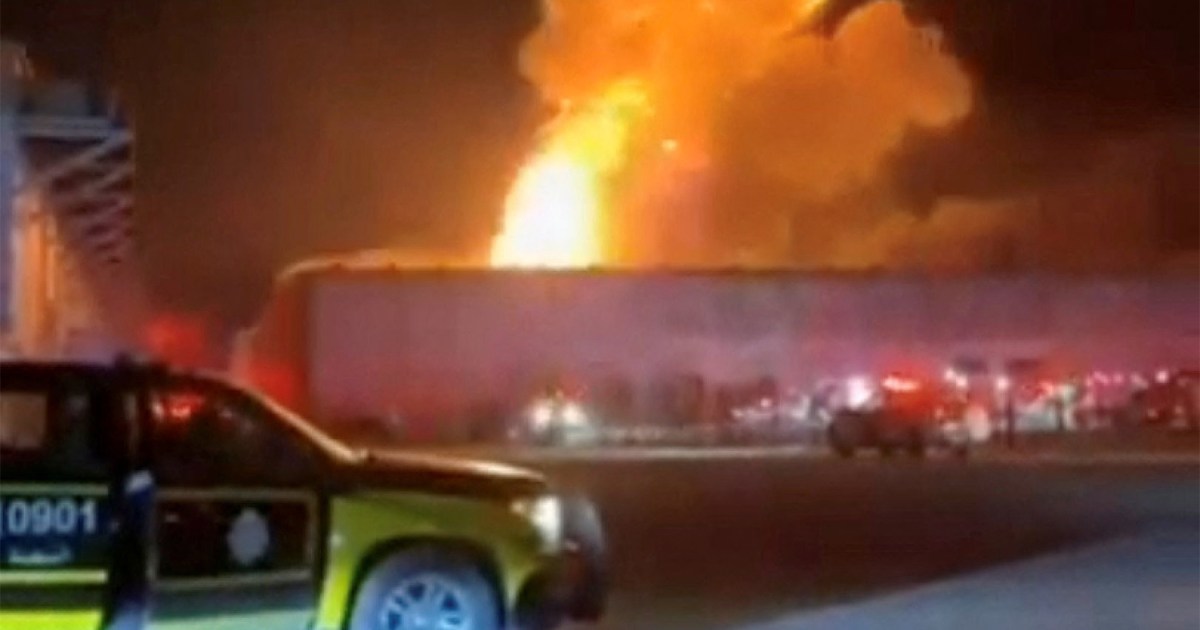
The United States has reinstated a naval blockade on Iranian ports and carried out another round of strikes near the Strait of Hormuz, sharply escalating a conflict that a recent memorandum of understanding had been expected to ease. US Central Command said the operation answered Iranian attacks on shipping in the waterway, while Iran said its control over the strait would remain intact.
CENTCOM said the latest US attacks began at about 02:00 GMT on Wednesday and hit dozens of military targets around Iran’s coast and the Strait of Hormuz. The command said fighter jets, drones and naval vessels used precision weapons during a seven-hour operation against missile and drone positions, naval assets and coastal defence systems.
US forces are now stopping traffic bound for or departing from Iranian ports and coastal areas, according to CENTCOM. The renewed blockade comes less than a month after Washington and Tehran signed a memorandum of understanding that Iranian Deputy Foreign Minister Kazem Gharibabadi said Tuesday was no longer valid.
Iran reports casualties from US strikes
Iranian media said US missiles struck a naval watchtower in Chabahar, a city on Iran’s southeastern coast. The reports described the watchtower as a civilian maritime safety facility used for security monitoring and search-and-rescue operations for fishermen.
Iran’s Student News Network said a US strike also hit a military base in Bampur in Sistan and Baluchestan province. Hossein Kermanpour, spokesman for Iran’s Ministry of Health, said more than 260 people were wounded in overnight US attacks, while Tehran said more than 30 civilians were killed in the latest round.
Iran’s Islamic Revolutionary Guard Corps said it answered with drone and missile attacks overnight on US military assets in Bahrain, Kuwait and Jordan. The IRGC also warned after the blockade was restored that energy exports from the Middle East would either be available to all countries or to none.
Gulf states report Iranian attacks
Kuwait’s army said Wednesday it was responding to Iranian missile and drone attacks and told the public to follow official safety instructions. Kuwait’s Ministry of Defence said an Iranian attack hit a Kuwaiti Naval Force vessel and wounded four personnel.
In Bahrain, air raid alerts were activated, and the Ministry of Interior urged residents to stay calm and go to the nearest safe location. Jordan’s military said its air defences intercepted and shot down four Iranian ballistic missiles that entered Jordanian airspace.
The US Treasury Department said Tuesday it had frozen more than $130m through sanctions on several cryptocurrency wallets it linked to the Central Bank of Iran. The financial move came as the military confrontation spread across the Gulf and nearby countries.
US Defense Secretary Pete Hegseth met Iraqi Prime Minister Ali al-Zaidi at the Pentagon on Tuesday and set out US conditions for closer ties with Baghdad. Hegseth later wrote on X that Iraq must assert sovereignty and disarm Iran-aligned militias, which he blamed for repeated attacks on US forces during the US-Israel war with Iran.
At the United Nations, Iran’s ambassador Amir-Saeid Iravani wrote to Secretary-General Antonio Guterres that the United States was the aggressor. According to Iran’s IRNA news agency, Iravani accused Washington of refusing to carry out commitments under the memorandum of understanding and of working to undermine it soon after it was signed.
This story draws on original reporting from Al Jazeera.