
U.S. outlines tentative Iran deal to halt fighting and ease oil waivers
Senior U.S. officials described a short framework that would stop military operations, open talks on a final deal and address Iran’s nuclear stockpile.
By James Whitfield · Staff Writer
3 min read
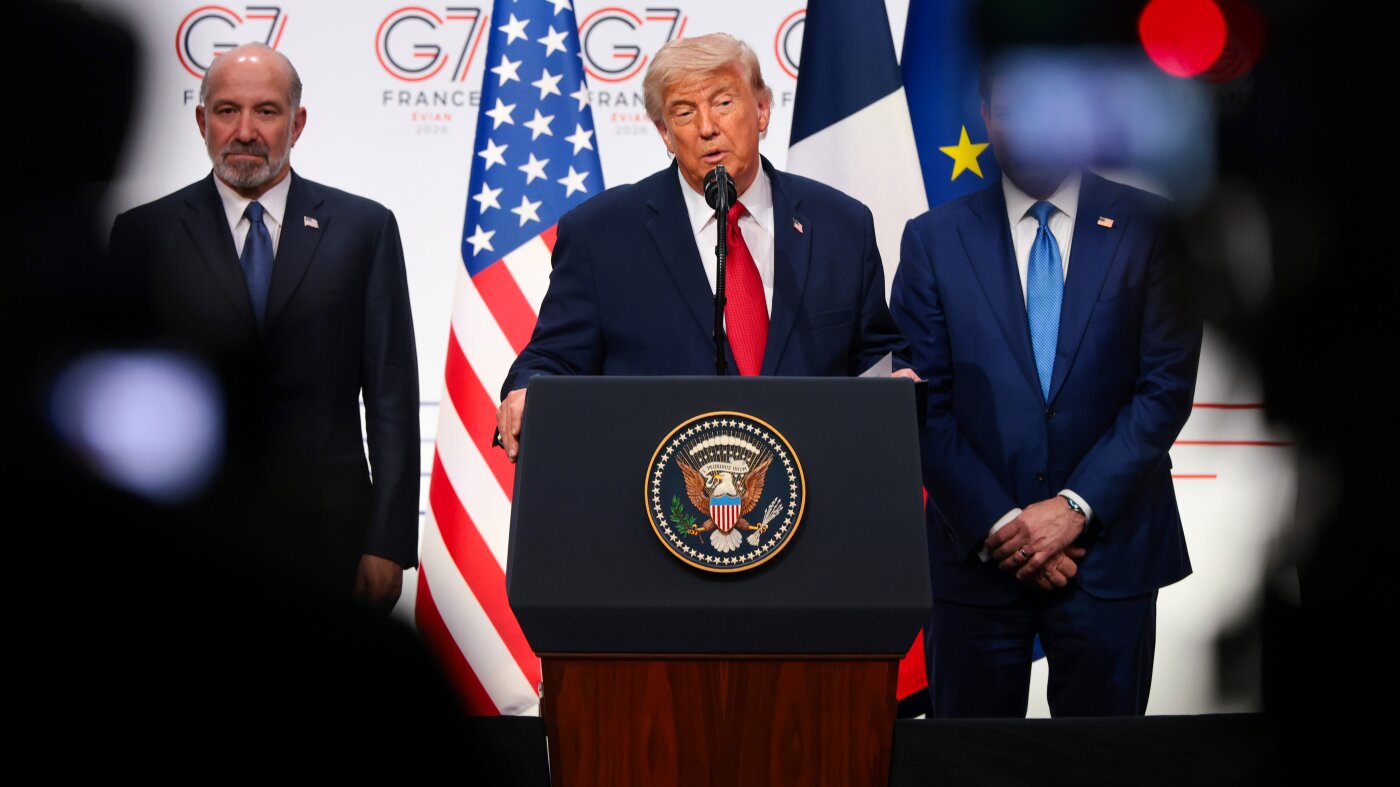
The Trump administration on Wednesday disclosed the terms of a preliminary agreement aimed at ending the war with Iran, offering the first public look at a framework President Trump announced days earlier. The proposal matters because it ties a halt in fighting to sanctions relief, shipping through the Strait of Hormuz and future talks over Iran’s nuclear material.
Senior administration officials, briefing reporters on condition of anonymity, read the document during Trump’s appearance at the G7 summit in Evian, France, NPR reported. Iran has not released its own account of the agreement.
The framework is brief and leaves many major issues for later negotiations, according to the officials. Trump said signing would happen in the coming days, and the document sets a 60-day window for talks on a final agreement, with an extension possible if both sides consent.
According to the agreement as read by a senior administration official, the United States and Iran would declare an immediate and permanent end to military operations on all fronts, including in Lebanon. The two countries would also pledge not to start another war or military operation against each other.
The document says the United States would begin removing its naval blockade once the agreement is signed. If a final deal is reached, the blockade would end within 30 days, according to the framework described by U.S. officials.
Iran, under the terms read to reporters, would use its “best efforts” to protect commercial shipping between the Persian Gulf and the Sea of Oman. Commercial vessels would face no charge for 60 days, according to the agreement.
The framework also calls for the United States to work with regional partners on a reconstruction and economic development fund for Iran of up to $300 billion, according to the officials. Trump told reporters the United States would not contribute directly to that fund, though he said other countries might invest in Iran.
Sanctions would remain in place until a final agreement is completed, according to the framework. In the meantime, the United States would issue waivers for exports of Iranian oil, petroleum and related products, including banking, insurance and transportation tied to those transactions.
The agreement says Washington would lift sanctions as part of a final deal and make frozen or restricted Iranian funds available once that deal is reached, according to the officials.
On nuclear issues, the framework says Iran will not “procure or develop nuclear weapons.” It also says the United States and Iran would create a plan for enriched uranium that Iran has stored deep underground.
Trump told reporters that Iran would “work closely” with the United States on enriched material. “When we have a chance, we’ll do it, but in the meantime, we have cameras on every inch of it. Nobody can do it, and if they do, we’ll hit them with Patriots,” he said, referring to the missile system.
Trump said technical talks on nuclear matters would begin immediately. He also said any economic relief for Iran would be “based on merit, and it won’t be from us.”
The president framed the agreement as an economic necessity, saying that without it the Strait of Hormuz would not have reopened. NPR reported that the U.S.-Israel-led war that began in late February pushed up oil prices and other costs, while polling showed U.S. public disapproval of attacks on Iran and weaker economic approval ratings for Trump.
This story draws on original reporting from NPR.