
US and Iran clash over plan for frozen assets to buy American farm goods
Washington says released Iranian funds should buy US food and medicine, while Tehran says it will decide how to spend the money.
By James Whitfield · Staff Writer
3 min read
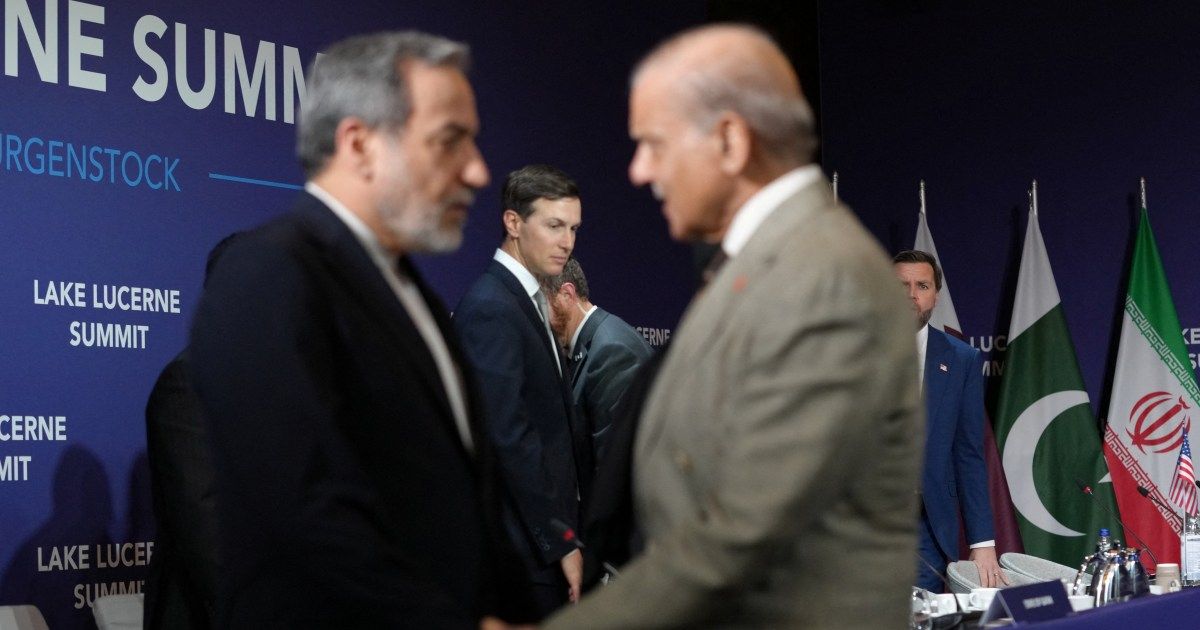
The United States says any released Iranian assets should be held in escrow and spent on American agricultural and medical goods, a proposal that could create a rare opening for commerce between two long-time adversaries. Iran says it has not accepted US control over the money, making the issue a potential sticking point in talks aimed at ending the Middle East war.
After talks in Switzerland, Iranian negotiator Mohammed Bagher Ghalibaf said the sides had agreed to release $12bn in frozen Iranian funds. US Vice President JD Vance described a different arrangement, saying any unfrozen assets would go toward purchases from American farmers and food for Iranians.
President Donald Trump said corn, soybeans and other goods Iran needs would be bought from US farmers. In a Truth Social post, Trump said money or sanctions relief from the US Treasury would go into a US-controlled escrow account and be used only for food and medical supplies from the United States, including corn, wheat and soybeans.
Iranian officials rejected that framing. Foreign Ministry spokesman Esmaeil Baghaei said the funds would be released and used by Iran with “absolute liberty” to buy goods needed by the country. He said any farm purchases would depend on price and quality, not conditions set by Washington.
Iran’s ambassador in Geneva, Ali Bahreini, also said Iran alone would decide how to use the assets.
Analysts see hard negotiations ahead
Gary Hufbauer, a non-resident senior fellow at the Peterson Institute for International Economics, told Al Jazeera that attaching spending conditions to unfrozen Iranian assets would produce lengthy negotiations. He said many members of Congress oppose the Iran deal, and multinational companies would be cautious about credit risk and another political flare-up.
Mohammad Reza Farzanegan, an economist at Philipps-Universitat Marburg in Germany, told Al Jazeera that Trump has a political incentive to steer Iranian purchases toward US goods. He said soybean exporters have been hurt by Trump’s trade dispute with China, and that presenting sanctions relief as humanitarian trade could help Trump with farm-state supporters.
Cullen Hendrix, a senior fellow at the Peterson Institute, told Al Jazeera the US proposal may also help Washington avoid a direct transfer of funds to Tehran, which could be portrayed domestically as a concession.
Trade exists, but remains narrow
US-Iran trade has persisted despite decades of sanctions, though at a low level and largely in sectors exempted for humanitarian reasons. According to US government figures cited by Al Jazeera, goods and services trade between the countries reached $838m in 2024, up 3 percent from 2023.
Services accounted for most of that total, at $742m, including nearly $600m flowing from the United States to Iran. Goods trade was smaller and consisted almost entirely of US exports to Iran.
Analysts said any revival of broader trade would be limited. Hendrix said Iran might buy corn and soybeans if required, but would be unlikely to make its food system dependent on US exports. Farzanegan said realistic trade categories include food, agricultural commodities, medicine, medical devices and related health-sector products.
Farzanegan also said Iran could need around 22 million tonnes of cereal imports this year, citing the UN Food and Agriculture Organization. Hufbauer said Iran could potentially export crude and refined petroleum products to the United States at competitive prices.
A relationship transformed since 1979
Before Iran’s 1979 Islamic Revolution, the country was a close US ally and a major regional trading partner. Iran exported oil to the United States, while US companies sold aircraft, military equipment, industrial machinery, vehicles, farm goods and technology to Iran.
The relationship broke down after the revolution and the 444-day hostage crisis at the US embassy in Tehran. Then-President Jimmy Carter froze Iranian assets and barred Iranian imports, and President Bill Clinton imposed a broad trade ban in 1995. The 2015 nuclear deal lifted some secondary sanctions, but Trump withdrew the United States from that agreement in 2018.
This story draws on original reporting from Al Jazeera.