
Ukraine targets Russian fuel routes to Crimea as refinery strikes widen
Kyiv says attacks on tankers, ports and refineries are aimed at Russian military logistics and have added pressure on fuel supplies.
By Sofia Marchetti · World Affairs Correspondent
3 min read
Ukraine has expanded its campaign against Russian fuel supplies, striking tankers bound for Russian-occupied Crimea and refineries far from the front, according to Ukrainian officials. Kyiv says the attacks are meant to disrupt military logistics and pressure Russia’s domestic fuel market as the land war slows.
Robert Brovdi, commander of Ukraine’s Unmanned Systems Forces, said his units hit 19 Russian tankers, a cargo ship and a ferry from July 6 to July 8. He said nine tankers were struck during the night of July 7.
Ukrainian Navy spokesman Dmytro Pletenchuk told Suspilne that Russia had shifted fuel deliveries to Crimea after Ukraine cut other supply routes. Pletenchuk said Russia had limited choices left between a land route and sea transport, and said the Kerch Bridge was not being used for fuel shipments at the volumes Russia needed.
Ukraine damaged the Kerch Bridge in 2022 with a truck explosion that set a nearby fuel train on fire. The bridge links Russia to Crimea, which Moscow seized in 2014.
President Volodymyr Zelenskyy told the Financial Times that Ukraine turned more attention to Crimea after disabling the oil offloading terminal at Novorossiysk, across the water on Russia’s coast. Zelenskyy said the campaign was intended to slow Russia’s militarisation of the peninsula and cut logistics tied to fuel and energy.
The Ukrainian Presidential Office in Crimea said the strikes had created a management crisis on the peninsula. Al Jazeera reported that civilian fuel sales had stopped in Sevastopol and that more than a dozen Crimean regions were facing electricity outages.
Ukraine also reported strikes in Crimea during the week, including attacks on the Saky airfield on July 3 that it said destroyed seven Sukhoi aircraft and two storage buildings holding Shahed drones. Ukrainian officials also said the Kerch oil transshipment terminal was hit on July 6, along with three hangars at the Guardsman airfield the same day.
Kyiv has kept up long-range attacks inside Russia. Moscow Mayor Sergei Sobyanin described a July 7 drone attack on the Russian capital as the largest in two years, and Russian officials said more than 400 Ukrainian drones were shot down while headed for the city on the opening day of a NATO summit in Ankara.
Ukraine’s Security Service said it struck the St Petersburg oil terminal on July 4, calling it one of the Baltic region’s largest oil products transshipment sites. Zelenskyy posted video that he said showed the terminal burning.
Ukraine’s General Staff said its forces later hit the Slavneft Yanos refinery in Yaroslavl, the Ust-Luga refinery on the Baltic Sea and the Omsk refinery in Siberia, Russia’s largest refinery and about 2,500km from the Ukrainian border. Russia’s Defence Ministry said it shot down 613 of 625 Ukrainian drones detected overnight.
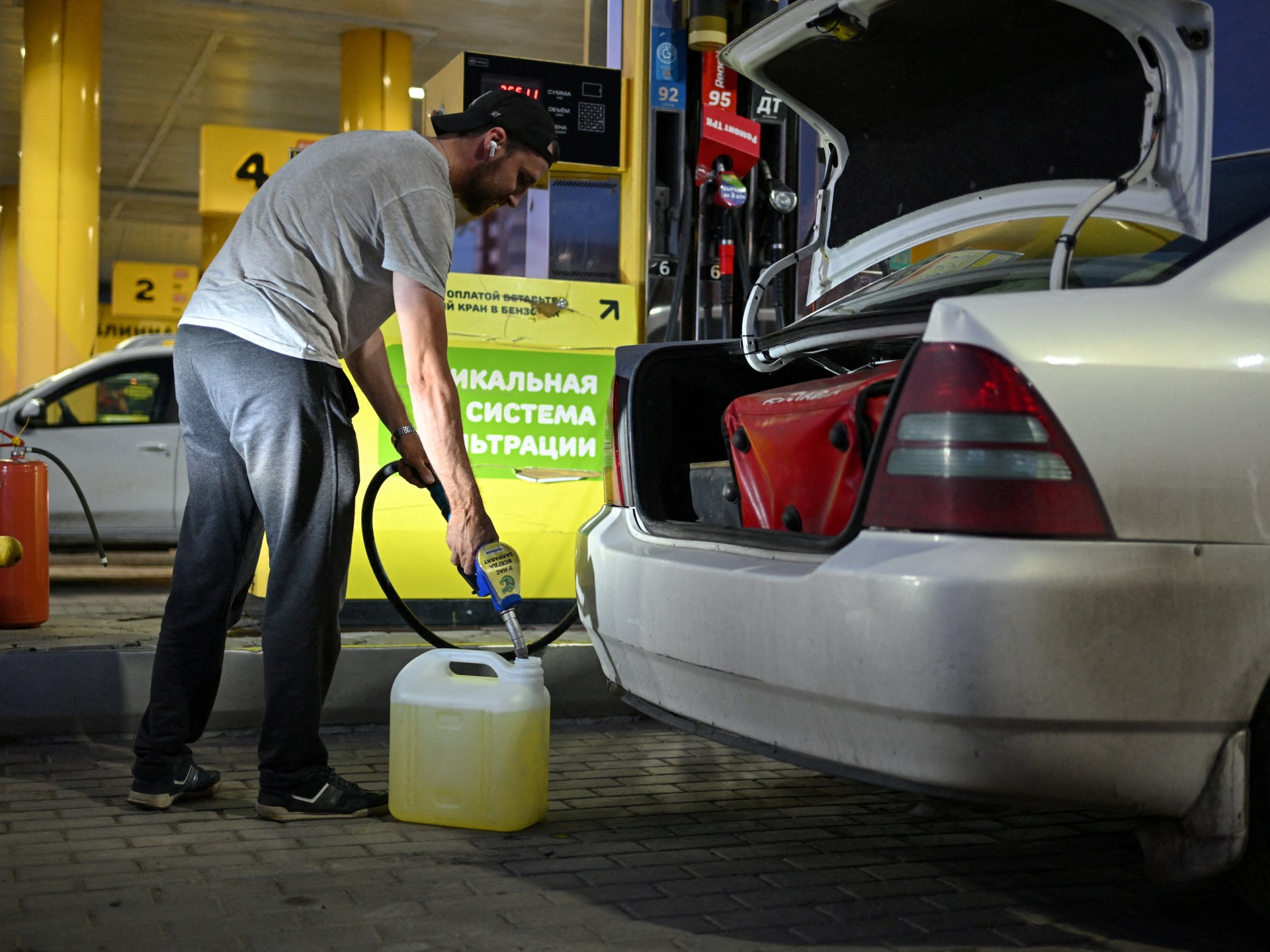
Ukraine’s Air Force said Russia had lost 42.7 percent of its refining capacity over the past year and had suffered $13.5bn in damage to oil infrastructure. Al Jazeera reported that the cumulative attacks have contributed to petrol and diesel shortages in Russia, with queues in major urban areas.
Zelenskyy told the Financial Times that the air campaign could prove decisive because, in his view, Ukrainian troops have largely halted Russia’s slow advance on the ground. Independent assessments cited by Al Jazeera estimated that Russia gained 97 square kilometres in the first six months of the year.
Ukraine’s commander-in-chief Oleksandr Syrskii urged caution, writing on Telegram that it was too early to speak of a turning point. He said Russia showed signs of exhaustion but still had offensive capacity and intended to widen a front line that he said already exceeded 1,250km.
Russian President Vladimir Putin, in a July 3 televised meeting with senior commanders, was told that Russian forces had seized 3,000sq km of Ukrainian territory this year and 636sq km in June. The Institute for the Study of War, which uses geolocated footage, estimated Russia’s June gain at 30sq km.
This story draws on original reporting from Al Jazeera.