
Gaza families search rubble for the missing as recovery teams run short
Years after Israeli strikes, families and Civil Defence workers in Gaza are still trying to recover bodies from destroyed homes with limited equipment.
By James Whitfield · Staff Writer
3 min read
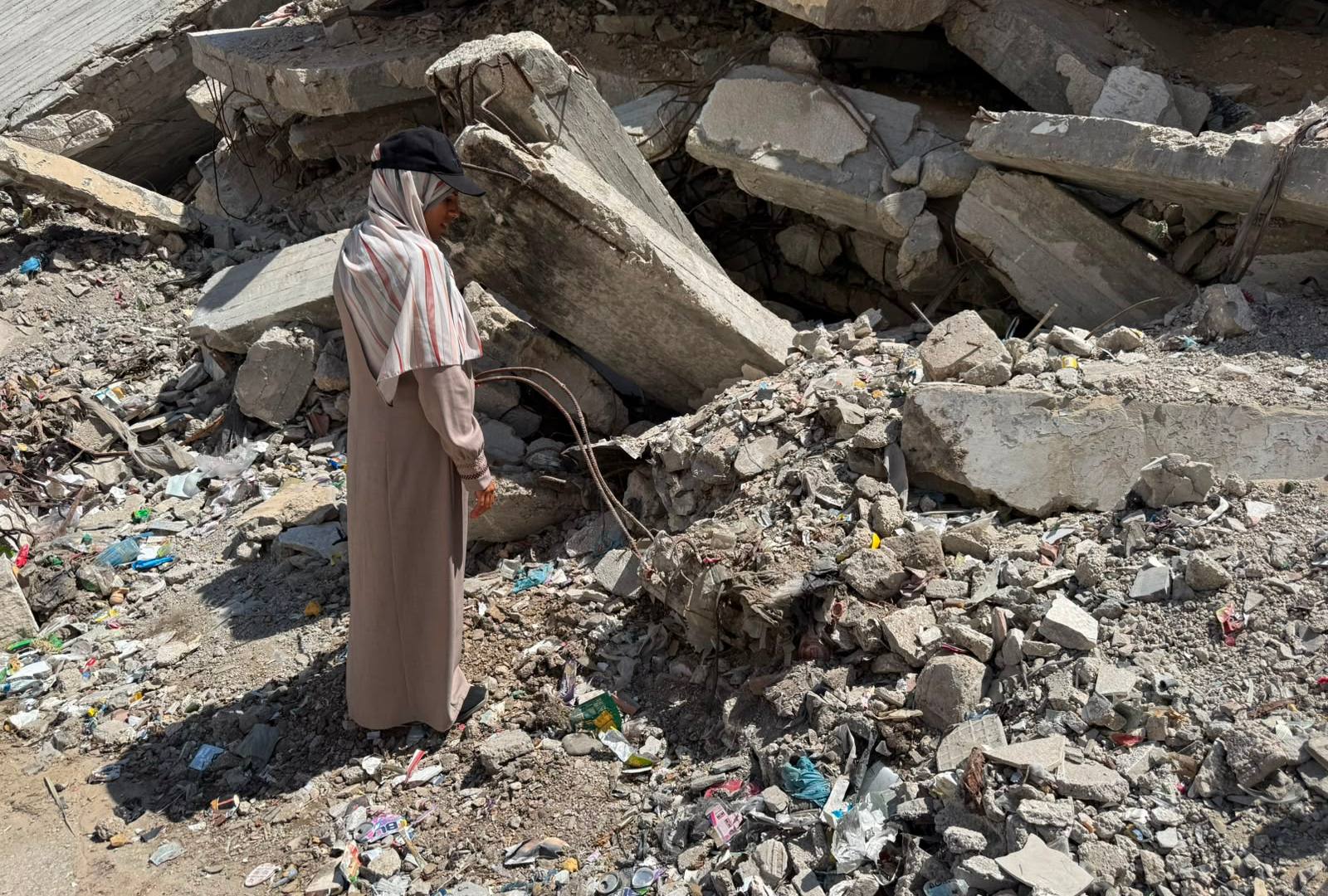
Families in Gaza are still searching collapsed buildings for relatives killed in Israeli attacks, a task that has stretched grief across years and left many without burials. Gaza’s Civil Defence says thousands of bodies remain under rubble, while recovery crews lack the heavy equipment needed to reach many sites.
Al Jazeera reported that the Haji family’s home in the al-Zaitoun neighbourhood of Gaza City was hit by an Israeli air raid on November 16, 2023. The three-storey house had held more than 30 relatives, ranging in age from four to 40, according to the report.
Fidaa Haji, 34, survived with her four children because they were in an outside room, Al Jazeera reported. Her husband, Adnan Haji, also 34, and other relatives in the main building were killed.
Haji and her children later moved south and lived in tents on a beach, according to Al Jazeera. After a ceasefire was announced in October 2025, they returned to al-Zaitoun and stayed near the ruins of their former home, where relatives’ remains were still trapped.
A search by hand
Haji told Al Jazeera that the inability to say goodbye or bury loved ones had left her grief unresolved. Her brother later recovered her husband’s body and buried him in the courtyard of al-Shifa Hospital, but the family still has not held a full funeral, according to the report.
The family tried on July 1 to recover more bodies themselves, Al Jazeera reported. Without heavy machinery, they found six bodies, though identification was difficult because so much time had passed since the attack.
Al Jazeera reported that Haji’s children struggled after returning to the ruined home. Her daughter Hala showed signs of psychological trauma and had trouble eating, while the children avoided parts of the house where they believed cousins remained under debris.
The case reflects a wider crisis, according to Gaza’s Civil Defence and humanitarian organisations cited by Al Jazeera. Families are living with what aid groups describe as suspended grief: relatives are missing but known or believed to be dead, with no grave, funeral or clear end to mourning.
Crews ration scarce equipment
Ismail al-Thawabta, director of Gaza’s Government Media Office, told Al Jazeera that thousands of bodies are still inaccessible because crews lack the machinery needed for recovery work. He said the delays have caused severe psychological and social harm, particularly for children waiting for answers about parents, siblings or other relatives.
Abdullah al-Majdalawi, director of public relations and media at Gaza Civil Defence, told Al Jazeera that his teams are working with the International Committee of the Red Cross, which has supplied excavators for some operations. He said the project covers only 400 hours of work, enough for a limited number of homes.
Because of that shortage, Civil Defence teams choose sites based on factors such as the number of people believed to be buried there, survivor accounts and items that may help locate or identify remains, al-Majdalawi said. He told Al Jazeera that crews sometimes use hammers and basic tools against steel and large slabs of concrete.
Al-Majdalawi said some families ask crews to bring back any part of a loved one that can be buried. He described the work as psychologically punishing for rescuers, who repeatedly handle remains while families wait nearby.
In one operation at a destroyed home thought to contain about 45 bodies, teams worked for three days and recovered only a mother and child, al-Majdalawi told Al Jazeera. The others were not found, leaving families with no remains to identify or bury.
This story draws on original reporting from Al Jazeera.