
UK protest powers face scrutiny after Palestine Action ban upheld
The Court of Appeal backed the UK’s ban on Palestine Action, intensifying debate over direct action and protest rights.
By Sofia Marchetti · World Affairs Correspondent
3 min read
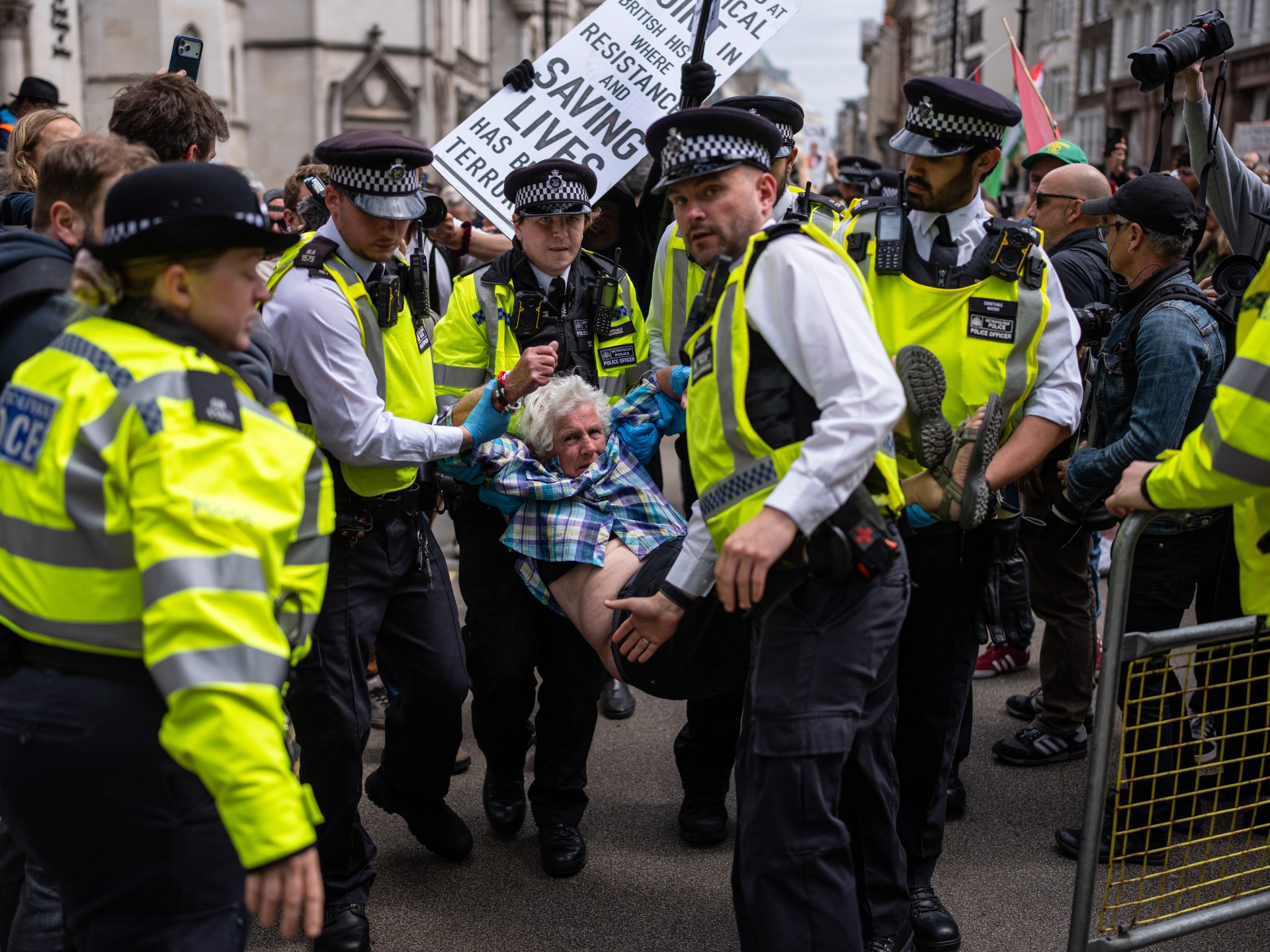
The UK Court of Appeal has upheld the government’s decision to ban Palestine Action as a terrorist organisation, Al Jazeera reported. The ruling matters beyond one group because it places a direct-action protest movement inside Britain’s antiterrorism framework.
Palestine Action, founded in 2020, says it targets companies and institutions it accuses of aiding Israel’s war in Gaza, according to Al Jazeera. Its actions have included occupations, disruption at factories and alleged property damage at defence companies.
The ban makes membership or support for the group a criminal offence punishable by up to 14 years in prison, Al Jazeera reported. About 3,000 people have been arrested since last year for supporting Palestine Action, according to the outlet.
A long record of direct action
Al Jazeera framed the case against a longer British history of protest movements that used disruption and lawbreaking to press political demands. The Women’s Social and Political Union, founded by Emmeline Pankhurst in 1903, campaigned for women’s voting rights through tactics including heckling, chaining members to railings, window-smashing, arson and attacks on property, according to the report.
Suffragettes were jailed for offences including criminal damage, obstruction and arson, Al Jazeera reported. The movement later became widely honoured in Britain after women won partial voting rights in 1918 and equal voting rights with men in 1928.
Postwar Britain saw large campaigns over nuclear weapons, taxation and war, according to Al Jazeera. The Campaign for Nuclear Disarmament drew hundreds of thousands of people after its founding in 1957, while the 1990 poll tax protests led to clashes in London, more than 100 injuries, hundreds of arrests and the tax’s abolition within a year.
In 2003, between one million and two million people marched in London against the Iraq invasion, Al Jazeera reported. The war proceeded despite what the outlet described as the largest political demonstration in British history.
Climate cases and tougher laws
Al Jazeera reported that experts see the rise of Extinction Rebellion, Insulate Britain and Just Stop Oil as a turning point in official responses to protest. Extinction Rebellion, founded in 2018, used nonviolent civil disobedience such as roadblocks and glueing protests to draw attention to climate change, according to the report.
The Police, Crime, Sentencing and Courts Act 2022 turned public nuisance into a statutory offence carrying a maximum 10-year sentence, Al Jazeera reported. The Public Order Act 2023 added protest-related offences and gave police wider powers, according to the report.
David White, a professor of climate justice at Queen Mary University of London, told Al Jazeera that researchers found 286 cases in which protesters were jailed for civil disobedience in Britain. He said those cases accounted for more than 136 years on remand or under sentence, with an average of 28 months and one in five jailed for more than a year.
White told Al Jazeera that jail terms for direct action had become more common and longer. He also said courts had restricted defendants from explaining political or moral reasons for their actions, including in cases involving climate change or genocide.
Palestine Action case
The latest dispute intensified after four Palestine Action activists known as the Filton Four were sentenced over 1.2 million pounds, or $1.6m, in damage at an Elbit Systems site near Bristol, Al Jazeera reported. Jurors in their criminal damage trial were not told that sentencing could later treat their conduct as linked to terrorism, according to the report.
Huda Ammori, a cofounder of Palestine Action, said she plans to take the challenge to the Supreme Court, Al Jazeera reported. United Nations experts warned that the proscription could chill political protest, according to the outlet.
Anas Mustapha of CAGE International told Al Jazeera the ruling showed the powers were “authoritarian tools for crushing dissent.” Thomas Bell of Human Rights Watch told the outlet the decision classified protest as terrorism and reflected UK backsliding on human rights.
This story draws on original reporting from Al Jazeera.