
Tunisia solar concessions draw union and activist resistance
Critics say five foreign-backed solar projects approved by parliament risk weakening public control over Tunisia’s energy system.
By Daniel Okafor · Business Editor
3 min read
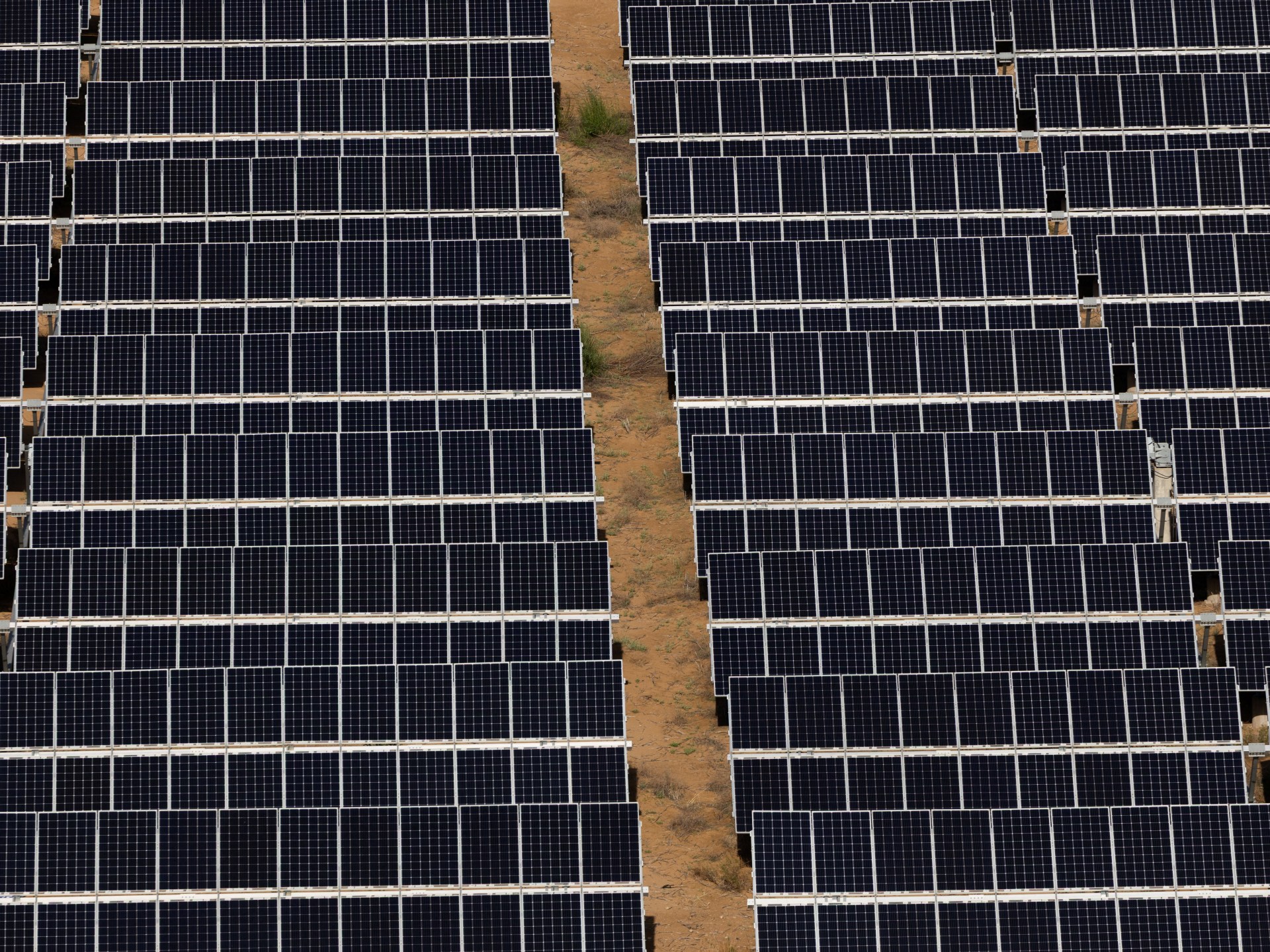
Tunisia’s approval of five solar power concessions has triggered resistance from unions, activists and policy critics who say the projects hand too much control to foreign companies. The dispute matters because Tunisia is trying to cut a large energy deficit while meeting its renewable power targets.
Writing for Al Jazeera, Saber Ammar and Hamza Hamouchene said Tunisia’s energy deficit is about $3.8bn, or nearly 51 percent of its total trade deficit. They said the gap has widened each year since 2000, driven by higher domestic demand and what they described as a failure to build energy sovereignty.
The five concessions were submitted to parliament on January 29 and later approved. According to Ammar and Hamouchene, the projects cover solar plants at Khobna and Mezzouna in Sidi Bouzid, El Ksour and Sagdoud in Gafsa, and Menzel Habib in Gabes.
The plants would have a combined capacity of about 598 megawatts and require an estimated $560m in investment, the authors said. The concessions would be granted to foreign multinationals.
Why opponents object
The Electricity and Gas Federation, a trade union organisation, held an urgent news conference on April 21 to oppose the concessions, according to Ammar and Hamouchene. The federation argued that the contracts would leave STEG, Tunisia’s public electricity and gas utility, mainly managing the grid while foreign firms take over power generation.
The union also said public money would cover infrastructure costs while private companies kept the profits, the authors reported. Workers and activists later protested outside parliament, but lawmakers approved the contracts.
The Tunisian Economic Observatory also raised objections, according to Ammar and Hamouchene. The observatory said the concessions included broad tax exemptions and stabilisation clauses that could restrict Tunisia’s fiscal powers.
The observatory also said the projects offered little technology transfer, weak local industrial participation and limited job creation, the authors reported. It further warned that carbon credits generated from emissions cuts in Tunisia could be transferred to the companies rather than held as a public asset.
The Electricity and Gas Federation had opposed carbon credit transfers before these concessions reached parliament, Ammar and Hamouchene said. Last year, the federation organised a strike over the issue, arguing that private developers should not capture credits linked to Tunisia’s energy transition.
A wider argument over energy policy
Supporters of the concessions presented them as a way to reduce Tunisia’s energy deficit, cut reliance on Algerian gas and reach a target of 35 percent renewables in the energy mix by 2030, according to Ammar and Hamouchene. They said Algerian gas currently supplies about 60 percent of Tunisia’s natural gas needs.
Ammar and Hamouchene argued that the concessions do not address the biggest part of Tunisia’s energy problem. They said about 73 percent of the country’s energy comes from petroleum products, mainly gasoline and diesel used by a transport system centred on private vehicles.
They said Tunisia should instead invest in public transport, restrict car imports, tax high-consumption vehicles more heavily and strengthen domestic refining capacity. They pointed to the Tunisian Company of Petroleum Industries, known as STIR, as a target for investment and upgrades.
The authors also cited a 2012 proposal for a $2bn Tunisia-Libya refinery project in Skhira. They said the plan was suspended because conflict in Libya made crude supply uncertain, and was later abandoned.
After the concessions were approved, Tunisia’s energy minister and a senior Ministry of Industry official were dismissed, according to Ammar and Hamouchene. They described the dismissals as an effort to contain public anger over the projects.
This story draws on original reporting from Al Jazeera.