
Trump heads to NATO summit seeking action on defense spending
The Ankara summit will test whether NATO allies can satisfy Trump’s demand for faster moves toward a 5% defense-spending target.
By Lucas Ferreira · Science & Environment Writer
3 min read
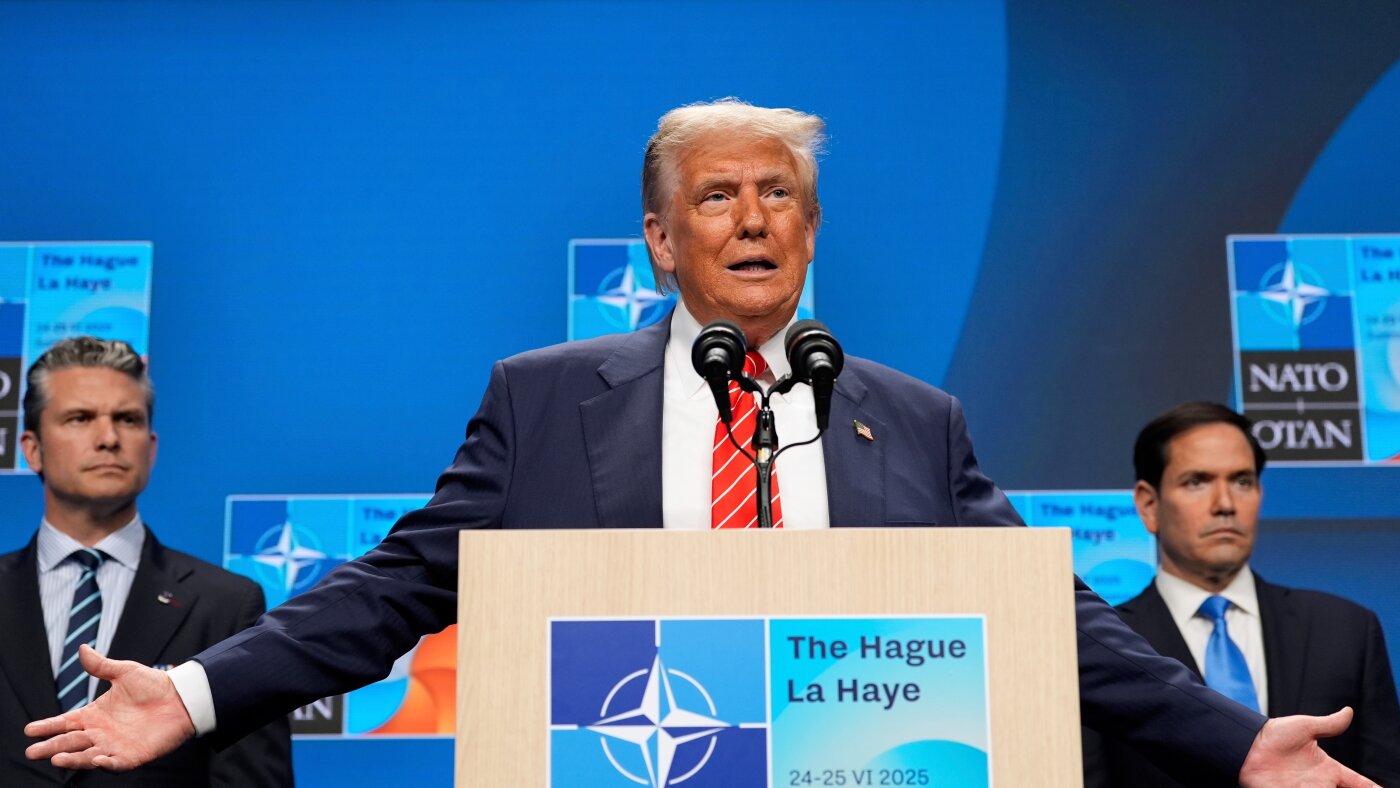
President Donald Trump is traveling to Ankara this week to press NATO allies to act on defense-spending promises they made last year, the Associated Press reported. The summit will test how far alliance members are willing to go to keep the U.S. president aligned with NATO as wars and diplomatic disputes strain relations.
Trump leaves Monday evening for the annual gathering in Turkey, according to AP. At last year’s summit in The Hague, NATO countries agreed to work toward spending 5% of gross domestic product on defense over the next decade, a goal Trump had pushed hard.
Matt Whitaker, the U.S. ambassador to NATO, said Trump expects allies to move quickly. “President Trump fully expects that all allies will step up immediately and get on the path to 5% and do it with urgency,” Whitaker told reporters, according to AP.
Spending pledges face their first test
The 5% target includes 3.5% for core military spending and the remainder for related costs such as infrastructure, AP reported. Spain said at the time it could not meet the goal, and other countries have expressed concerns about the size of the commitment.
Mark Rutte, NATO’s secretary-general, tried to highlight allied spending increases during an Oval Office meeting with Trump last month, AP reported. Rutte showed charts describing what he called “The Trump Trillion,” referring to allied spending commitments since 2017.
Luke Coffey, a senior fellow at the Hudson Institute, told AP the Ankara summit would serve as a “first report card” after The Hague. He said leaders who arrive with credible plans to meet the targets could give Trump room to claim success.
Ukraine and Syria meetings are planned
The war in Ukraine, now in its fifth year, is expected to be a central issue at the summit, AP reported. The White House said Trump will meet Ukrainian President Volodymyr Zelenskyy on Wednesday, after Trump spoke with both Zelenskyy and Russian President Vladimir Putin on July 4.
Trump also plans to meet Syrian President Ahmad al-Sharaa on the sidelines, according to AP. The White House has not stated the purpose of the meeting, which follows Trump’s public comments about Syria taking a larger role against Hezbollah in Lebanon. Al-Sharaa has said he is not interested in doing that.
A separate meeting is planned with Turkish President Recep Tayyip Erdogan, the summit host, whom Trump considers a close friend, AP reported. Trump has no other bilateral meetings scheduled with allied leaders.
U.S. posture in Europe remains unsettled
The summit comes as the Trump administration promotes what it calls “NATO 3.0,” a concept under which European countries would assume more responsibility for their own security, AP reported. Elbridge Colby, a U.S. undersecretary of defense, outlined the approach earlier this year to NATO defense ministers.
Defense Secretary Pete Hegseth added pressure last month by saying the U.S. would review its forces in Europe over six months, according to AP. Trump has sent mixed signals, including announcing 5,000 troops for Poland after ordering the same number withdrawn from Europe.
Sen. Jeanne Shaheen, D-N.H., is leading a bipartisan Senate delegation to Ankara to show congressional support for NATO, AP reported. Shaheen said allies are vital to U.S. security and economic interests, and criticized the administration’s approach to Russia and Europe.
Experts told AP that even with higher spending, many European allies still rely on the United States for their defense. Liana Fix of the Council on Foreign Relations said most European countries remain far from being able to defend themselves without U.S. support.
This story draws on original reporting from NPR.