
Taiwan opposition leader says Xi talks skipped reunification issue
KMT chair Cheng Li-wun told NPR her Beijing meeting with Xi Jinping focused on restarting dialogue, not Taiwan’s political future.
By Daniel Okafor · Business Editor
3 min read
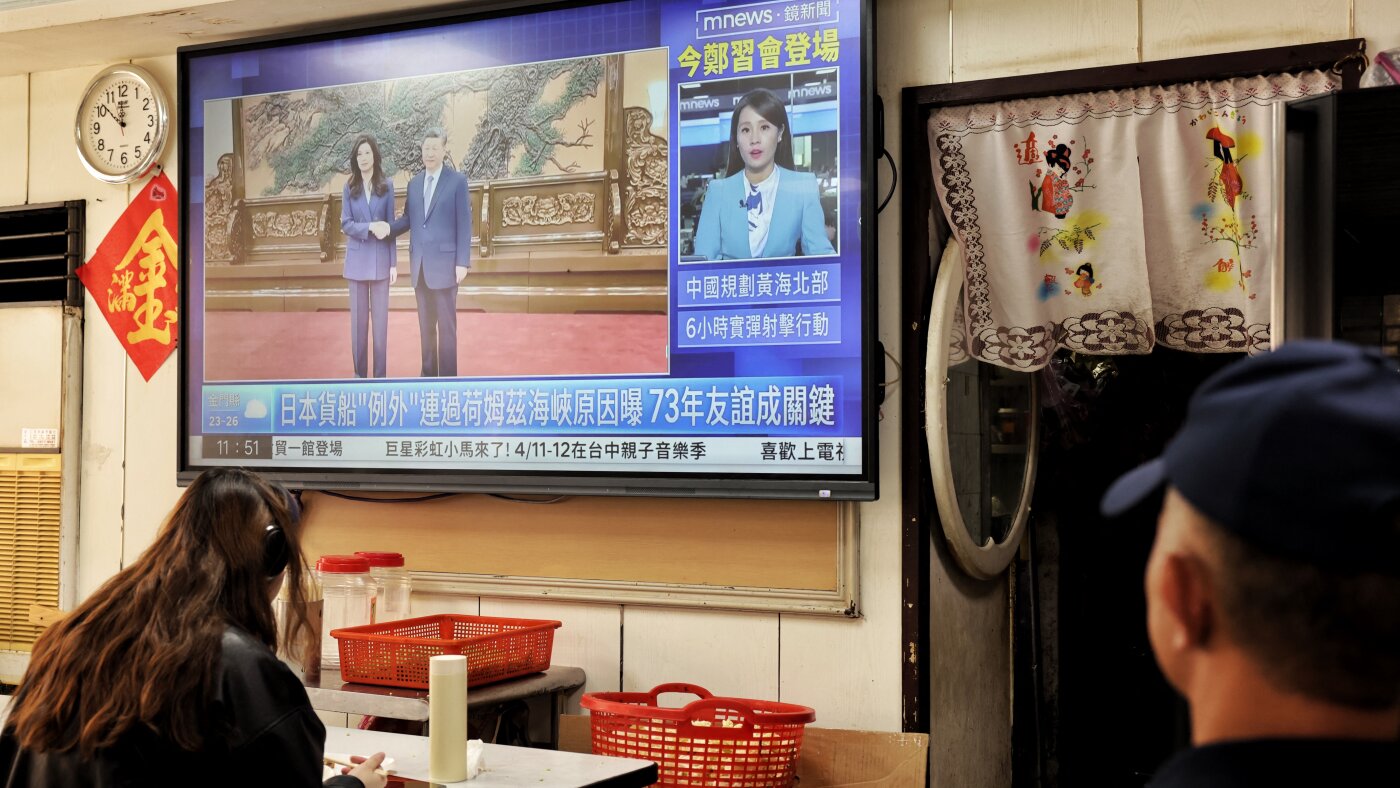
Taiwan opposition leader Cheng Li-wun said her recent meeting with Chinese President Xi Jinping did not address “reunification,” even though Beijing continues to press its claim over the self-governing island. Her remarks to NPR matter because Taiwan is waiting on a $14 billion U.S. arms package while questions persist about Washington’s long-term commitment to Taiwan’s defense.
Cheng, who leads Taiwan’s main opposition Kuomintang, or KMT, is on a 15-day visit to the United States, NPR reported. She is trying to make the case for more engagement with Beijing at a time of sharper tension across the Taiwan Strait.
Cheng told NPR that talks with Xi in Beijing earlier this year were aimed at reopening communication between the two sides. She said Taiwan and China currently lack the conditions needed to discuss reunification, and that her priority is reducing the risk of conflict.
The KMT chairwoman met Xi in Beijing on April 10, according to NPR and photo captions from the meeting. Xi has previously said reunification with Taiwan is “unstoppable,” NPR reported, but Cheng said that issue was not part of her exchange with him.
Cheng framed her approach around what she described to NPR as the need for “peaceful coexistence” after the Chinese civil war, which pitted the KMT against the Chinese Communists in the 20th century. She warned in the interview that a war across the Taiwan Strait would devastate Taiwan and could draw in the United States, with wider consequences.
Her U.S. trip comes as Taiwanese politics are divided over China policy and defense, NPR reported. The ruling Democratic Progressive Party criticized the KMT after the opposition used its legislative majority in May to pass a smaller defense spending measure than President Lai Ching-te had sought, according to NPR.
Asked by NPR about criticism that the KMT reduced the arms budget, Cheng rejected the idea that her party is weak on defense. She said the KMT has long backed Taiwan’s defense and argued that the DPP’s proposed special defense budget lacked sufficient detail and raised legislative concerns.
Cheng also told NPR that the KMT chose to approve foreign military sales first rather than accept the government’s full proposal. The dispute has unfolded while Taiwan awaits U.S. action on the $14 billion arms package, NPR reported.
On cross-strait policy, Cheng told NPR that dialogue could resume if both sides returned to the 1992 consensus and opposed Taiwan independence. She said that, if the KMT returns to power in 2028, it would seek broad exchanges with mainland China and pursue mechanisms to reduce military activity and prevent conflict.
Cheng also explained her opposition to Taiwan independence by pointing to the Republic of China Constitution, telling NPR that it treats Taiwan and the mainland as two areas under a one-China framework. She said that, under that view, avoiding permanent separation would create room for dialogue and reconciliation with Beijing.
This story draws on original reporting from NPR.