
Syria signals Lebanon diplomacy despite US pressure over Hezbollah
Foreign Minister Asaad al-Shaibani’s Beirut meetings pointed to a cautious reset with Lebanon rather than a Syrian move against Hezbollah.
By James Whitfield · Staff Writer
3 min read
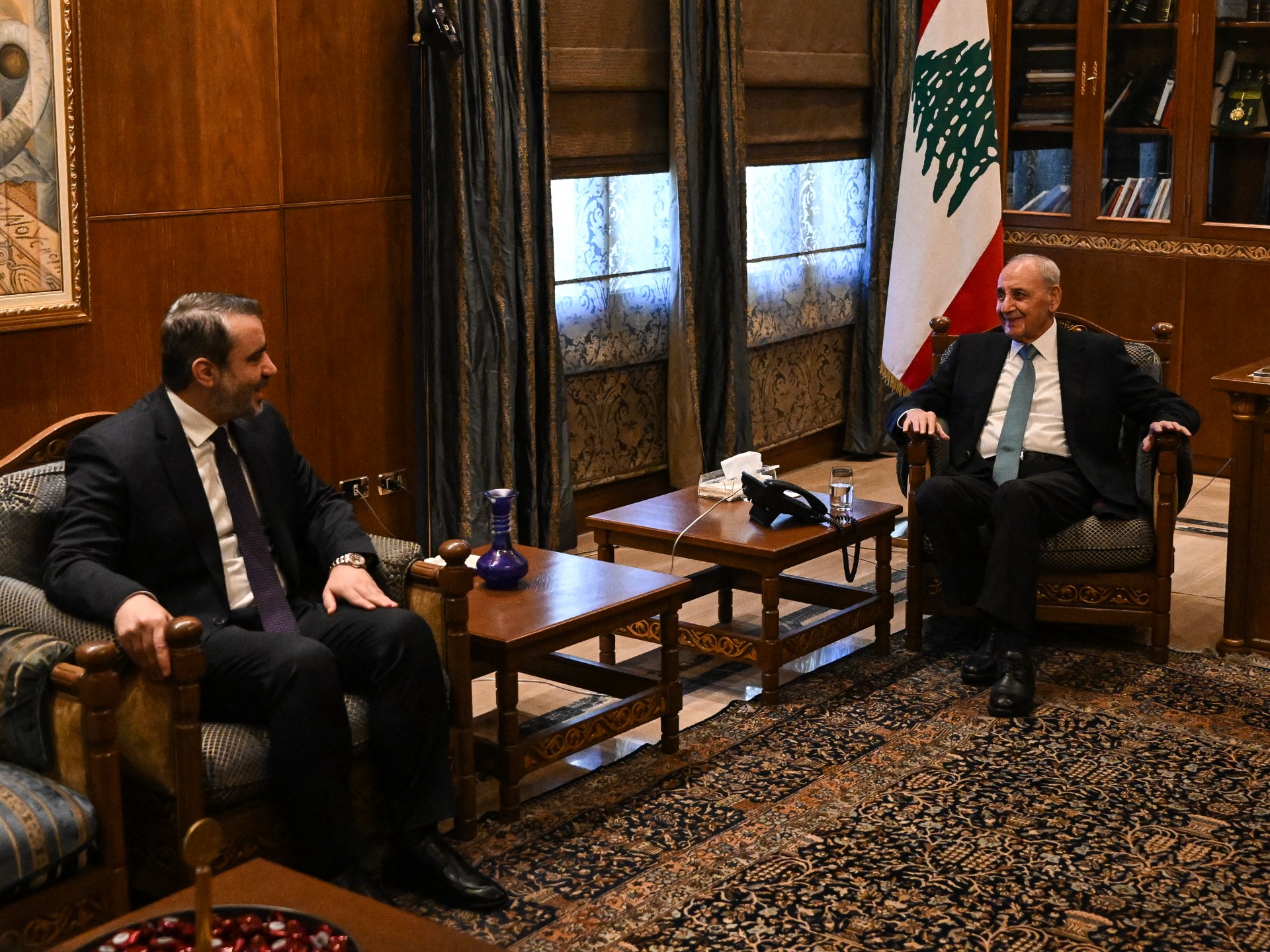
Syria’s foreign minister used a Beirut visit on Thursday to signal that Damascus wants dialogue with Lebanon, even as US President Donald Trump has urged Syria to take a lead role in disarming Hezbollah. Analysts told Al Jazeera that Asaad al-Shaibani’s meeting with Lebanese Parliament Speaker Nabih Berri, a key Hezbollah ally, showed Syria is seeking political channels rather than a military role across the border.
Al-Shaibani also met Lebanese President Joseph Aoun and Prime Minister Nawaf Salam during the trip, according to Al Jazeera. After meeting Salam, he rejected Israeli attacks on Lebanon and said a recent Israel-Lebanon framework agreement was a Lebanese internal matter.
Nawar Hawach, the International Crisis Group’s senior Syria analyst, told Al Jazeera that the Berri meeting marked a shift from al-Shaibani’s October visit, when he avoided Lebanon’s Shia leadership. Hawach said Damascus now appears to want ties with all Lebanese factions, including the bloc closest to Hezbollah.
A strained relationship enters a new phase
Syria and Lebanon have a long record of intervention and influence in each other’s affairs, Al Jazeera reported. Syria occupied Lebanon from 1976 until 2005 under Hafez al-Assad and then Bashar al-Assad, before withdrawing after large anti-Syrian protests.
Al Jazeera reported that Bashar al-Assad continued to influence Lebanese politics through local partners after the withdrawal. That balance changed in December 2024, when Syrian opposition groups took Damascus and ended decades of Assad family rule.
Souhayb Jawhar, a Lebanese analyst with Badil, told Al Jazeera that relations are now in a “delicate transitional phase.” He said the new Syrian leadership is trying to rebuild ties with Lebanon through assistance and coordination, rather than returning to the old model of Syrian control.
Hezbollah remains the central issue
Hezbollah’s role in Syria is a major source of mistrust, according to Al Jazeera. The Lebanese group backed the Assad government during the Syrian war and has been accused of attacks against Syrian civilians; Hezbollah was part of the pro-Iran “axis of resistance” with the former Syrian government.
The current Syrian authorities fought Hezbollah during the war, and Al Jazeera reported that many Syrians remain hostile to the group. Last year, the Syrian government blamed cross-border clashes with Lebanon on Hezbollah, though Hezbollah denied involvement.
Hawach told Al Jazeera that Lebanese-Syrian relations amount to a cautious reset toward normal state-to-state ties, with practical cooperation advancing while mistrust and Lebanon’s divide over Hezbollah limit progress.
Al Jazeera reported that Hezbollah was weakened in 2024 when Israel killed much of its military leadership, including longtime Secretary-General Hassan Nasrallah, during expanded attacks in Lebanon. The group has nevertheless remained a military force during recent months of fighting with Israel, according to the report.
Damascus resists a military role
Trump has repeatedly suggested in recent weeks that Syria could be relied on to disarm Hezbollah, Al Jazeera reported. Hawach described Trump’s comments to Al Jazeera as political pressure rather than a concrete plan, saying Damascus has reasons to rule out military action in Lebanon.
Al Jazeera reported that Syrian President Ahmed al-Sharaa has denied that Syria’s army will enter Lebanon to disarm Hezbollah. Jawhar said Damascus does not want Hezbollah’s weapons to threaten Syrian security, but also does not want to serve an American or Israeli effort that could spark Lebanese internal conflict.
Jawhar told Al Jazeera that talks over Hezbollah’s weapons would have to be gradual and internal, beginning with a halt to Israeli attacks and withdrawal, followed by discussion of a national security strategy. He said Berri can help manage compromises and reassure Lebanon’s Shia community.
Analysts cited by Al Jazeera warned that Syrian intervention in Lebanon could widen regional conflict and take on a sectarian dimension. Jawhar said the Beirut visit pointed to a Syrian effort to redefine ties with Lebanon through political and security coordination, while avoiding tutelage, rupture or military intervention.
This story draws on original reporting from Al Jazeera.