
Sudanese mothers in Lebanon face displacement after fleeing war at home
Sudanese women who escaped Sudan’s civil war are now sheltering in Beirut after fighting in Lebanon uprooted their families again.
By James Whitfield · Staff Writer
4 min read
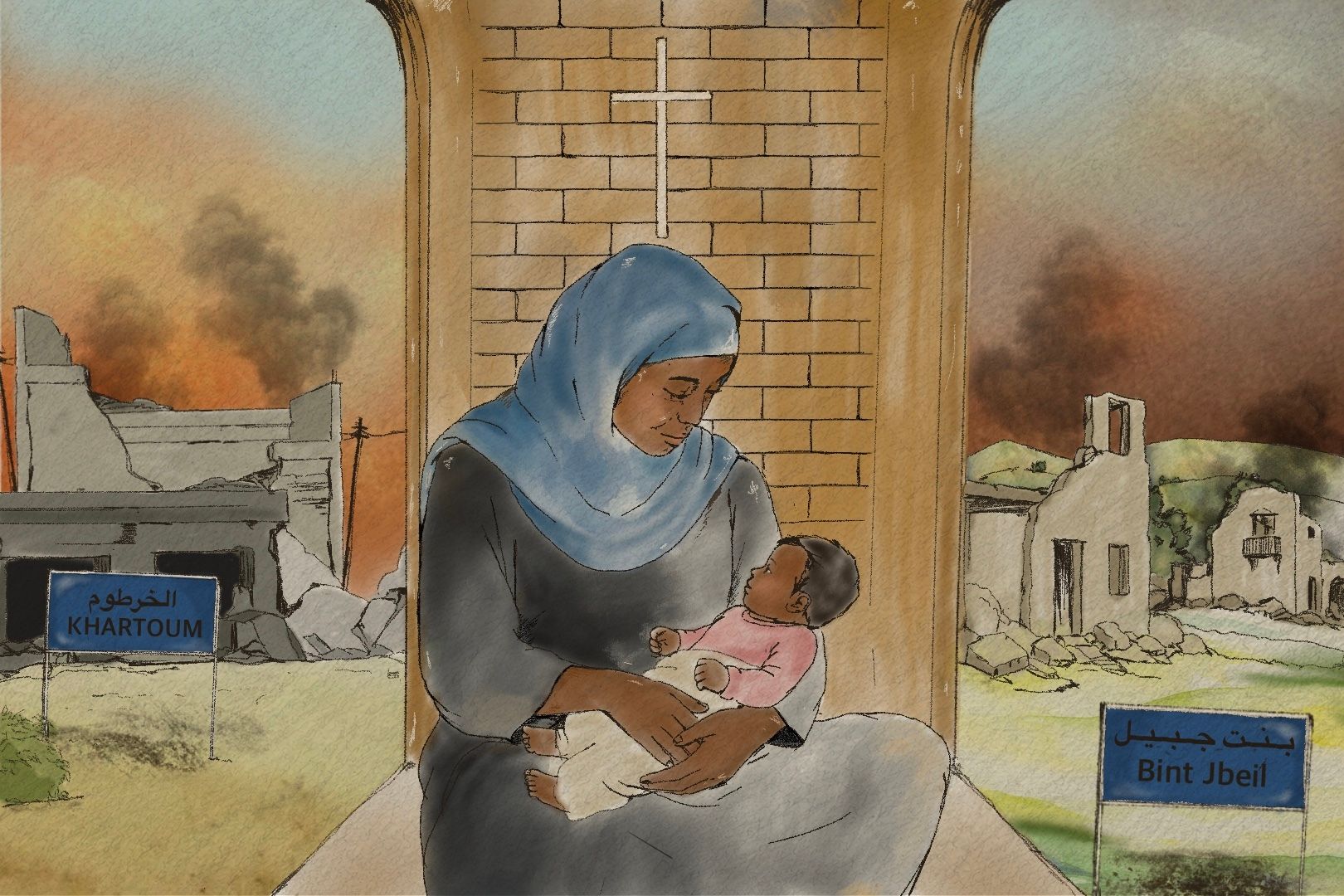
Sudanese mothers in Lebanon who escaped the civil war in Sudan are being displaced again as fighting in Lebanon pushes migrant families from their homes, Al Jazeera reported. The upheaval has left women who recently gave birth or are caring for young children dependent on crowded shelters, aid groups and uncertain legal protection.
Al Jazeera reported from Saint Joseph Church in Beirut, where about 250 displaced migrant workers are sheltering, most of them Sudanese, along with people from Bangladesh, Pakistan and other parts of South Asia. Since renewed fighting between Hezbollah and Israel began on March 2, about 1.5 million people have been internally displaced in Lebanon, including migrant workers, according to Al Jazeera.
Why are Sudanese mothers in Lebanon displaced again?
Many Sudanese migrants in Lebanon first left Sudan after the war that began in April 2023 destroyed homes, separated families and shut down ordinary life. Some then settled in southern Lebanon or Beirut, only to flee again when the Israel-Hezbollah conflict reached areas where they lived.
One of the women, identified by Al Jazeera as Rufaida, is a 28-year-old mother from Sudan who arrived in Lebanon about a year ago. She told Al Jazeera that fighting in Khartoum destroyed her family home and killed her father before she traveled across Sudan for months to obtain papers and a passport.
Rufaida reached Beirut on a one-month tourist visa, which has expired, according to Al Jazeera. She married Mohammad, a Sudanese man who had spent eight years in Lebanon, and the couple lived in Bint Jbeil, where he worked as a concierge in a building that also provided them a room.
That home was later destroyed during Israel’s campaign in south Lebanon, Al Jazeera reported. Rufaida, then eight months pregnant, and Mohammad fled north in a van with a small bag containing baby clothes, passports and family keepsakes from Sudan.
After sleeping on the Beirut waterfront, the couple walked across the city looking for shelter, according to Al Jazeera. They said a shelter run by Offre Joie in Karantina refused them because they were not Lebanese; Al Jazeera said the organization had not responded to requests for comment by publication.
Lebanon’s Ministry of Social Affairs had issued an April 16 directive saying shelters should be open to individuals and families of all nationalities, Al Jazeera reported. The couple eventually reached Saint Joseph Church, which has long served migrant communities in Beirut.
Father Michael Petro, who leads the Jesuit parish, told Al Jazeera the church became a trusted gathering place for migrants beginning with earlier waves of workers in the 1970s. He said the church hit its 250-person capacity on the second day of the war and had recently turned away more than 100 people.
The church and partner groups have also helped with medical care. Al Jazeera reported that the Jesuit Refugee Service and other organizations covered Rufaida’s prenatal care, cesarean delivery and vaccinations for her son, Ahmad.
Another Sudanese mother at the church, 30-year-old Roudaina Mustafa, arrived with her husband and four children after fighting forced them from a shared room in Dahiyeh, Beirut’s southern suburbs, Al Jazeera reported. She later gave birth to a daughter, Yana, with costs covered by the church and the NGO Assameh.
Roudaina told Al Jazeera her eight-year-old daughter, Tebyan, who was diagnosed with Asperger’s syndrome in Lebanon, has been unable to continue specialized care after the annual cost rose from $2,000 to $6,000. She also said her children’s schooling is blocked because most of them lack up-to-date documents.
The International Organization for Migration counted 164,097 migrants in Lebanon in August 2025, including 14,854 Sudanese nationals, according to figures cited by Al Jazeera. UN figures cited by Al Jazeera say 4.4 million Sudanese have fled their country since the civil war began, while about 3,800 Sudanese are registered as refugees with UNHCR in Lebanon.
UNHCR says only about half of refugee children of primary school age in Lebanon are enrolled in school, according to figures cited by Al Jazeera. Roudaina told Al Jazeera she hopes for resettlement in a third country, though UNHCR’s Global Trends report says fewer than 82,000 refugees were resettled worldwide last year despite nearly 2.9 million being identified as needing it.
This story draws on original reporting from Al Jazeera.