
Shipping lines resume routes as Iran war disruption eases
Container capacity has rebounded on key routes after months of attacks, delays and higher costs tied to the Iran war and Red Sea strikes.
By Lucas Ferreira · Science & Environment Writer
3 min read
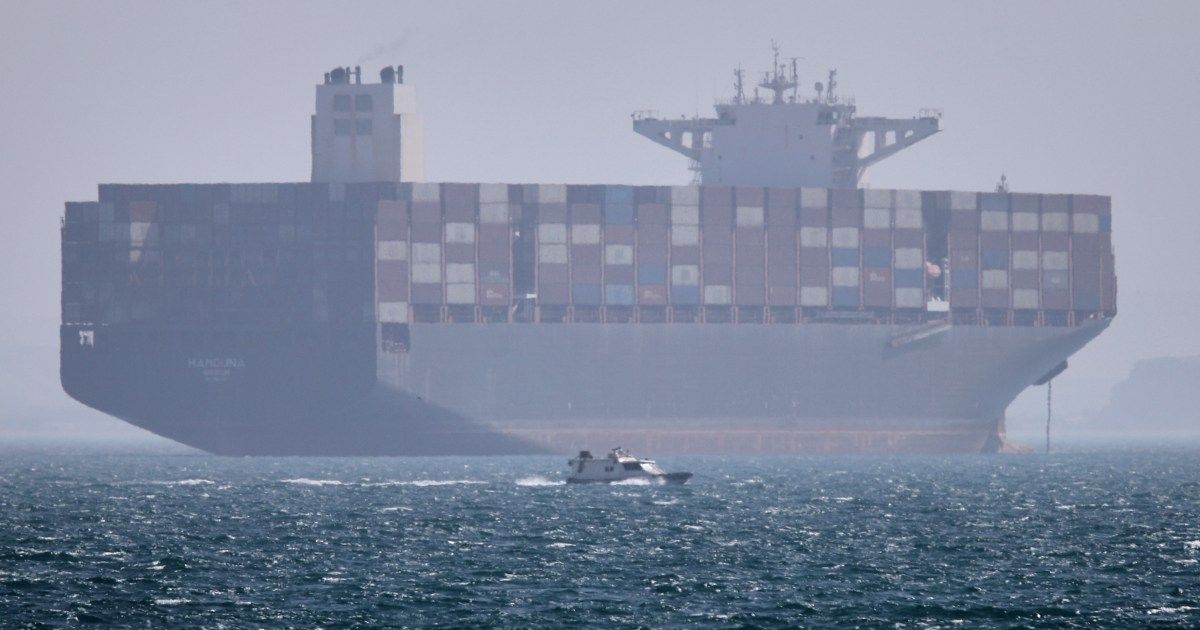
Global shipping companies are moving back toward normal operations after more than four months of disruption linked to the war involving the United States, Israel and Iran. Analysts cited by Al Jazeera say the turmoil drove up costs, delayed vessels and forced route changes, but is unlikely to reshape container shipping over the long term because seaborne trade has few practical substitutes.
Al Jazeera reported that the conflict has been the biggest shock to merchant shipping since the COVID-19 pandemic and Russia’s invasion of Ukraine. Since the war began in late February, shipping lines have had to deal with vessel attacks, longer voyages and higher operating expenses, according to the broadcaster.
The effect has varied by sector. Al Jazeera reported that oil and gas tankers are more exposed to the Strait of Hormuz because Gulf energy exports depend on the waterway, while container carriers can often choose longer routes to avoid conflict zones, including areas affected by attacks by the Iran-aligned Houthis in the Red Sea.
Shipping firms have started adding capacity since Washington and Tehran signed a memorandum of understanding on June 17 to end the conflict, according to Al Jazeera. Xeneta, an ocean and air freight rate analytics platform, said container capacity in the region fell from 3.2 million TEU to 74,000 TEU by mid-June before recovering to pre-war levels on some routes.
Xeneta also said capacity between Asia and the U.S. West Coast reached 350,000 TEU last week, above the pre-conflict record for that lane. On Monday, Maersk and Hapag-Lloyd, the world’s second- and fifth-largest container shipping companies, said they would resume using the Suez Canal for the first time since February after reviewing security conditions in the Red Sea, according to Al Jazeera.
Industry data point to shipping’s ability to rebound from severe disruptions. BIMCO, a major shipowners’ association, said global container volumes fell only 1.2 percent in 2020 from the previous year despite the first year of the pandemic. The Institute of Shipping Economics and Logistics said worldwide port cargo volumes were already above pre-pandemic levels by January 2021, rising 6.4 percent year on year.
Al Jazeera reported that shipping remains central to world commerce because it moves about 90 percent of global trade. The largest container ships can carry more than 24,000 TEU, equal to about 12,000 trucks, 2,240 cargo aircraft or 360 freight trains, according to the report.
Punit Oza, head of Maritime NXT and a former executive director of the Singapore Chamber of Maritime Arbitration, told Al Jazeera that shipping demand is set by cargo owners, economies and consumers rather than by shipowners alone. He said the industry is likely to look familiar in five years because neither war nor disruption changes the basic economics of moving bulk goods by sea.
Judah Levine, head of research at Freightos, told Al Jazeera that Dubai’s Jebel Ali is likely to remain the region’s main hub for Gulf-bound freight and cargo moving between Asia, Europe, Africa and the Americas. He said wartime diversions to Fujairah and Khor Fakkan in the United Arab Emirates and Port Sultan Qaboos in Oman showed how carriers may use smaller ports and land connections during future disruptions.
The International Maritime Organization has put shipping lane protection on the agenda for its biannual meeting this week, according to Al Jazeera. IMO Secretary-General Arsenio Dominguez said on Monday that seafarers had died in connection with the conflict and that the consequences had reached global trade, energy and food security.
Ruth Banomyong, a logistics and supply chain management professor at Thammasat Business School, told Al Jazeera that shipping networks will probably stay broadly intact, while governments and companies improve links among ports, customs systems, inland transport and alternative routes. He said the lesson is to reduce reliance on any single transport corridor, rather than try to replace the Strait of Hormuz.
This story draws on original reporting from Al Jazeera.